The post Italian boat attacked in Croatia. The incredible video posted by its owner appeared first on Yachting News.
]]>Italian boat attacked in Croatia. The video.
It’s not a recent piece of news but we want to tell you about it so that attitudes and events like these don’t happen again.
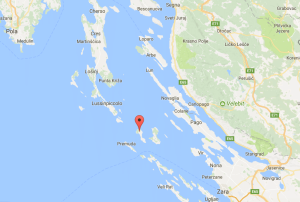
It’s late July when Enrico and his family – his wife and daughter – land with their sailboat near Silba Island and, a few miles away from the local multi-buoy mooring terminal, drop the anchor determined to spend a night at anchor.
https://www.facebook.com/enricocossutta/videos/10212266469033393/
 Meanwhile, Marko M, the 39-year-old local manager of the multi-buoy mooring berth, after collecting his money at the anchorage, decides to charge all the boats anchored in the bay for mooring, even though they are in an area where paying a fee isn’t required.
The numerous yachtsmen coming from all around the world are consequently forced to pay a fee equal to 50% of what is usually charged for a mooring within the bay. Enrico, too, is required to pay this fee but he gently refuses to pay since he is certain the area is free to anchor in.
That’s when the unthinkable happens. The 39-year-old local goes crazy and threatens to kill Enrico. Then, he takes a mooring rope, he wraps it around the anchor chain and tries to trip the boat by towing it with his tender.
Enrico’s wife invites him to go away and threatens to call the police while the girl is crying on board.
Enrico’s boat dangerously gets close to another boat docked near there but, fortunately, a few minutes later the islander gives up and goes away.
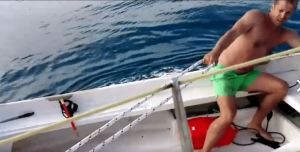 The Italian yachtsmen show the video to the local police that, consequently, has opened an investigation against the crazy Croatian.
According to local media reports, all local residents have expressed their support to the Italian yachtsmen and talked about an outrageous episode that seriously damages the image of the popular tourist destination.
In an interview, Enrico and his family have claimed that they won’t give up sailing in those zones since they all love Croatia and they are going to come back there next year, too.
On our side, we can only condemn such behaviours and we invite everyone to report episodes like this. We will not fail give voice to these deplorable facts so that unfortunate incidents like this don’t happen again.
The post Italian boat attacked in Croatia. The incredible video posted by its owner appeared first on Yachting News.
]]>The post How to tie a Bowline Knot appeared first on Yachting News.
]]>The bowline knot is certainly the most widely used knot aboard all boats, it has two fundamental characteristics: it develops a very reliable loop and, most importantly, it unravels easily, even after being subjected to strong tensions .
Bowline knot, also known as bomber knot or lover’s knot, is a very old knot. The famous John Smith, Pocahontas’ boyfriend ( we aren’t joking because Pocahontas really existed), great sailor and master chief of a British settlement in Northern America, talked about it in his “Seaman’s Grammar” in 1627.
It is said it was seen even within the remains of Sun Boat, discovered in Cheope, Egypt. The point is that bowline knot has resisted during the centuries, athough it was thratened by lots of variants which proliferate on Internet today.
Here you are a video explaining its traditional execution.
https://youtu.be/3hcmjLnzh3g
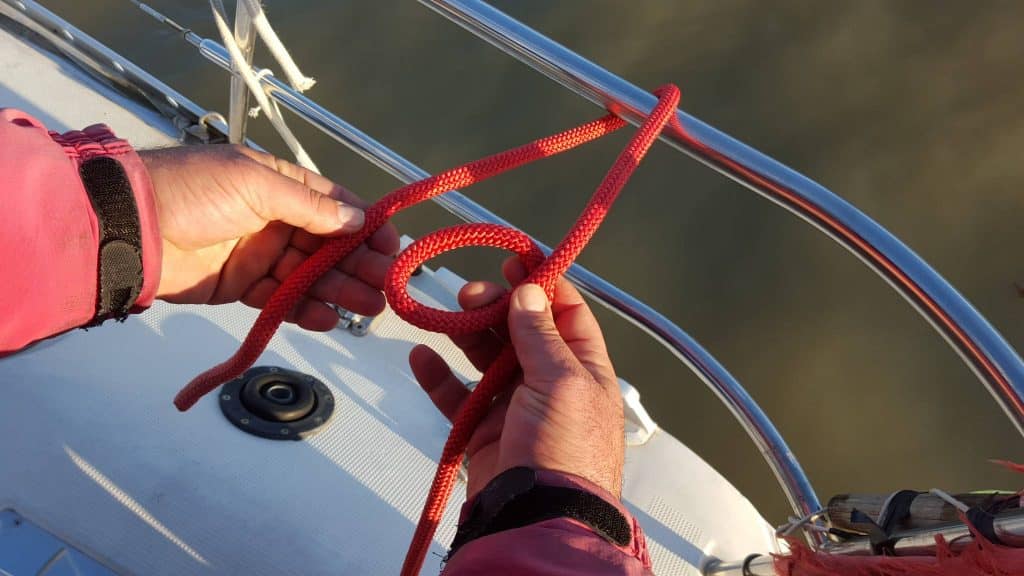
First of all, make a wrap or hitch, usually but improperly called eyelet, by pushing the sleeper under the final part of the rope, that is the running.
Then, let the free cape, the sleeper, pass into the hitch from below and then under the sleeper again like in a hug.
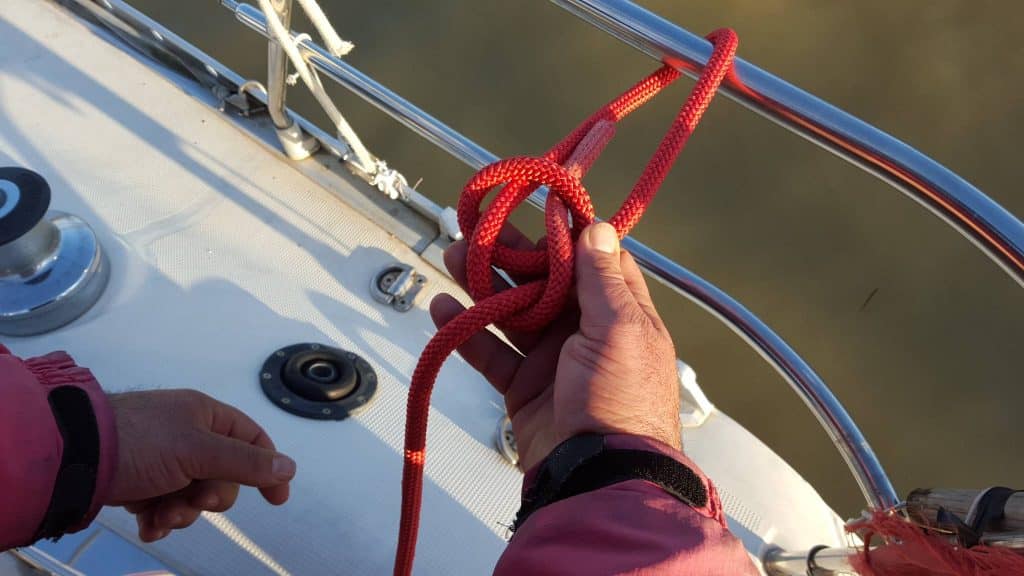
The sleeper will enter into the hitch in parallel to itself and it will clamp.
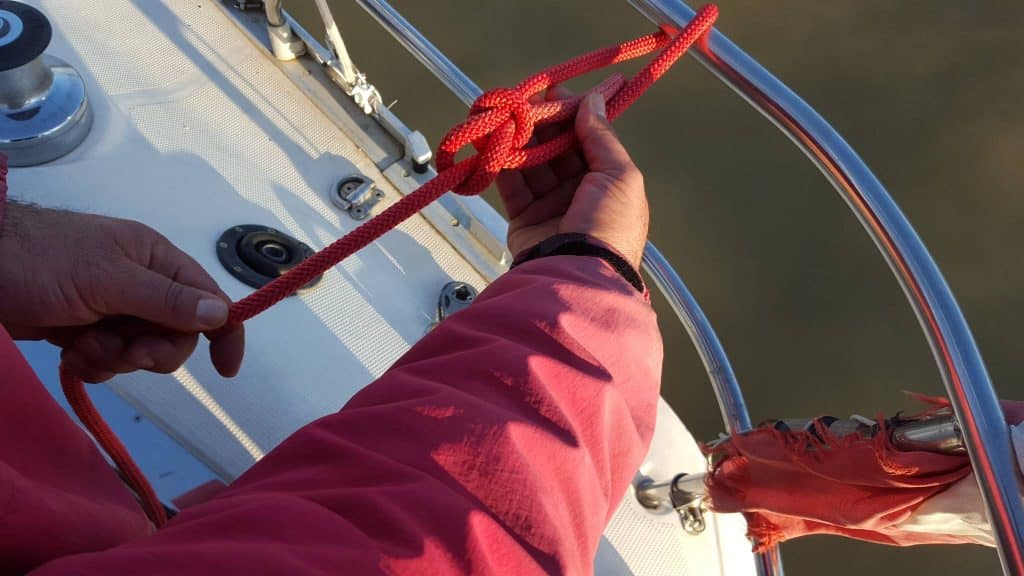
This knot has an excellent grip. So, it is ideal for moorings or to fix halyards and sheets. But it is not a jolly knot because it could untie itself if it is not tense.
But why is it called lover’s knot?
Bowline Knot
Bowline knot, according to the traditional definition, is ” a ring, generally at the extremity of a cable, made through splicing or special knots”. Okay, we agree.
But why lover? A probable reason is that old guides referred to the terminal part of a rope called “lover”.
In the prestigious ” Military Scientific Dictionary for Every Arm Use” by Guido Ballerini (Neaples, 1824) dealing with technical language used in military sciences, the term refers to the terminal part of a rope.
In our case, it is evident that the lover plans to monster to obtain its aim: it hugs the sleeper and let its love dream come true.
The post How to tie a Bowline Knot appeared first on Yachting News.
]]>The post NIGHT SAILING: SMALL RITES AND ANCIENT EMOTIONS appeared first on Yachting News.
]]>Preparing for Night Sailing
 Every night is different but each one provokes a series of identical actions you can learn over time.
The night told in these pictures is the third one of a long crossing (about 1000 miles) between Turkey and Italy. For two of the three members of our crew it is the third time ever but it is clear that the two previous ones have already created a sort of habit with the preparation gestures started before it got dark.
In fact, it’s before sunset that a boat crew starts to check that everything is ok. Starting from way lines, of course, whose perfect working has already been checked before sailing off but that requires another check before sunset in order to have enough time to replace a lamp.
And it is always 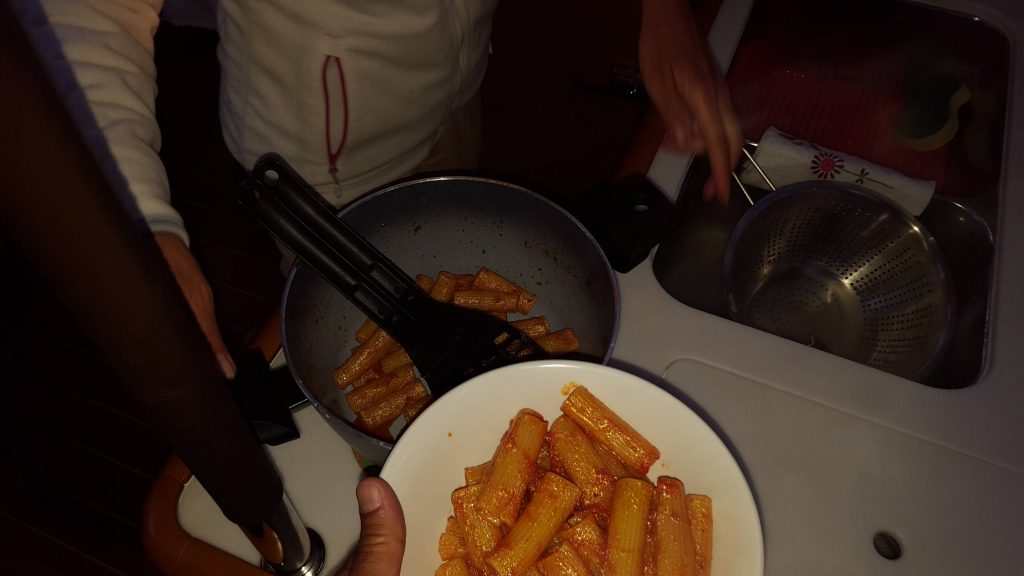 before night that we prepare our dinner. Sea conditions are good: a weak south-east wave gives us a roll we are used to. So, we don’t miss the occasion to have a good dish of pasta all together. Unlike what happened two nights before in the Ionian Sea, where rough sea and strong wind (over 18 knots) reduced our dinner to two sandwiches. This night, on the contrary, we have a good dinner just in time to put all in order and have the dinette in order for when it will get dark and shifts will start and, above all, with no lights which would disturb the guard in the cockpit.
We are sailing in a not particularly congested area, between Stromboli and Capri Island: about 130 miles with no dangers. Our equipment is complete and our radar makes us feel safe.
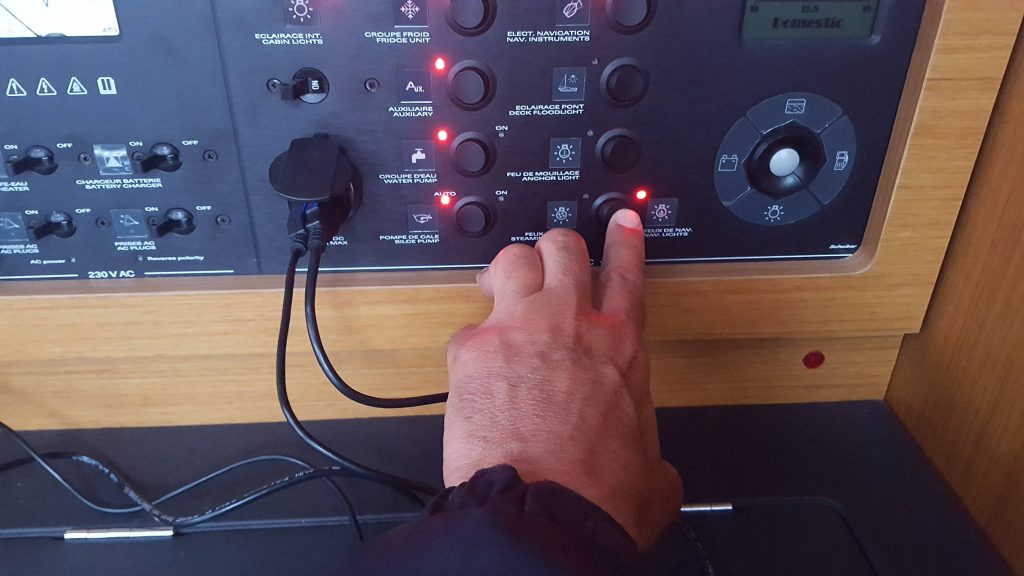
It’s at sunset that we set lights. We turn the way lights on and we set the instruments’ones in the cockpit by reducing them gradually so that they will not disturb the guard.
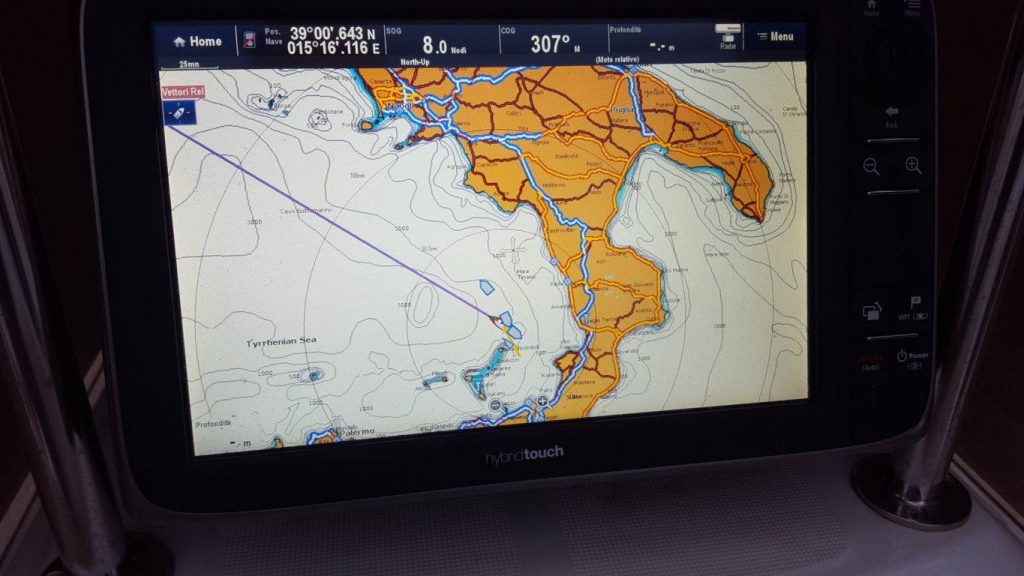
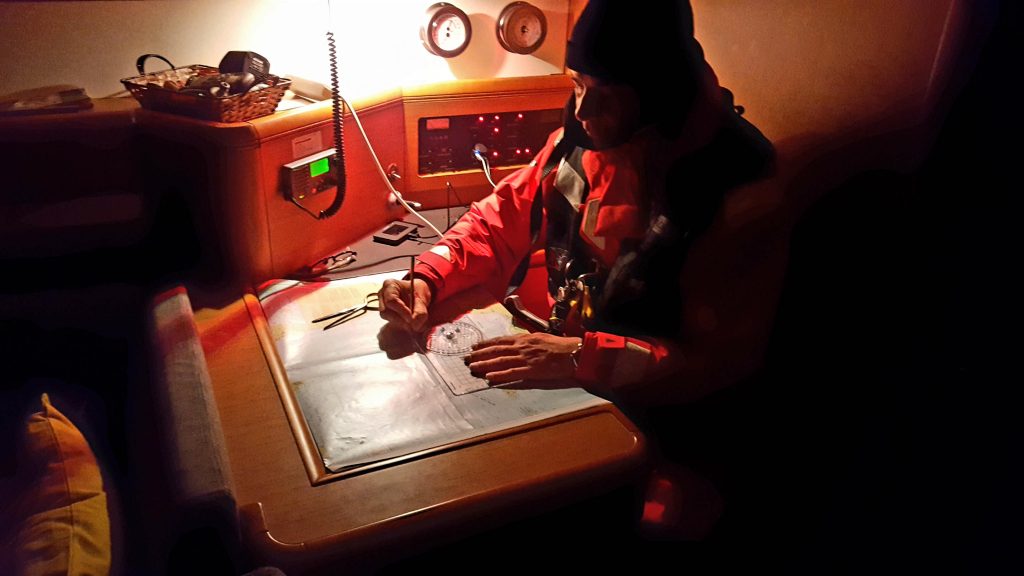
Below deck, everything is put in order. On the chart table there is only the nautical chart, where we mark the ship point (which is also noted on the log book) every two hours. The aim is to have an updated position and a reference point in the case Gps abandons us.
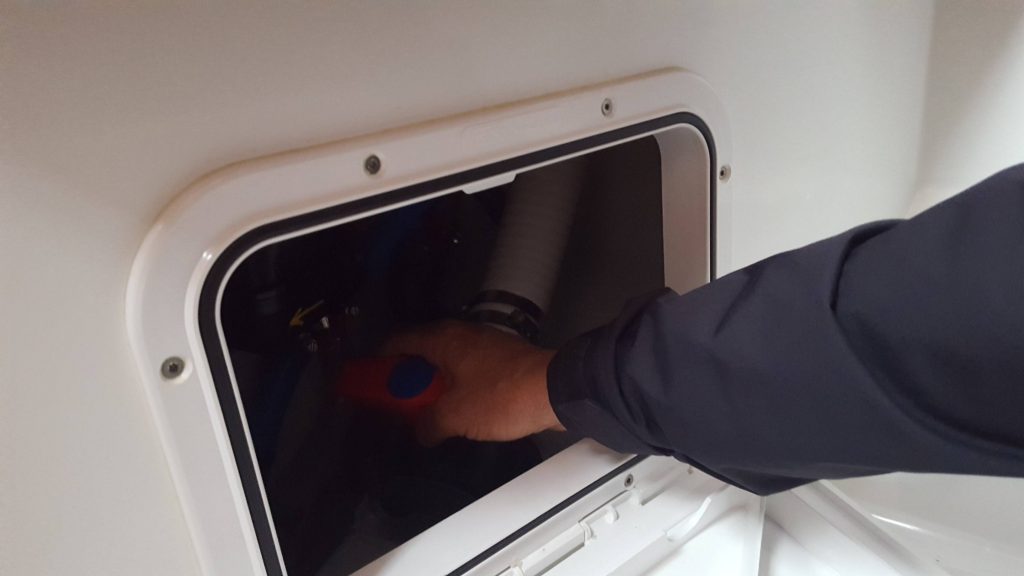
For safety reasons, we close the hatch and porthole and all sea skin fittings, even those ones usually let open during the day.
Night Sailing
We bring what is necessary for the night in the cockpit. The auto-inflating life jacket, that each of us wears with the life line. It is categorical at night. Regardless weather conditions, we must stay fastened to clevis in the cockpit, even in calm sea. If we want to move to the bow, we always have to hook the life line to the jack line. Just a wave generated by a ship sailing in the distance and that we don’t see might make our boat roll or make us fall overboard.

In addition to the jacket, we need a torch, a portable VHF system, some water and chocolate, something to eat and a thermos with some hot coffee. The aim is to have everything handy, so that nobody will be obliged to go to the dinette and turn lights on. The only light on is the red one on the chart table.

Wind becalms almost completely. So, we roll genoa and mainsail and we sail under power. In normal conditions, I prefer reefing, regardless wind’s strength. In this case, we close everything because the roll makes the mainsail slam.

We start our shifts. The two less-experienced people share a two-hour-and-half shift. Theoretically, one in the cockpit and the other one as free guard, below deck or in the cockpit. In practice, considering the particular bond between the two members, they sit on the stern and they enjoy their shift while a third person sleeps before his one.
The rhythm is always the same and it has suffered very few changes over time. The going-off guard communicates to the new one compass course and eventual notes as well as the presence of some ships or eventual changes in weather conditions; he notes the boat position on the nautical chart and, if necessary, he puts some coffee in the thermos. Another two-hour-shift starts.
Sometimes, a night encounter is cheered by a chat on Vhf. Like two nights ago in the Ionian Sea, this night, too, we have been called on channel 16 from a boat sailing on a course opposite and parallel to ours. They find us on AIS and they call us: “Marinella from Freedom….we’ll transmit on channel 9“.
Only a few words yet sufficient to communicate that we have seen them, where we are going and wish good night.
https://youtu.be/M9H31-HPB50
The night passes fast. Imperceptibly, something changes in the sky. Then, star light gets weaker, night disappears, while the sun is raising to a new day.

The post NIGHT SAILING: SMALL RITES AND ANCIENT EMOTIONS appeared first on Yachting News.
]]>The post A boat crashes into waves at full throttle, what a hit! The video. appeared first on Yachting News.
]]>At the helm of his bass boat, a small boat with a flat hull that allows access to shallow waters, the fisherman was sailing at full speed on calm waters. Although the boat is not very large, the engine, judging by its speed, is very powerful.
The accident was caused by a bad idea of the protagonist of the video: crossing the wave train raised by a motorboat sailing nearby.
https://www.youtube.com/watch?v=ZibrkMU0fWk
The first wave train is cut by the bass boat at a non-optimal angle and at crazy speed. The helmsman loses control and is therefore unable to reduce speed and regain control of his boat before crossing the following waves.
The result of the encounter between the out-of-trim hull and the second wave train is a spectacular nose-up, followed by a flight of the boat completely out of the water.
Unfortunately for the fisherman, the friction of the air generated by the speed in contact with the hull also causes the boat to rotate in flight. The impact with water is therefore even more violent.
The helmsman is first literally centrifuged inside the small motorboat, to then be thrown, unconscious, into the water. It is the life vest that keeps the fisherman afloat during the moments that separate him from the arrival of rescuers and thus save him from a very probable drowning. Fortunately he had worn it!
At the end of the video, we can see the victim rescued and recovered on board the boat from which other people were filming the scene.
Terribly upset by the accident, he has saved his life but consequences have been very serious: many broken bones, various bruises in most of his body and almost broken neck. Judging by pictures, however, we can say it ended well. Surely, he won’t think to perform this type of maneuver ever again. We, instead, we can only stress the importance of wearing a life vest.
The post A boat crashes into waves at full throttle, what a hit! The video. appeared first on Yachting News.
]]>The post Ice sailing. Sliding at 35 knots on Lake Geneva appeared first on Yachting News.
]]> Increasingly more popular in the States, the new sport even has its world championships. The background is the gorgeous Lake Geneva, in Wisconsin, which is completely frozen in winter. Rules are simple, very similar to car races’ ones: boats line up on the starting line and, on the judge’s go, they whizz at top speed. The first that reaches the finish line wins the race.
Boats are all designed to be light and fast. Their shape is sharp and elongated, similar to Formula One cars’ spoiler. Their structure is highly aerodynamic in order to have the best interaction with air pressure.
Two side wings, based on two of the three blades intended to slide on the ice ( the third one is positioned forward), enable the boat to keep the necessary stability at high speed. And it’s not an euphemism: these racing boats, sliding on the ice while pushed by the wind, can touch 35 knots. It is no coincidence that pilots have to wear special protections, including helmet and glasses.
The following footage was made by photograph Matt Mason and shows all the fascinating power of the new discipline. The ice sailboat turns, raising one of the two side skates. Pictures clearly show the spectacularity of the manoeuver, enhanced by landscape background where competitions take place.
At first, pilots line up on the starting line and jump into the yacht only when they have built up speed. Only their head and arms remain visible.
Is this just a fad? Maybe, but ice sailing has already conquered many expert sailors. The 2017 world champion was Karol Jablonsky, the same helmsman who has joined America’s Cup in 2005. So, if you like speed and sailing, Ice Sailing can be the right winter option for you. You only have to be brave, passionate and… a little crazy!
The post Ice sailing. Sliding at 35 knots on Lake Geneva appeared first on Yachting News.
]]>The post The world’s strangest ship? It’s called RP Flip and is a unique research ship, created by the US Navy, which can sink under water and stand vertically. appeared first on Yachting News.
]]>A ship standing vertically in the middle of the ocean? Don’t panic, it’s not one of the most dramatic sea accidents in boating history, but a lab ship created and developed by the US Navy.
The vessel is called RP Flip (acronym of Floating Instrument Platform) and is a 355-foot (108-meter) research ship conceived by the Scripps Institution of Oceanography. The project was completed in 1962 but what we can see today is the result of the 1995 update.
As you can see in the video below, Flip is unique in the sense that it has the flexibility to stand vertically in the middle of the ocean. The entire shift of the ship from its horizontal to vertical position takes around 28 minutes.
https://youtu.be/Ig6uWY8VEuI
RP Flip is used by the US Navy to study wave length, water temperature and density and for the collection of other relevant meteorological data. Because of the potential interference with the acoustic instruments, Flip has no engines or other means of propulsion and must be towed to open water to be moved from a spot to another. This way and thanks to its prismatic coefficient, it can reach up to 7-10 knots.
In order to ensure the correct functioning of data collection operations, every room on Flip has two doors: one to use when sailing, the other to use when the ship is vertical. Bunk beds, toilets and stoves are built on universal joints so that they can rotate with the boat and be available in all positions. During the flip, all passengers ( 16 at most, including 5 crew members and 11 scientists) have to move from the deck to the bulkhead which, in turn, becomes a new deck.
Flip can support research operations for up to 30 days. In order to make measurement position stable, it is equipped with 3 anchors. Of course, the structure of the boat enables it to minimize impact against waves.
Research operations are usually carried out in the ocean, off the western coast of the United States. So, if you ever find yourself in that area, keep your eyes peeled! You might see a ship standing out in the waters of the Pacific. It’s certainly an unusual, striking spectacle!
The post The world’s strangest ship? It’s called RP Flip and is a unique research ship, created by the US Navy, which can sink under water and stand vertically. appeared first on Yachting News.
]]>The post It’s foiling mania and the flying Optimist becomes reality. appeared first on Yachting News.
]]>The secret lies in the use of graphene, a nanotechnology material consisting of a single, tightly packed layer of carbon atoms with the same mechanical resistance than diamond and the same flexibility as plastic.
A group of students and researchers at Chalmers University of Technology and SSPA Sweden have designed and developed an Optimist dinghy with extraordinary capabilities. The basic idea was to build a small dinghy or, better, one of the smallest among the dinghies currently in circulation in the world, with foiling capabilities.
By using composite materials with added graphene, they have succeeded in building a lighter, stronger hull, equipped with hydrofoils, custom-designed to lift the boat by delivering minimal drag and supreme performance.
After the tests performed in the towing tank of SSPA – an advanced fluid dynamics research centre dedicated to naval architecture and engineering based in Gothenburg, Sweden – where both resistance and seaworthiness of the prototype were measured, T-foils were designed and built.
The flying Optimist was therefore put on test for the first time by the 17-year-old sailor Axel Raham, a rising star of the Scandinavian sailing scenario. The sea trial was performed in a 10-knot wind. The dynamics of the vessel is clear: the Optimist stays on the water until 4 knots: at 5 knots, she starts to fly, delivering extraordinary performance.
Guided by Christiam Finnsgard, researchers are very proud of the result and tester Axel makes no secret of his enthusiasm. ” At one point, you feel the noise of the water stop; everything becomes silent and you only feel you’re sailing fast”, stated the young sailor. “Astonishing, it’s simply astonishing! That’s the way future sailing should be!”.
The pictures in the video above actually convey the idea of how exciting the experience must be since, even if it is now made of graphene and advanced hydrodynamic appendages, the Optimist is, first of all, the unique, unmistakable 2.30-long dinghy with 3.25 square meters of sails and excellent performance. What the Swedish university carried out is an interesting way to reinvent the “little girl” designed by Clark Mills that, this year, has celebrated her 70th birthday.
The post It’s foiling mania and the flying Optimist becomes reality. appeared first on Yachting News.
]]>The post How to prepare for heavy weather sailing appeared first on Yachting News.
]]> rain and some storms would be approaching us along the Tuscany Coast in the next hours. Our destination was the Gulf of La Spezia; in short, a safe port on one side and an unexpected deterioration in weather conditions on the other one.
So, we decided to leave from Viareggio and head for Portovenere, knowing we would have to face increasingly steeper waves and a highly demanding crossing in southern and libeccio winds. The first step of a crossing with a bad, yet not terrible, weather forecast was therefore closed by the decision to sail off. The observation of natural phenomena played a key role in our decision-making process: at 7.00 there was just a light south wind blowing, the sea was slightly rough and there was no sign of storms.
Once we were out of the port, we sailed about half a mile along the coast in order to avoid the barrier which extends from the outer breakwater of the port of Viareggio northwards and we finally headed for the Gulf of La Spezia. After about 20 minutes, a large western front began to emerge, with dark, low clouds and an increasingly stronger south-east wind. The risk of sailing in strong winds, heavy rainfall, lighting and reduced visibility was highly concrete.
 We reversed course to come back to the port but, within few seconds, we realized that the speed at which the front was approaching would have forced us to face it in a dangerous position, namely in the narrow space between the barrier and the coastline. Consequently, the only decision we could take in that moment was to head towards West, move away from the coast and face the front in open sea.
That’s, in our opinion, the only possibile decision to take when – because of a miscalculation or false weather forecasts – bad weather surprises us at sea. On the morning of the last November 5th, the development of the weather events was textbook: the south-east wind got quickly stronger, then it calmed down and, after a few minutes, it reversed direction and got stronger again, reaching 40 knots. Visibility was seriously reduced by a highly heavy rainfall. Far from being a simple summer storm, the phenomenon was intense, accompanied by an increasingly choppier sea and strong wind.
How to stay safe in heavy weather sailing?
We’ve already talked about heavy weather sailing. Well, the measures to be adopted in the event of a stronger storm are almost the same. The only difference is that adverse weather conditions require more resistance, both in physical (cold and fatigue are the major enemies in this case) and psychological terms ( stress levels are elevated especially during the first phase and drop only when the worst is over).
As for the second aspect, the chance to face heavy weather sailing with greater or lesser calmness depends on the conditions our “unit” is in. In this case, the term “unit” not only refers to our boat but to a group including at least three elements: the captain’s expertise and experience, the crew’s preparation, the overall conditions of the boat and its equipment.
Of course, all these parameters need to be checked sufficiently in advance. Being aware of the real skills of the person who is in charge of both the boat and crew is an essential element which plays a key role in the decision on whether or not leave. Anyway, when a squall is predicted, it’s better to wait for better weather conditions; in the case of unexperienced crew, giving up leaving is an act of responsibility.
As for the boat’s conditions, these should be always checked, regardless of the weather conditions. So, it is important that everything on board is ok, including mast, rigging, deck equipment, blocks, stoppers, turnbuckles, engine and batteries. Being sure that our “unit” is in good conditions contributes to reduce our stress level to the benefit of our decision-making capability.
Preparing the boat and crew
Before heavy weather reaches us, we have a lot to do aboard. Having prepared the boat, now think of preparing the crew.
First of all, all crewmembers should put on belts and lifejackets and should be fastened to the jack line if working in the cockpit. Make sure that your crew knows the exact location of all the safety equipment and how to use the Vhf radio. If someone is susceptible to seasickness, probably it’s late now, but he should take his seasickness medication immediately.
 On deck, all the mobile things should be secured and, if possibile, stowed below deck or in the lockers. Check both fore and aft lockers to make sure heavy items are secure, then lock lids and make sure all cockpit drains are clean and perfectly working.
Check all rig fittings are secure, including carriages, mainsail fittings and the jib. If anything is missing or broken, replace it if possible.

The post How to prepare for heavy weather sailing appeared first on Yachting News.
]]>The post Guidi brings Art to the METS Trade in Amsterdam appeared first on Yachting News.
]]> marine equipment, which is about to celebrate its 50th anniversary (1968-2018).
The preparations for the upcoming accomplishment already started at the Marine Equipment Trade Show in Amsterdam a few weeks ago, an event that the Italian company didn’t failed to join.
The preservation of values and tradition is a “diktat” for the Grignasco-based firm; yet, multiple, creative contaminations with art offer additional opportunities which never cease to amaze the audience and satisfy the authors. When we visited the stand of Guidi at the Mets Trade, a question occurred to us: Boat Show or Art Gallery?
A 60-square-metre exhibition area, designed – as usual – by Studio Anna Fileppo, where art and products dialogue incessantly within a context whose boundaries are so blurring that they are very difficult to be outlined.
The stand of Guidi Srl showed off a complete range of bronze, brass, chromed, nickel-plated and aluminium marine accessories along with anti-lock valves, water intakes and strainers, pipe fittings and much more, all 100% made in Italy.
Alongside these precious marine “masterpieces”, the company also exhibits a small preview of the photobook which will be published in 2018 to celebrate the 50th anniversary of the firm. 17 shots by the talented American artist Jill Mathis embellished the walls of the stand and transformed it into a real, attractive “Art Gallery”. The photographer’s camera captured the products of the Guidi line at some among the most prestigious Italian boatyards which have chosen the Grignasco-based company as their supplier.
 The feminine, delicate touch of the artist gives the marine products a poetic guise and that aesthetic-real value that it would be otherwise unperceivable on board a yacht. Jill Mathis is an habitué of Guidi Srl and her camera has been embracing the aesthetics of the factory job for several years, by ennobling it in a broader portrait of gears, bolts, iron, water, hand-shaped bronze, brass and aluminium. Under her magnifying glass, Jill inspects the reality of the factory from inside, with neither filter nor censure, by re-establishing an ancient pair: industry and art. Boasting deep, ancient roots, this relationship has almost always coincided with revolutions and crises of the ongoing economical systems.
Once again, Guidi celebrates a marriage between products and arts, a union which renews its vows from boat show to boat show, from country to country, by tracing a well-defined path towards a near, certain, stable future. The solidity of the group is confirmed by the sales trend of the Italian company, which, this year, has reported a +15% increase on both the Italian and foreign market compared with 2016.
Guidi is synonym with quality and, above all, innovation. Boasting an unparalleled team-building capacity, it is currently involved in the creation of a shared space at the next Versilia Yachting Rendez-Vous in Viareggio together with other authoritative Italian brands and leaders of the marine equipment sector, including Tecnoseal, Veco Spa and Mase Generators.
The founder of the group, Bruno Guidi,  uses fine words to describe his satisfaction:
“I’m very pleased that we’re so close to this important achievement. When I started my activity, I didn’t think that I could celebrate a 50th anniversary. The fact that my sons, Daniele an Alessandro, work with me now and in positions of responsibility is, in my opinion, a guarantee of continuity for everyone, including our employees, customers, suppliers and partners.
We therefore look at the next 50 years of Guidi with optimism, knowing that we can’t stop”.
So, everything is ready for the 50th anniversary of the “Made in Guidi“, which looks at the future with trust, drawing on the art as a means to exceed the time limitats and outline the future.
Quoting Kandinskij “Art exceeds the limits in which time would like to constrict it”
Photo by Enrica Pastore


The post Guidi brings Art to the METS Trade in Amsterdam appeared first on Yachting News.
]]>The post How “wet” the Volvo Ocean 65 yachts are appeared first on Yachting News.
]]>This is a 7,000 nm north-to-south Atlantic run, passing through the various climate zones of the globe, from the European coasts with their autumn storms to the quiet Equator and the harsher conditions of South Africa.
As you can see in the video below, these 7,000 nautical miles will be certainly far from being “dry”..
https://www.facebook.com/tuttobarche/videos/1721393537879666/
From a strategic point of view, this is one of the most complex legs because of the variety of climate zones. But…what’s a climate zone?
The earth’s oceanic climate features distinct bands, looping the globe and running out from the Equator to the Poles in a mirror image. When they race from north to south, the fleet is constantly crossing from one climate band to another. The trick is finding the right entry and exit points for each transition, that is a moment when weather conditions can radically change, by allowing for spectacular gains and losses.
These are the major challenges of the race:
Subtropical High Pressure Zone, also known as “horse latitudes”. There are different theories about the origins of the name and most of them concern the poor amount of air available to sailors. There is even a theory according to which the zone is so named because the particular conditions of these areas slowed up the old sailing ships so much that they would run out of water and be forced to throw the dying horses overboard. Actually, this area seems to offer a lot of opportunities. The first is the famous Azores High, a large, stable, semi-static high pressure zone sitting around 30 and 38 degrees north.
Trade Winds. Azores High (to give you an idea of its strength, this is the wind that determines the Mediterranean summer weather because it deflects Atlantic depressions) determines the second Atlantic climate zone, the Trade Winds, so named because the old sailing merchant vessels used them as a safe, reliable source. The Trade Winds are moderate to strong winds that constantly blow towards the Equator, from North-East in the northern hemisphere and from South-East in the opposite hemisphere. This way, they engender two belts of wind that move from Sub-Tropical High Pressure zones towards the Equator.
Island Chains. Both the Canary Islands and the Cape Verde islands lie in the way as they head south. Both archipelagoes are volcanic, high pieces of land. Consequently, they impact the air flow for hundreds of miles, by offering multiple opportunities.
The Doldrums, also known as ITCZ (InterTropical Convergence Zone). Sitting south (or north in the Southern hemisphere) of the Trade Winds, they determine the position of the low pressure zone surrounding the earth’s oceans roughly at the Equator.
This zone develops because warm, moist air that characterizes this part of the world rises higher than cold air that is therefore sucked in. This engenders the Trade Winds along with light winds, thunderstorms and sudden gusts in a context with a high level of unpredictability.
A good Equator crossing can win the leg while a bad one can drive you to the defeat. It’s therefore a crucial moment. The key is picking the thinnest point of the doldrums. This is why, even if they run from Europe to South Africa, the routes approach fleets to the South-American coasts. Legend has it that the sweet spot is around 27-28W, but anything between 25W and 30W can work.
St. Helena High: as already mentioned above, climate zones are mirrored north to south about the Equator. This means that the St. Helena High is the southern version of the Azores High. Like in the North, high pressure engenders light winds, so it risks to block the direct route to Cape Town. The fleet of the Volvo Ocean Race will probably go to the west of the centre of the high to reach the last climate zone of the leg called Westerly Storm Track.
The Westerly winds are western winds. Northern ones are normally exploited to go from the American Coasts to Europe. Unlike the Trade Winds, the Westerly winds are less stable and storms and low pressure systems swirl west-to-east around the globe. The traditional strategy is to get clear of the Sub-Tropical High Pressure zone, enter the Storm Track, find a low-pressure system and ride with it towards East. Often, the first “rider of the storm” – to quote Jim Morrison – is the first competitor who arrives under the Table Bay and crosses the finish line in Cape Town.
The post How “wet” the Volvo Ocean 65 yachts are appeared first on Yachting News.
]]>