The post Lures and wake in offshore trolling: all the tips for best fishing appeared first on Yachting News.
]]>Reading the wake and positioning the lures
When reaching fishing spots, often after covering quite a few miles, the thing that excites us the most is pulling out our lure bag and casting the first rods. However, before doing any of this, a smart angler should try to read his boat’s wake and figure out the best spots to cast certain lures.
So, upon arriving at the fishing area, it is best to slow down to an average fishing speed of 6-7 knots and start observing the wake behind you and your “Strike Zone,” which we discussed in the previous article. This is the area between the transom and the end of the propeller’s wake or the turbulence created by the boat’s hull. Essentially, it is the zone where strikes, or catches, are most likely to occur.
Analyzing our wake, we will see that the central area contains the propeller turbulence, a swirling mass of white water that affects the stability of lures if they are cast into this main turbulence.
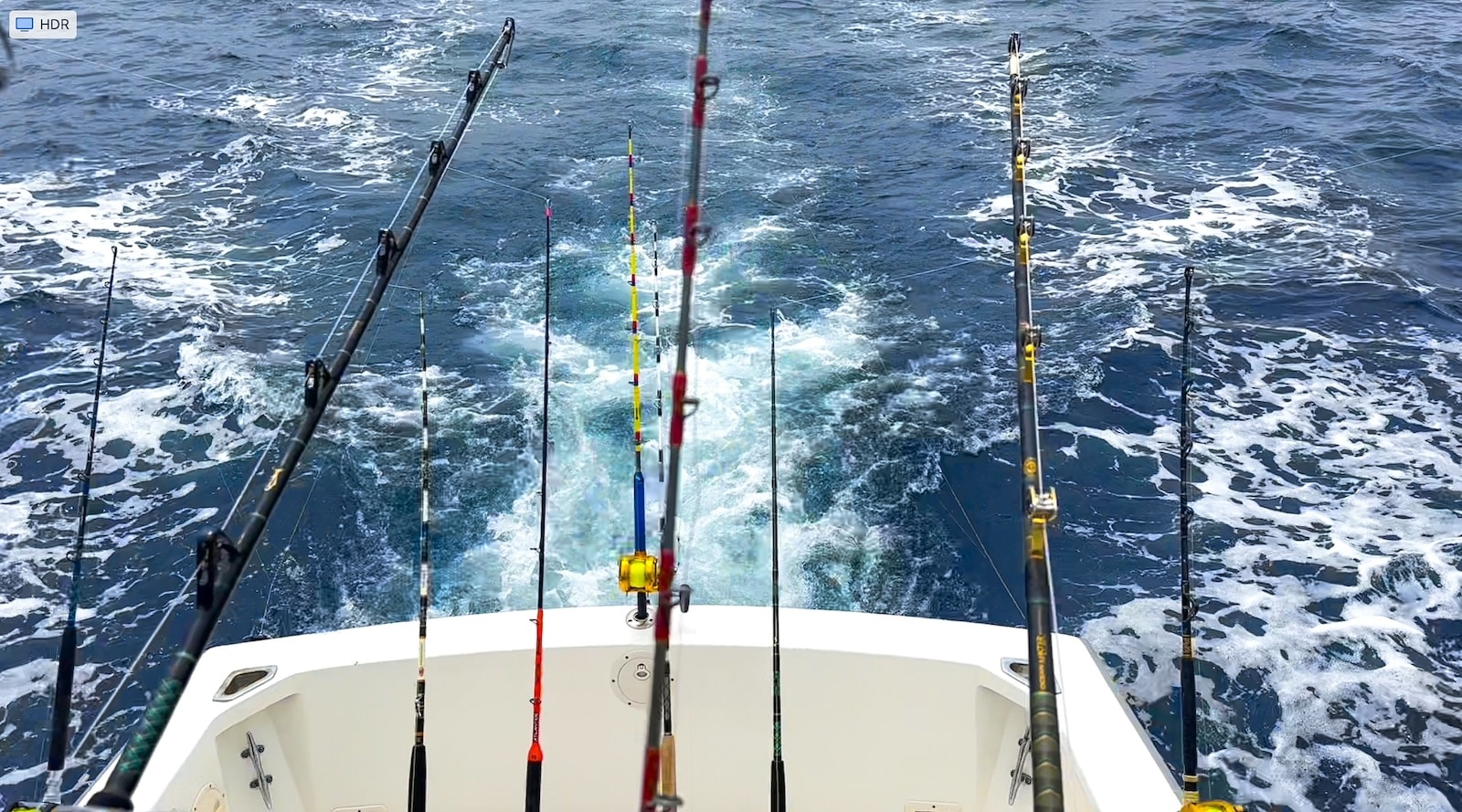
This propeller wake is deeper at the transom, with the maximum depth at the blades, coming very close to the surface over a short distance. Although it may seem like very compact white water, it is quite translucent, allowing predators to find the lures within it.
On the sides of this central flow, there are lanes of cleaner water with little to no foam or turbulence. This is an excellent area to cast a lure, as it will be highly visible and thus in a zone free of turbulence, which would otherwise affect its proper swimming.
It’s also important to note that the white water coming off the sides of the boat is very shallow and almost transparent, primarily consisting of surface bubbles. A lure cast in this area is likely more visible than in any other area, as the white, foamy surface will highlight the lure’s silhouette. However, if there is too much turbulence, it could affect the stability of the lure.
One thing to keep in mind is that generalizations can never be made; there are many variables to consider, and each boat has its own unique wake, which will change based on speed, sea conditions, and the direction of movement relative to the surface current. For example, the wake is longer when moving against the current and shorter when moving with the current. Therefore, you should extend the distance of the lure from the stern when going against the current and shorten it when moving with the current.
The strike zone is constantly changing, and to achieve the best results, you will need to adjust the positions, heights, and distances of your lures as conditions change.
Pressure waves
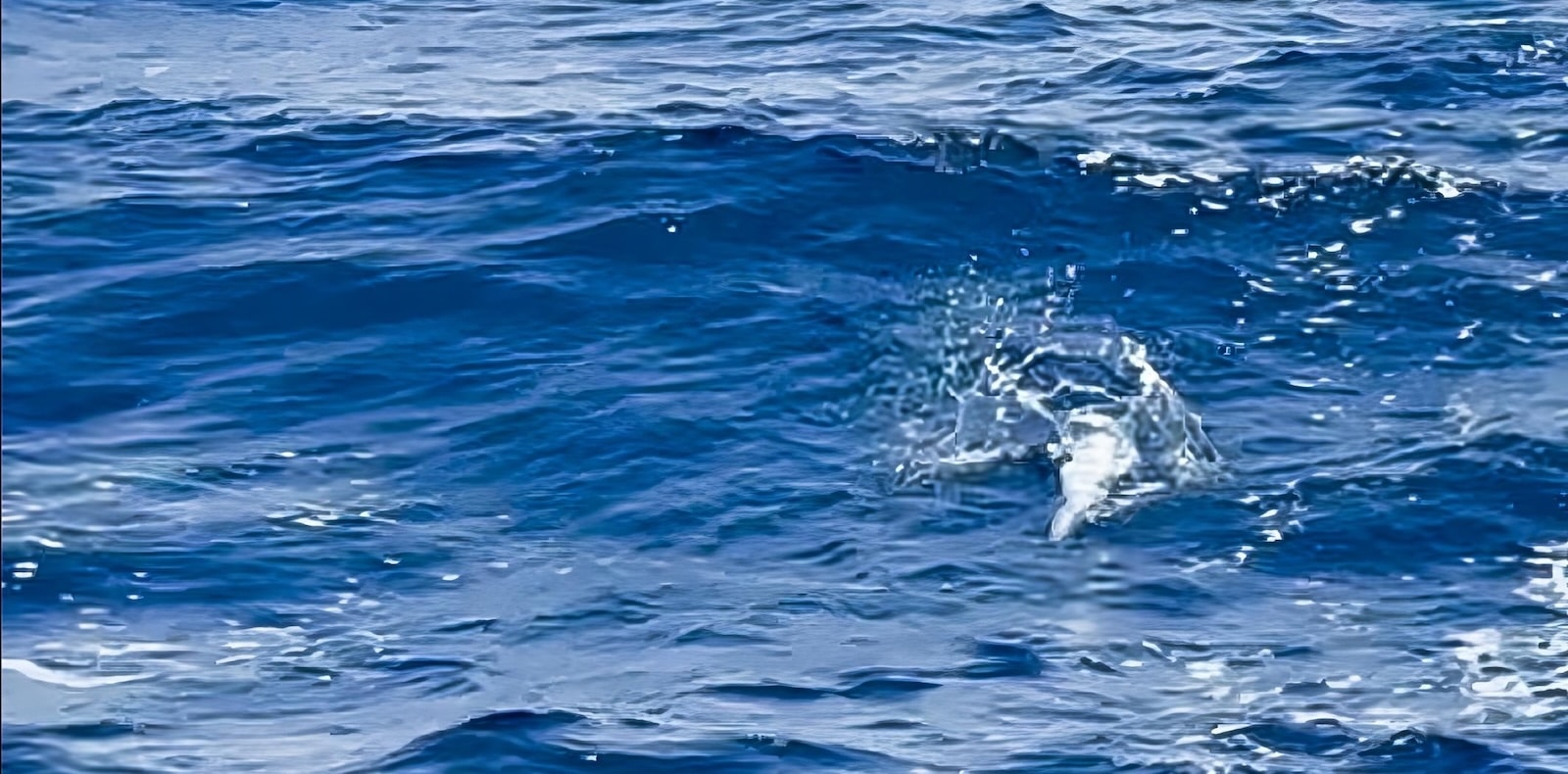
An essential factor to consider within the Strike Zone is the waves following the boat. These are pressure waves created by the boat, varying in size depending on the boat’s dimensions and hull type. The distance between the pressure waves roughly corresponds to the boat’s waterline length. These waves are crucial in offshore trolling with surface lures. Indeed, it is key, whenever possible, to position the trolling lures on the front face of the wave (the part of the wave facing the boat).
By observing these pressure waves behind your boat, you’ll notice they are higher and wider towards the stern but gradually become lower and narrower further back in the wake, eventually fading towards the end of the boat’s wake. The wave’s front face, facing the boat, is much more visible to a fish approaching from behind than the back of the wave. Generally, positioning the trolling lure on the lower third of the wave’s front face is ideal in terms of visibility for the fish, ensuring a good swimming rhythm for the lure, and making it easier for the fish to attack it while swimming in the wave.
Some boats have almost imperceptible pressure waves, so in these circumstances, lure positioning should follow these criteria less strictly. The rougher and more turbulent the sea, the harder it is to distinguish where the pressure waves are (sometimes almost impossible). However, with experience, you’ll learn how the waves appear or influence the wake and, thus, determine the points within the strike zone where the lures perform correctly.
Offshore trolling lures
No one can ever tell us with certainty why a lure manages to deceive a predatory fish, but it is certain that some lures work because they elicit excellent predatory or aggressive responses.
We know that in the animal world, anything that moves, in this case, swims, and can be caught is a potential prey and thus a source of food. Obviously, the more this swimming object resembles common prey and the more it appears to be in distress, sick, or injured, the more likely it is that a predator will expend its precious energy resources on an attack. This is a natural response to the predatory instinct, an inherent trait in living beings born with this instinct.
Try throwing a ball in front of a puppy or kitten, and you’ll see that it instinctively chases it. A similar thing happens when a lure is run in front of a hunting predator. However, several factors contribute to a predator deciding to attack: the lure’s size, color, swimming action, shape, emitted vibrations, the influence of the hook and leader, and, crucially and often overlooked, the zone where the lure is positioned behind the boat.
How a lure behaves
Leaving the analysis of artificial lures like minnows for other articles, the lures commonly discussed in offshore trolling are surface lures, which we can define as skirted lures.
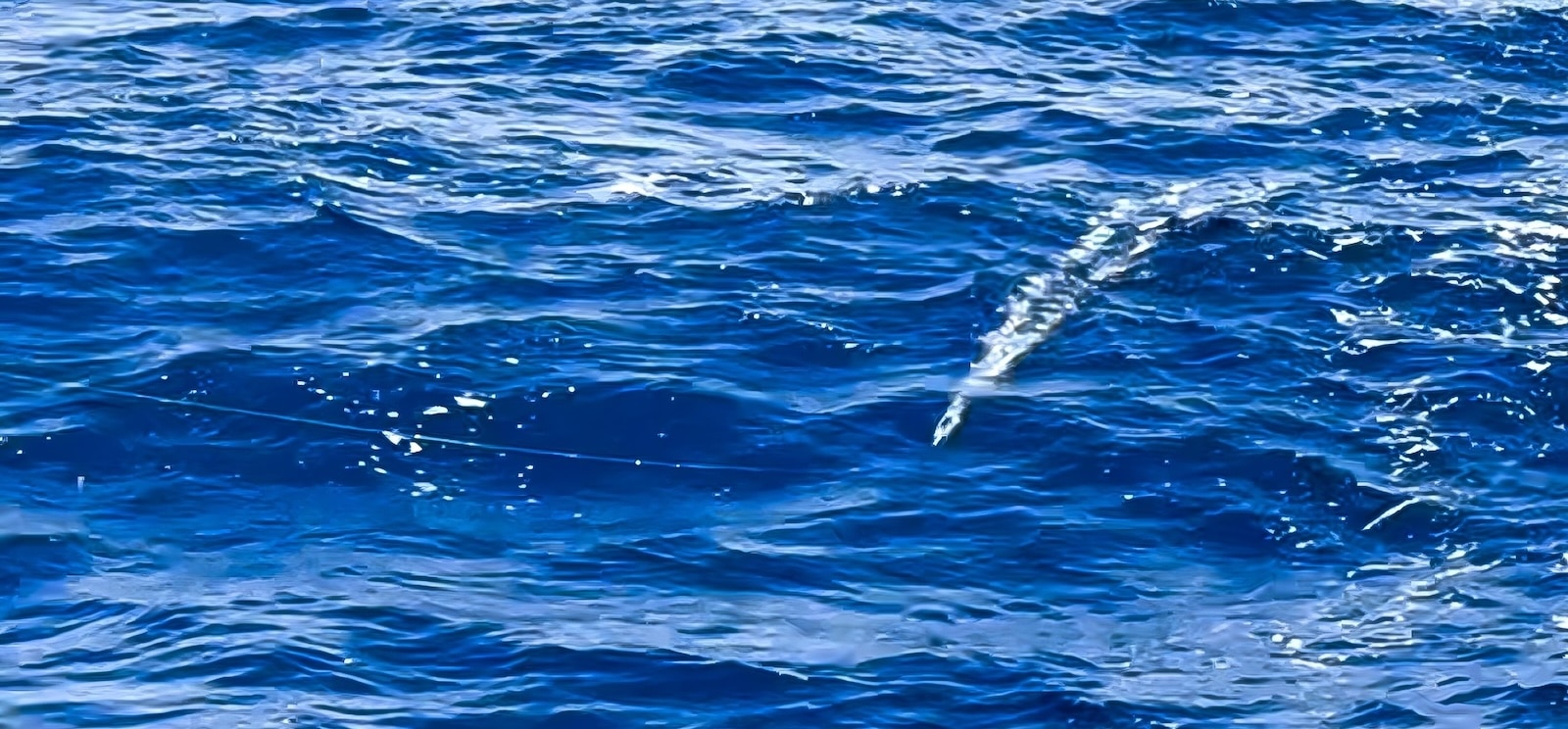
All these types of lures, when trolled in our strike zone, should work with a precise rhythm in a repeating cycle. A good offshore lure should operate according to the following rhythm: it rises to the surface, captures air (commonly referred to as “breathing”), then re-enters the water, leaving behind a long trail of air bubbles (known as “smoking”). When it stops “smoking,” it should rise again to capture more air for another “breath.”
The above explanation represents a correct rhythm, but it can happen that the lure continues swimming underwater after it has run out of trapped air, failing to produce a smoke trail for a certain period. This period is referred to as the “lazy” period. Conversely, the lure might return to the surface too often, still having air to release for the smoke trail underwater, expelling the remaining air during the next breath.
What is certain is that every lure, of different shapes and sizes, will follow this cycle with its own timings. These timings can vary significantly from one lure to another and yield different results depending on the circumstances.
For example, some lures have longer breathing cycles of 10-15 seconds, such as sliced headed lures (cut angled, as seen in the photo), some of which even have rhythms of 20-25 seconds between breaths. These lures are highly appreciated in oceanic waters.
Personally, I have always preferred very active lures with faster rhythms.
Indeed, these lures have consistently yielded the best results for me, even in rather apathetic fishing situations, both in the Mediterranean and in other seas. It’s no coincidence that the lures I personally design and develop, such as the collection tailored for a prominent international company, perform best when worked with a breathing cycle between 4.5 and 5.5 seconds.
These are mostly lures with symmetric heads, featuring a more or less deep cup-shaped face, known as cupped faced lures or cupped nose lures. These lures, also referred to as chugger head lures, when finely tuned in the wake by studying their positioning point and the angle at which the line connects to the lure, with a cycle lasting about 5 seconds, can deliver great satisfaction by effectively provoking fish.
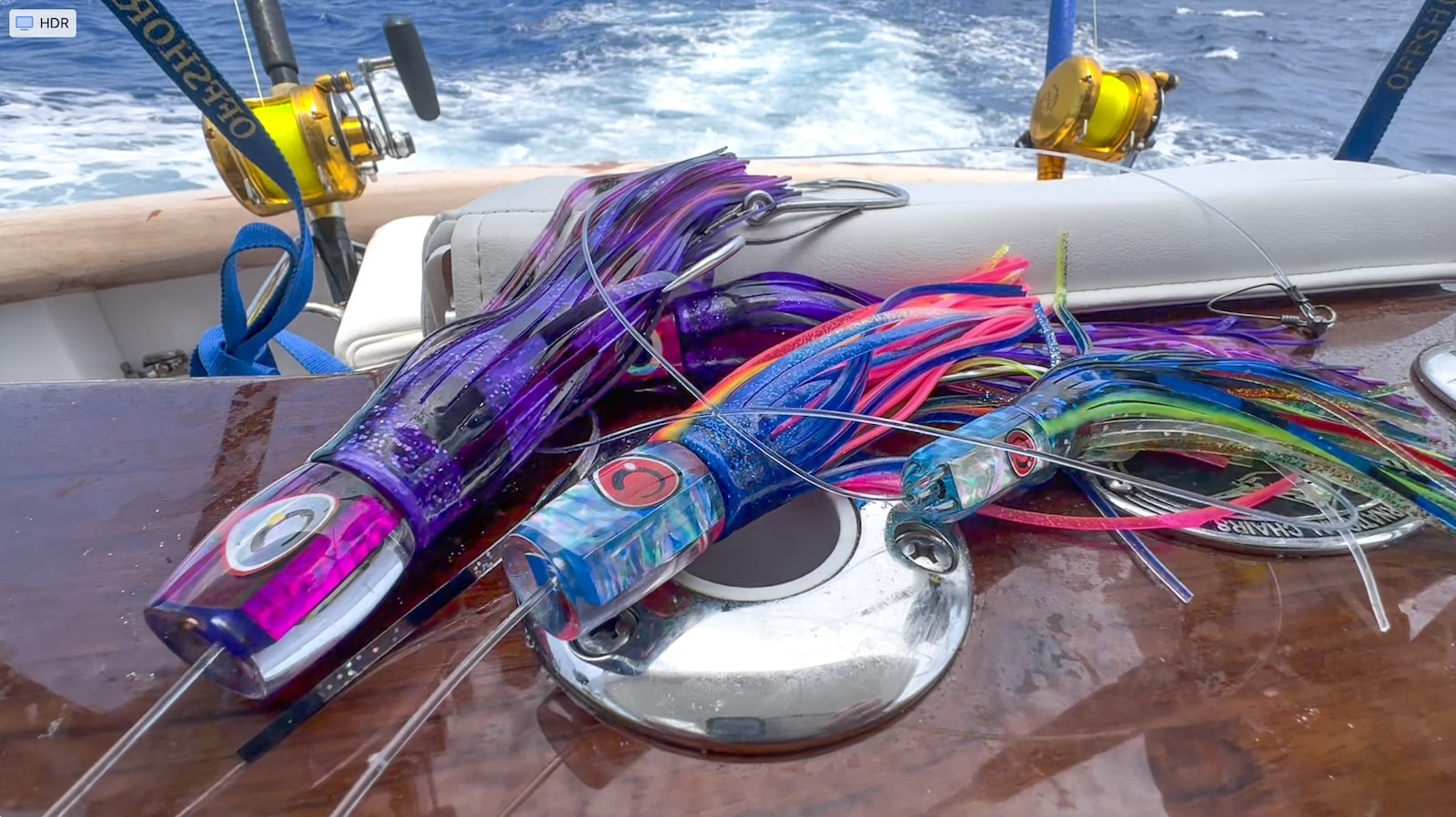
Of course, not all lures operate in the same manner. Some lures come to the surface and breathe with a few splashes before submerging, while others explosively break the surface with loud noise, lifting water and splashes. Some dive straight down, others dart from side to side; some lures describe a deep, progressive arc as they dive, while others shake from side to side upon immersion, moving their head or skirt. Furthermore, each lure model leaves a different wake behind it, so the smoke trail can vary greatly from very subtle to very noticeable.
You might wonder which factors influence these behaviors. It primarily depends on the shape of the lure’s head, its face, and length, as well as the trolling speed. The frequency at which a lure cycles its action can vary based on sea conditions—whether rough or calm—its position in the strike zone, boat speed, trolling direction with or against the current, the angle at which the line enters the water, the weight of the line, including the diameter and weight of the leader used.
A well-working lure can trigger aggressive strikes from predators. When the hook is properly engaged, a successful strike is assured.
Stay tuned to YachtingNews Fishing for more insights!
The post Lures and wake in offshore trolling: all the tips for best fishing appeared first on Yachting News.
]]>The post Offshore Trolling: the guide with tricks and tips for beginners and experts appeared first on Yachting News.
]]>Guide to offshore trolling: tricks, and tips for everyone, beginners and experts alike
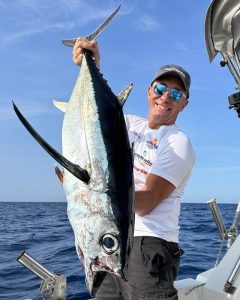 There are only a few things in the world that give such a rush of adrenaline as seeing a fish just below the water’s surface, dorsal fin out, accelerating towards your bait being trolled on the surface. Then comes the strike, and the excitement you feel is such that you want to keep experiencing it, every time you go out, turning into a true addiction over time.
It’s well known that trolling with artificial baits at high sea is a deadly weapon for catching the largest predators of the sea, from tunas to billfish, like our beloved sailfish, as well as the great oceanic marlins.
However, offshore trolling should not be confused with other types of trolling, often done at low speeds, sometimes very low, where the angler often tries to keep the baits far away from the boat, thinking (sometimes erroneously) that this disturbs the feeding activity of the predators.
In offshore trolling, it’s actually the opposite; it’s necessary to abandon the idea that the baits should be as far away from the boat and its wake as possible. When it comes to big game and offshore trolling, the boat and its wake are actually part of the system, and the secret lies in learning how to use all of this to your advantage.
Offshore Trolling: Speed
When using surface lures for offshore trolling, commonly referred to in English as skirted lures (referring to the rubber octopus skirts attached to the head), the biggest difference lies in the speed at which they are trolled.
Offshore, these lures are effectively trolled at speeds ranging from a minimum of 6 knots, mostly between 6.5 and 8.5 knots, and up to situations where speeds reach 10 knots and beyond. Their vibrations, their wake, and the white water produced by the boat are components that combine to form an effective mobile lure for attracting large predators.
How far to position the bait, the strike zone
Many anglers, due to their previous experience with trolling, such as live bait trolling, tend to let out their baits well beyond the boat’s compression waves, fearing that the turbulence from the engines, the noise, and the boat’s own waves might scare the fish. However, in this form of fishing, it’s not the case.
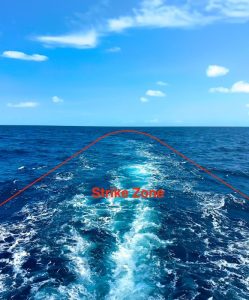
The action is concentrated in the area between the stern and the end of the wake (created by the boat and the turbulence of the propellers) or just after, in the area commonly referred to as the Strike Zone. And it’s precisely within the strike zone that you should deploy your baits.
 Some may argue that they have sometimes caught fish by letting the bait far beyond the boat’s wake, but probably because those fish were attracted by the overall setup and were moving towards the boat.
But it’s never worth letting out baits excessively far, as the likelihood of getting a solid strike on a fish is much higher with a line deployed at a closer distance, thanks to the lesser elasticity of the line and the reduced belly created by the line due to wind. Furthermore, as fish approach the boat, they become more aggressive and therefore strike the baits more violently, resulting in better hook sets.
You might wonder why fish get so close to the turbulence and wake of the boat, and the reasons can be varied: the turbulence itself may resemble a school of small forage fish frothing and splashing on the surface in a feeding frenzy amidst a baitfish shoal, or perhaps predators know from experience that the noise of the engine could mean the passage of a fishing vessel dumping fish scraps into the water, thus an easy meal; or maybe the motor’s wake attracts small predators like bonitos and mackerels, which hunt in the white waters to feed or camouflage, and this, in turn, can attract larger predators that prey on them.
In short, regardless of what we imagine the boat’s wake represents for large pelagic fish, in reality, our boat doesn’t frighten these predators in any way.
In fact, as experienced fishermen know, the larger target fish are even more daring; they have no fear and approach the stern almost as if they wanted to touch it.
Offshore trolling: hook size
Before understanding how to properly choose our offshore trolling setup (whether fishing on a large fisherman with twin diesel engines, on a boat with a single outboard engine, or even trolling from a sailboat during a cruise), we need to discuss a fundamental point: how large should the hook be with which to arm our bait.
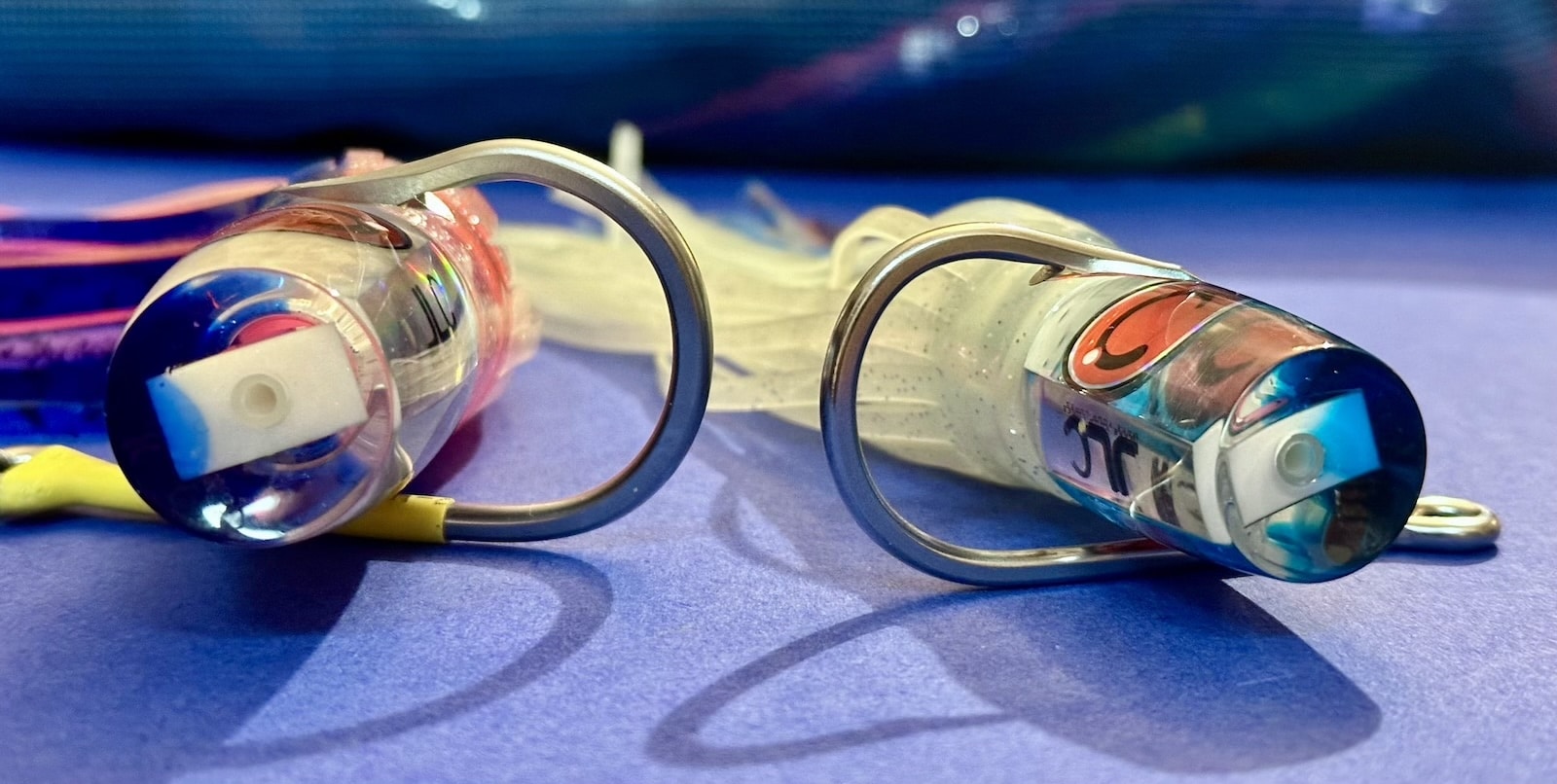
The minimum size of the hook to be used for boat fishing is determined by the size of the bait’s head. The opening of the hook must be able to encompass the bait’s head, whether it’s a resin head, a soft head, or a metal head.
This fundamental concept is based on the expectation that at least half of the hook’s opening is free from the shadow cast by the bait’s head during trolling, ensuring that at least half of the hook’s gape can penetrate deeply into the fish’s jaw, thus ensuring a stronger hook set.
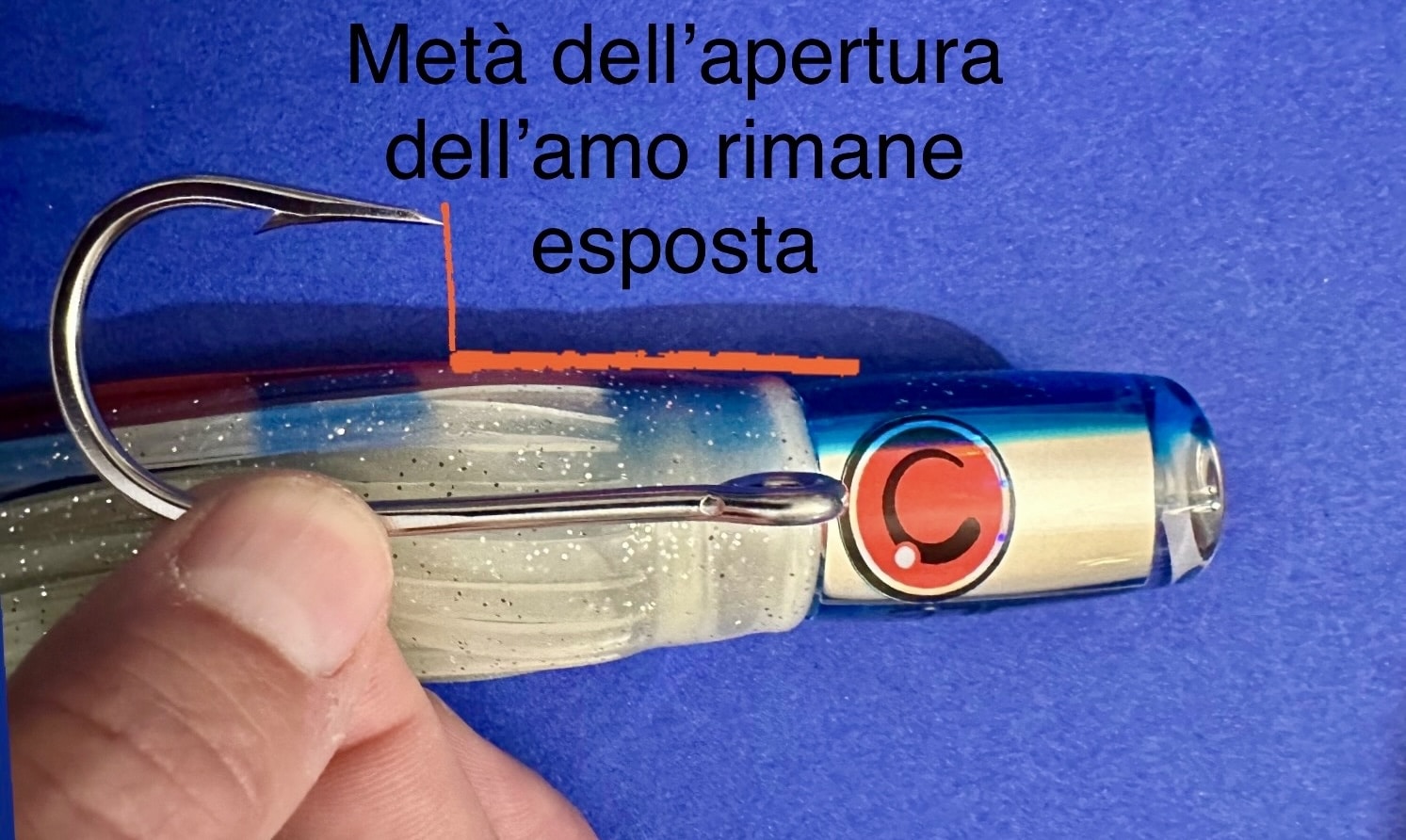
However, we must also find the right compromises in this case because the smaller the hook, the less it disrupts the action of the bait. So if we exaggerate with the size of the hook, strikes may decrease. Therefore, we can overcome this by using hooks with a smaller diameter, hence lighter, such as the 7691SS or the 7732SS models, which make it possible to use larger hooks, as required by the baits, without affecting the action of the baits too much.
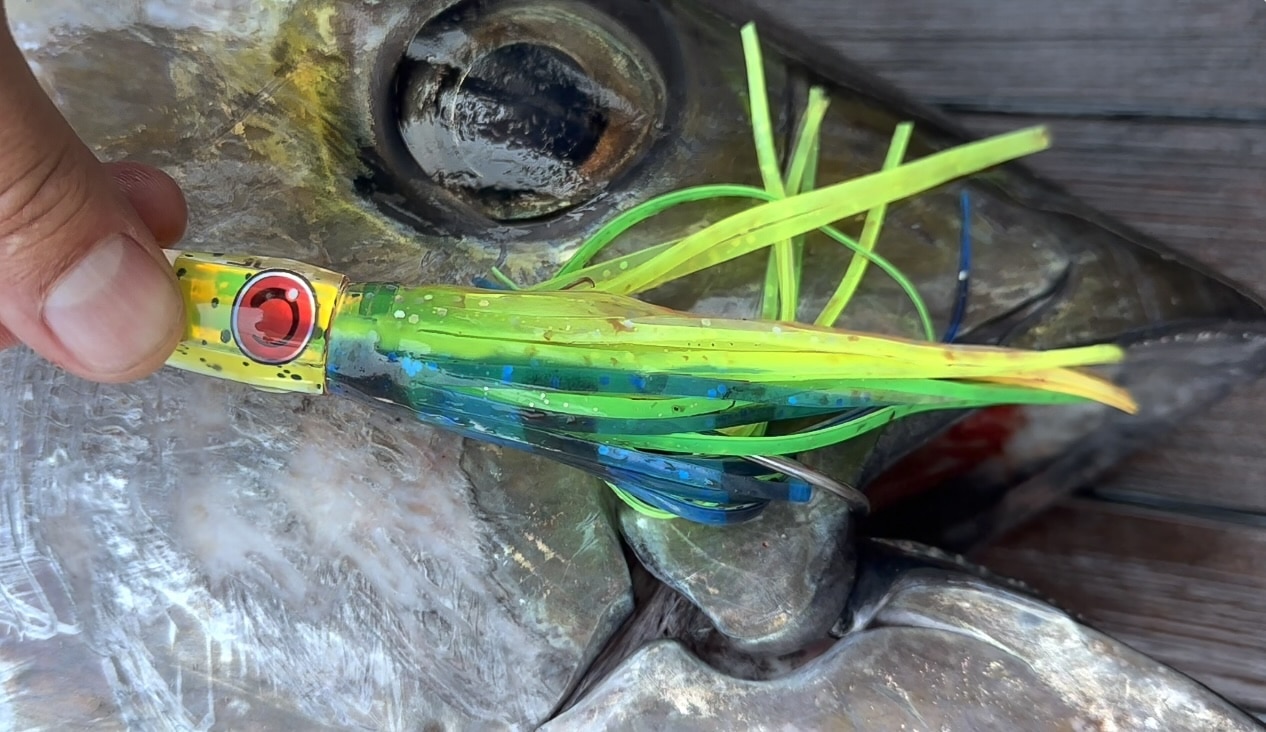
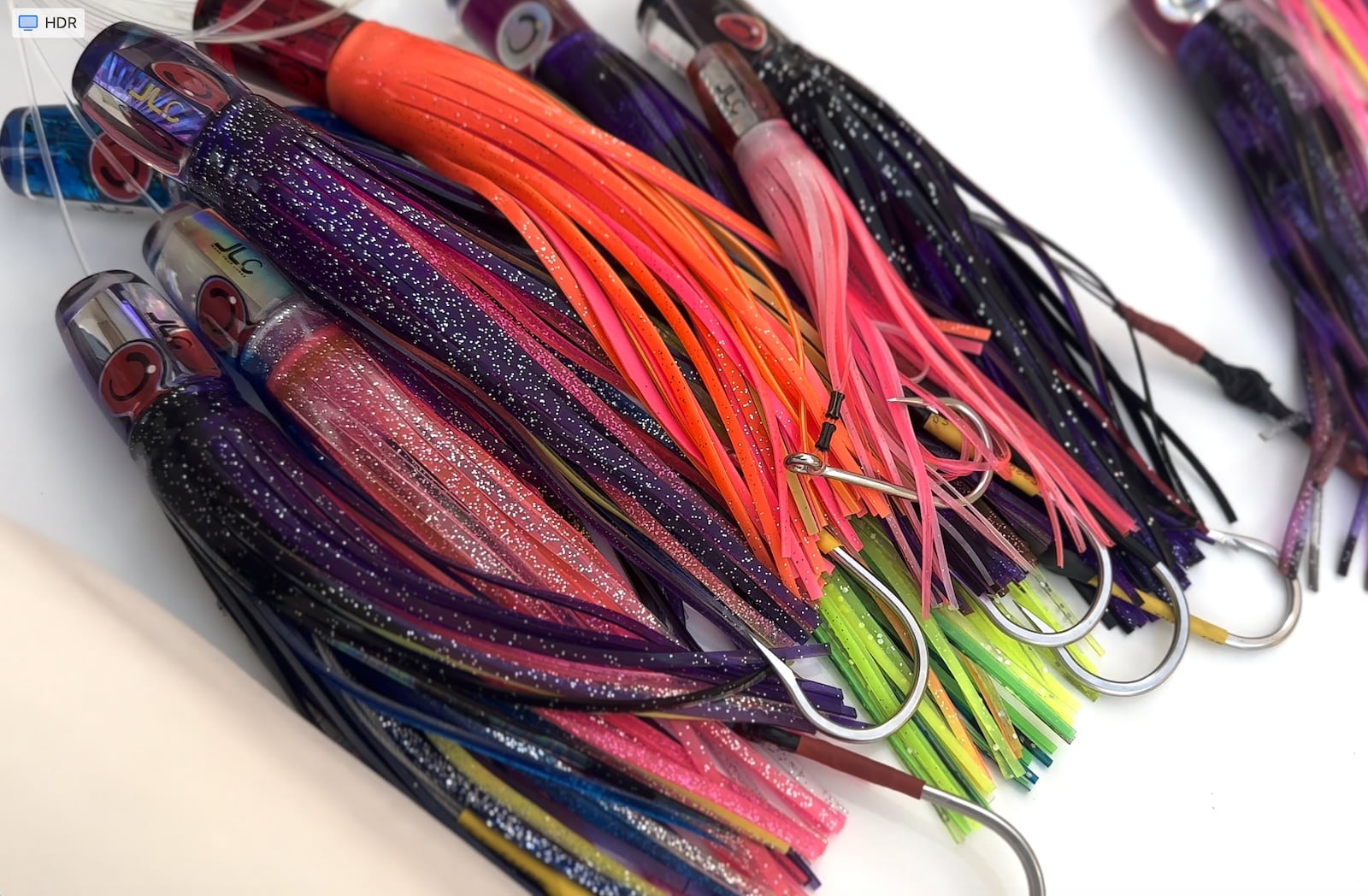
Unfortunately, sometimes slightly disproportionate sizes are necessary for small baits we want to use in offshore trolling because they could still be attacked by very large fish. The large sizes of the hook are often a necessary choice to bypass the large jawbones of the fish and thus achieve secure hook sets.
The post Offshore Trolling: the guide with tricks and tips for beginners and experts appeared first on Yachting News.
]]>The post Release Boatworks introduces the new 43 Gameboat: an evolution of performance and style in deep-sea fishing appeared first on Yachting News.
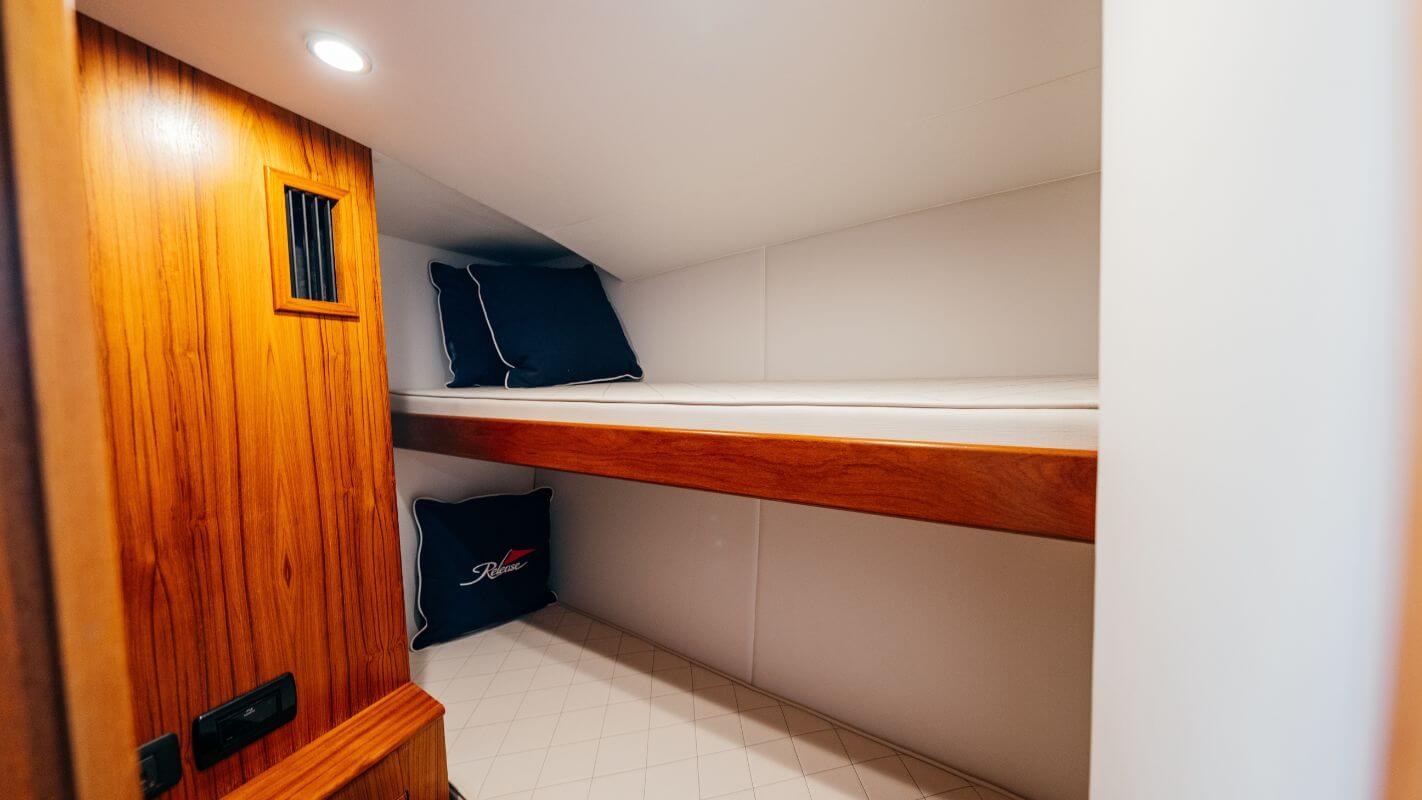
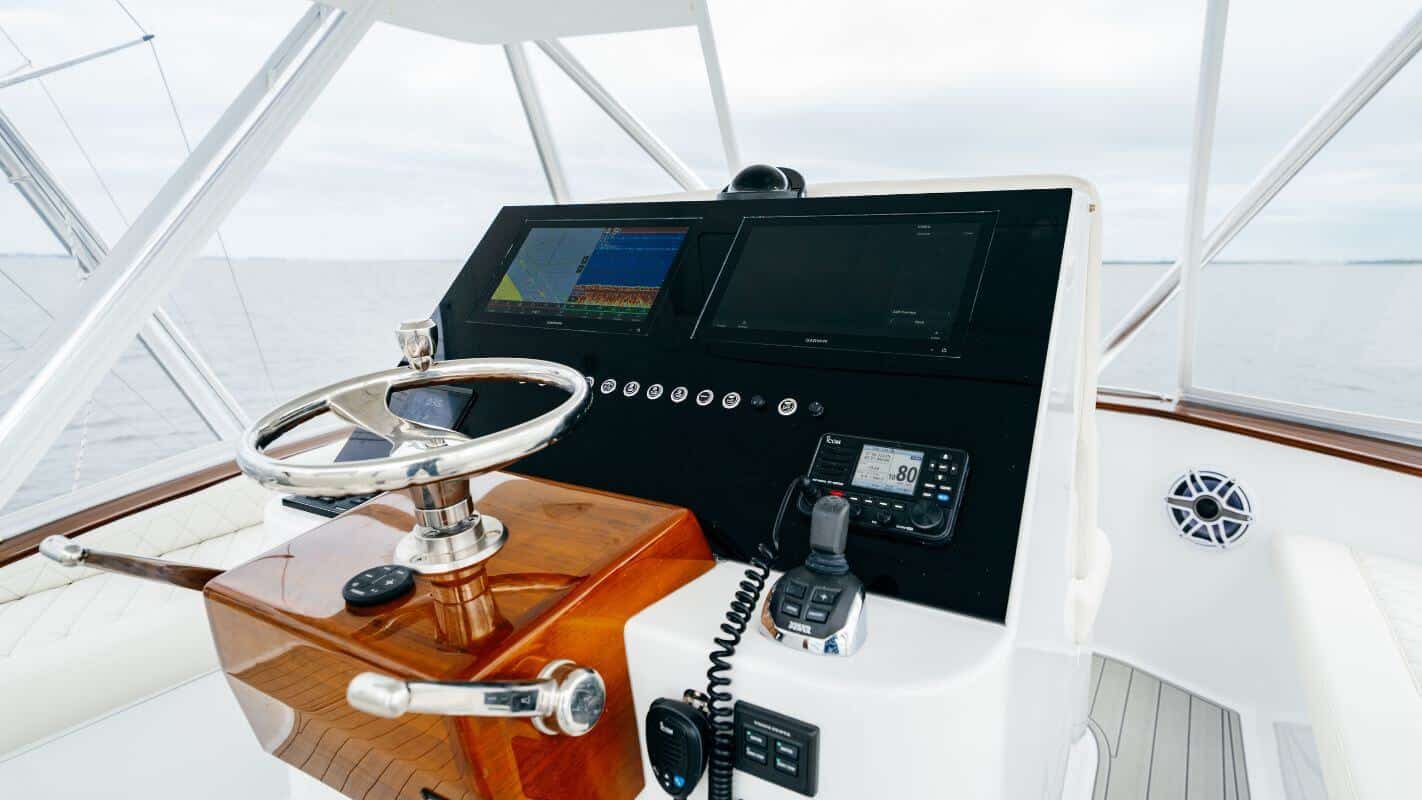
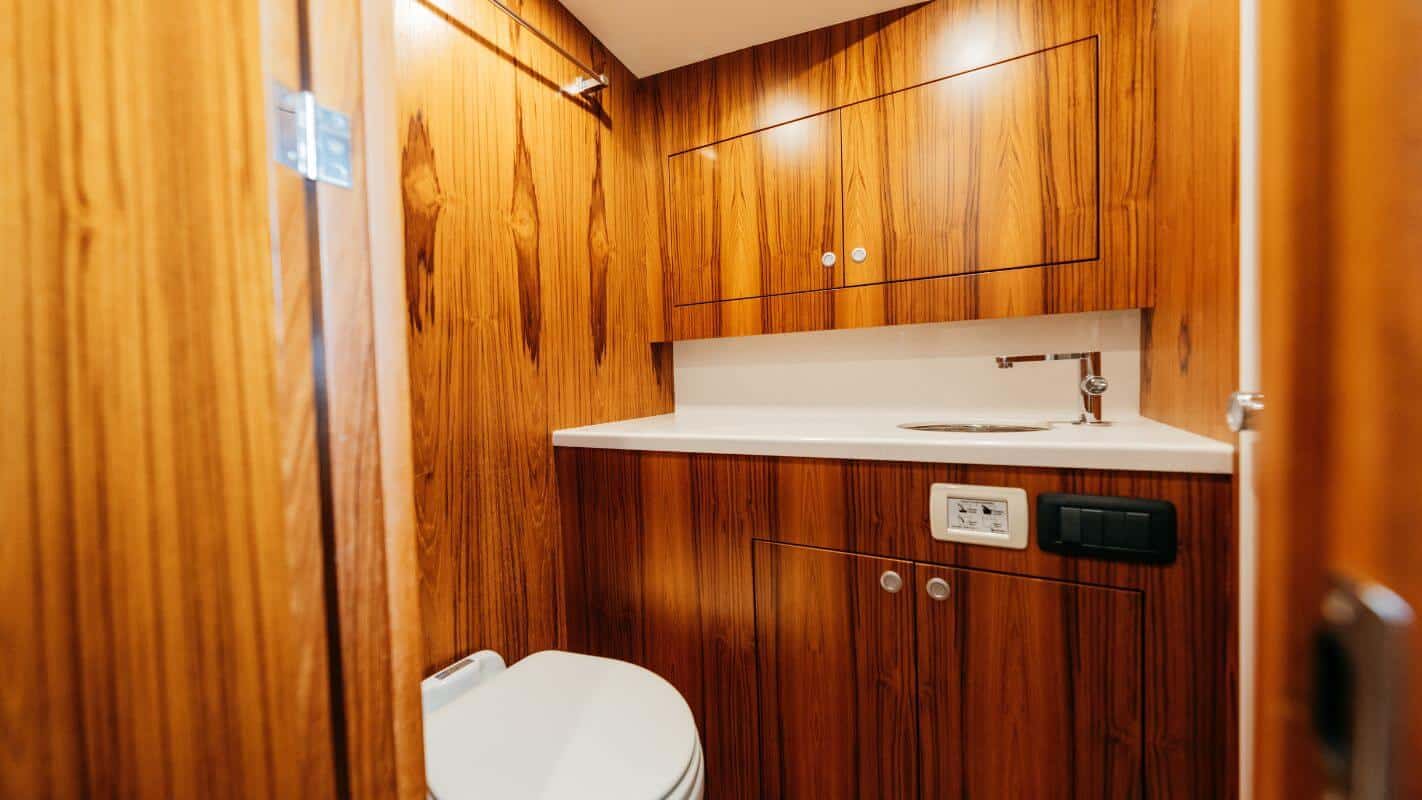
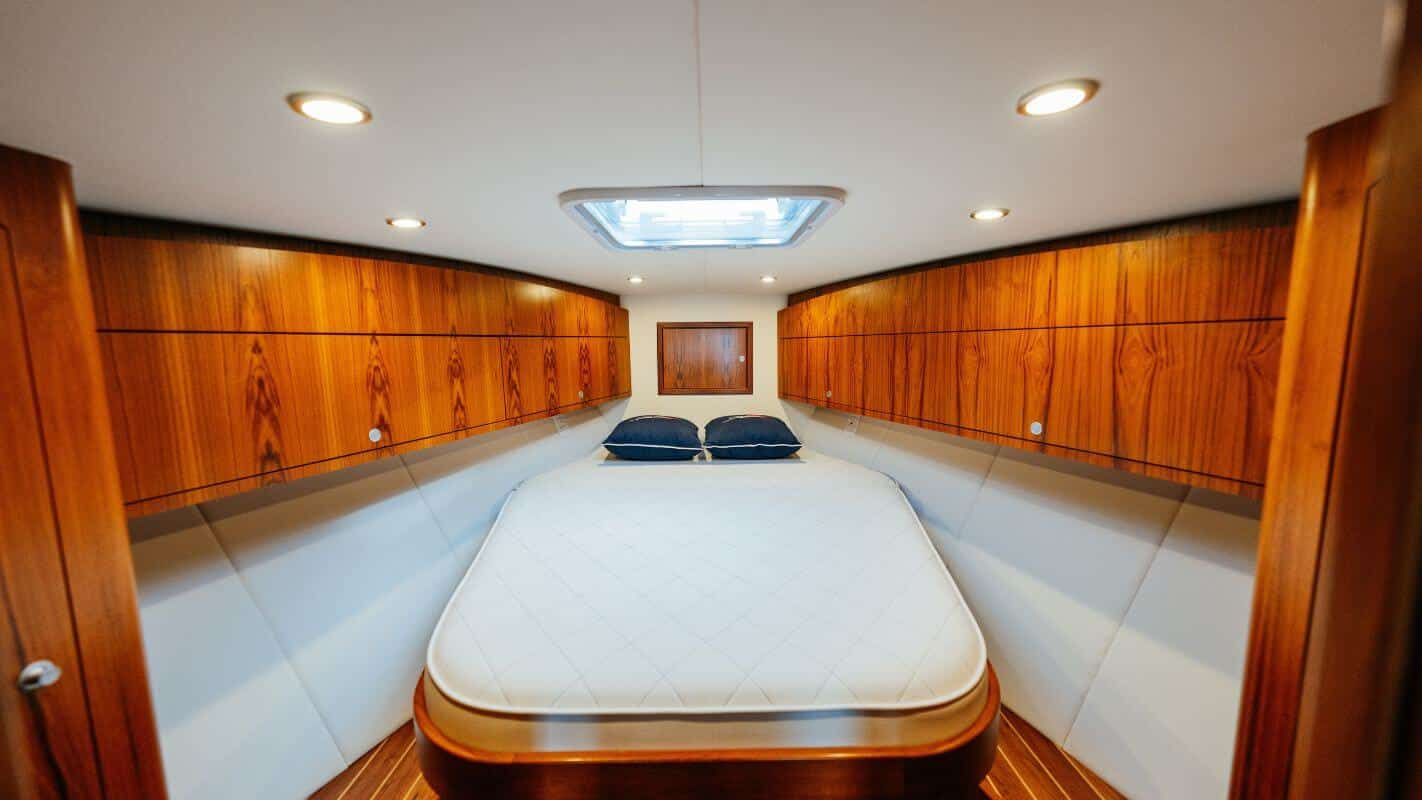
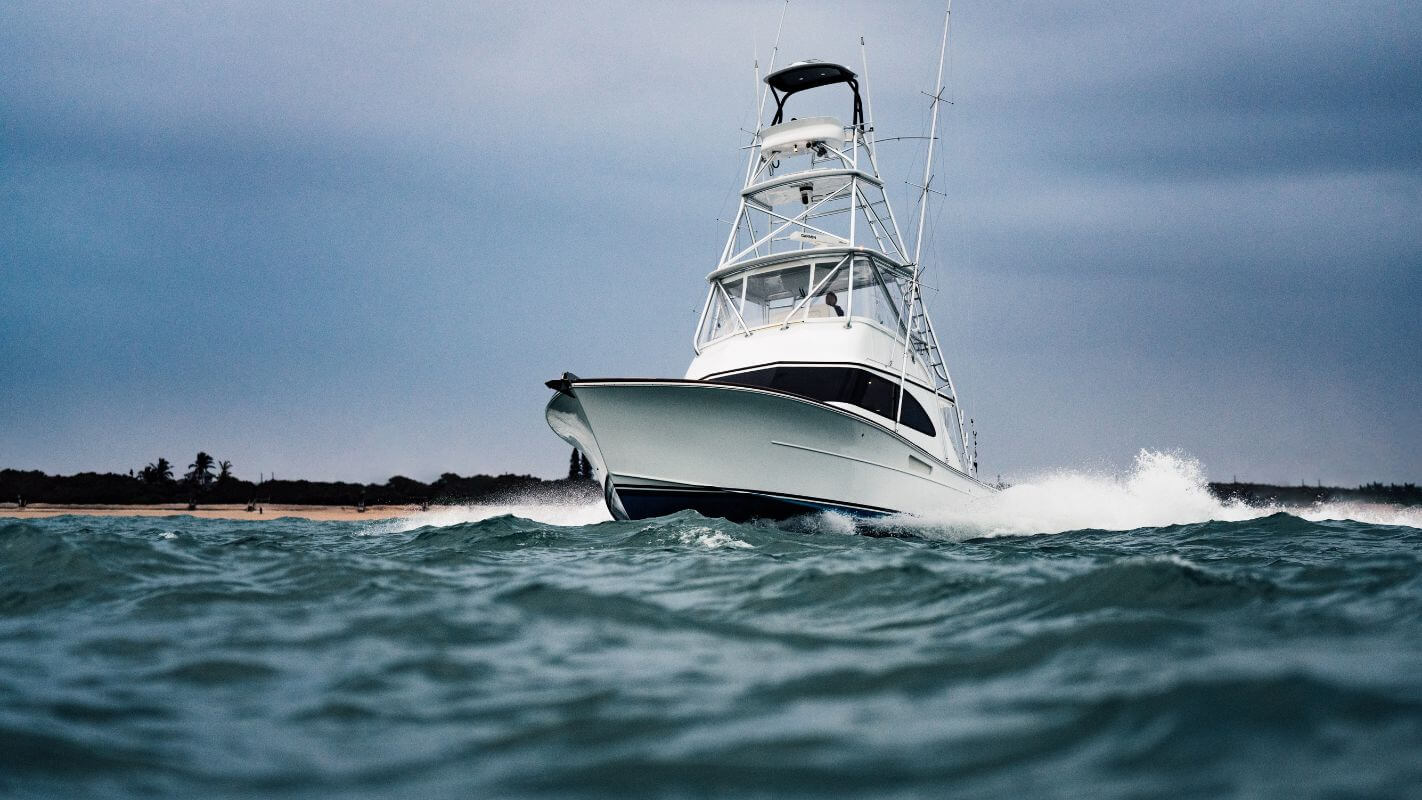
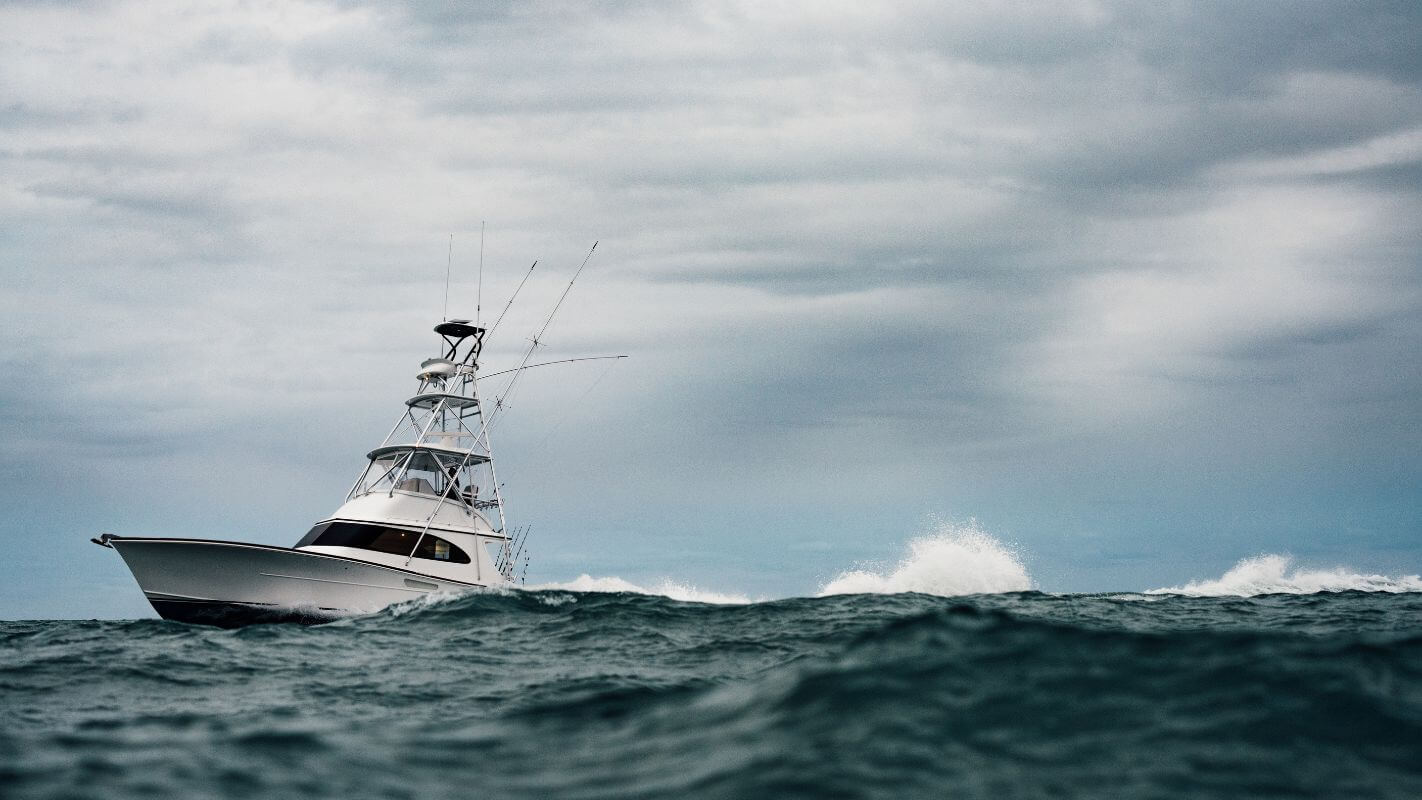
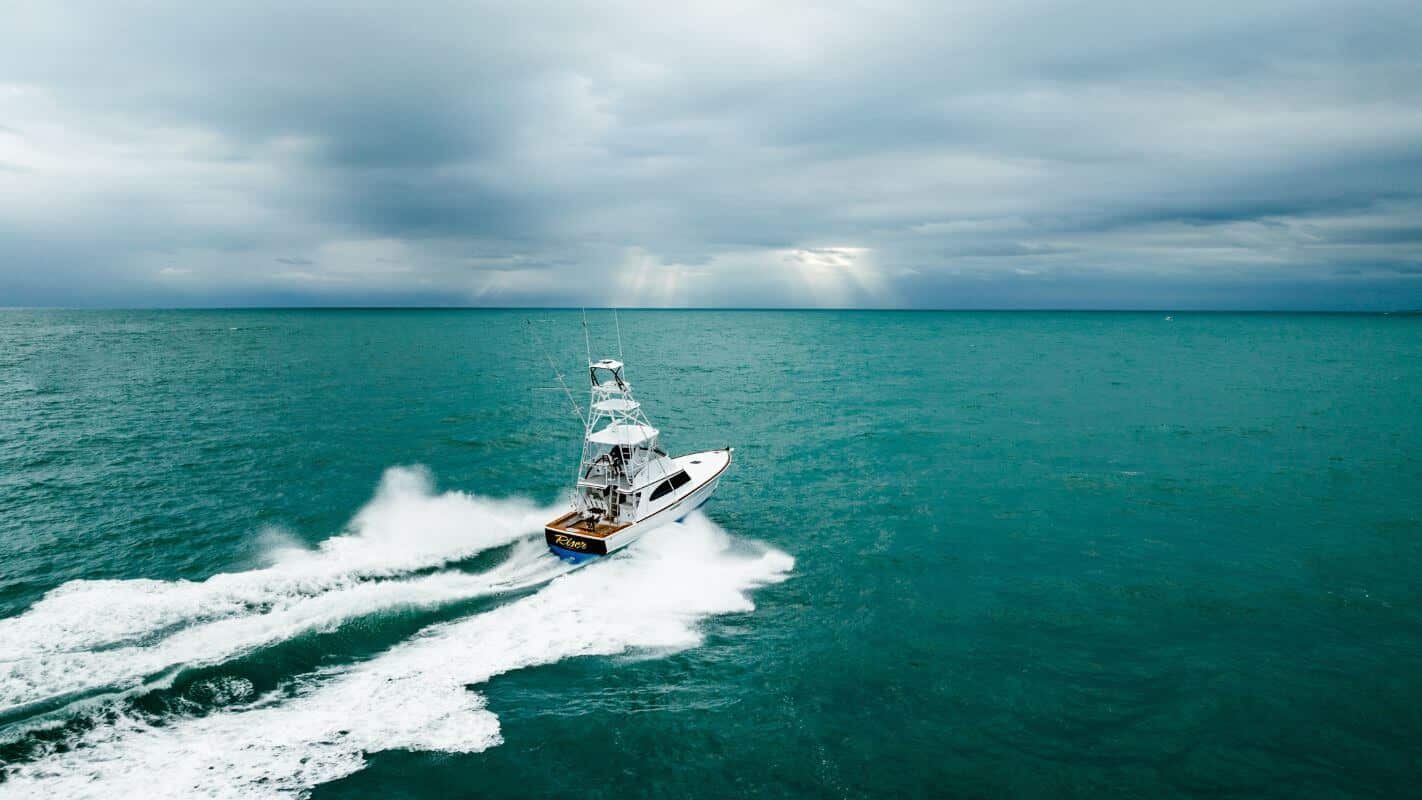
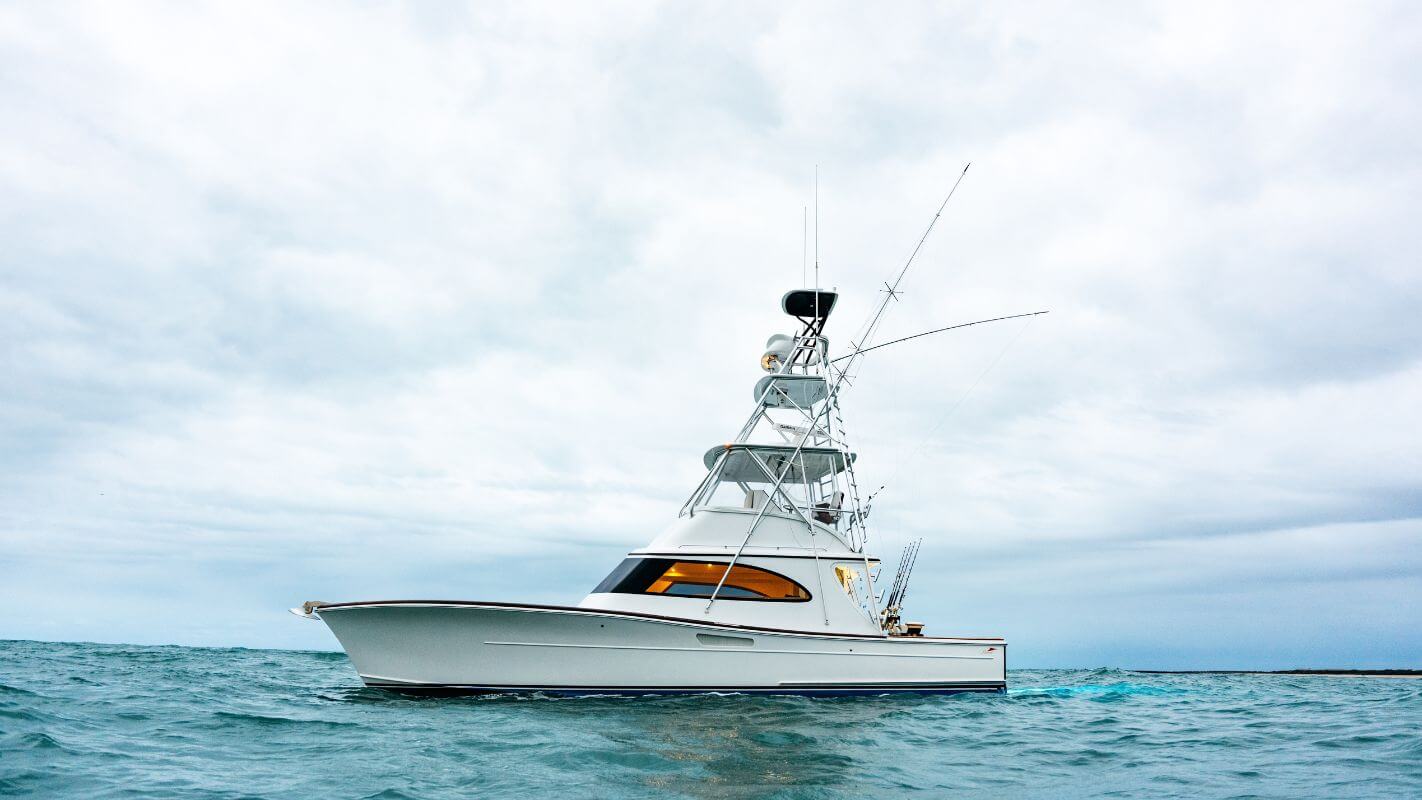
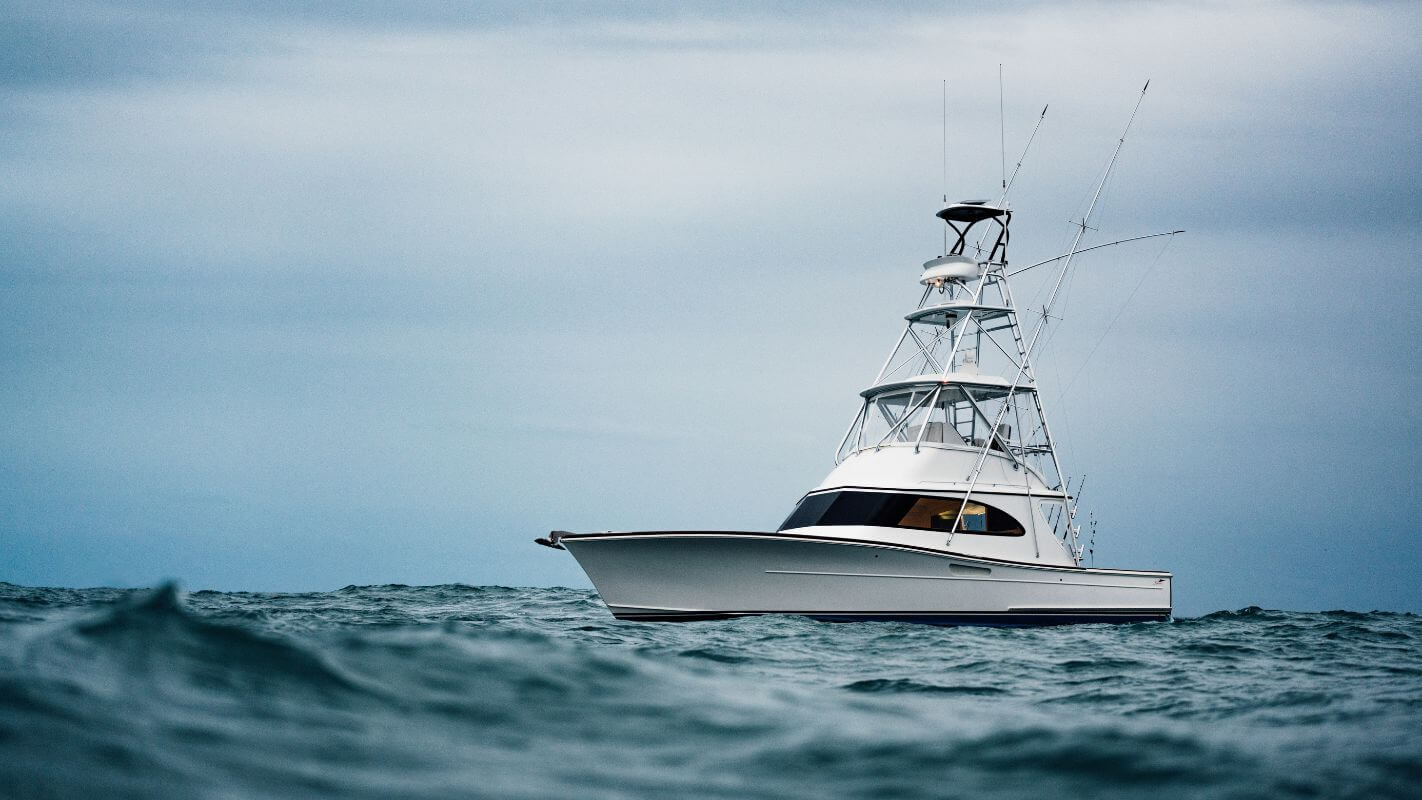
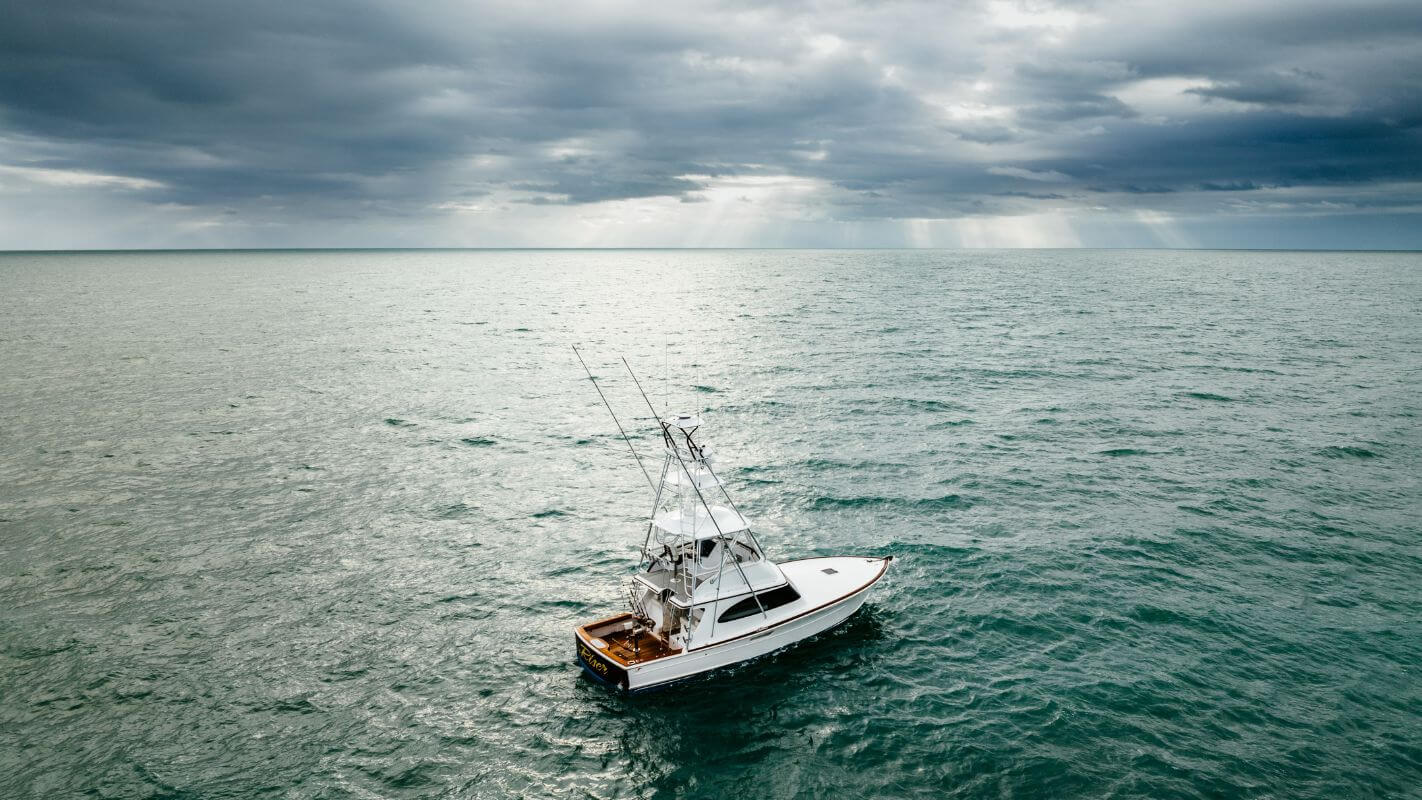
]]>The new flagship from Release Boatworks is called the Gameboat 43, merging the classic design of the exceptional Merritt 43 – a boat with timeless fame and iconic charm – with modern technology and state-of-the-art materials designed to maximize strength and optimize performance at sea.
The hull, constructed with modified epoxy resin, was built using vacuum infusion technique, employing Airex foam cores and hybrid Eglass fiberglass laminates. This combination not only maximizes structural strength but also minimizes weight, ensuring agile and responsive navigation.
The interior of the hull is protected by an isophthalic gelcoat topcoat, highly resistant to corrosion and weathering. On the exterior, the high-performance NPG isophthalic gelcoat provides gloss, flexibility, and weather resistance, keeping the boat in optimal conditions even in adverse circumstances.
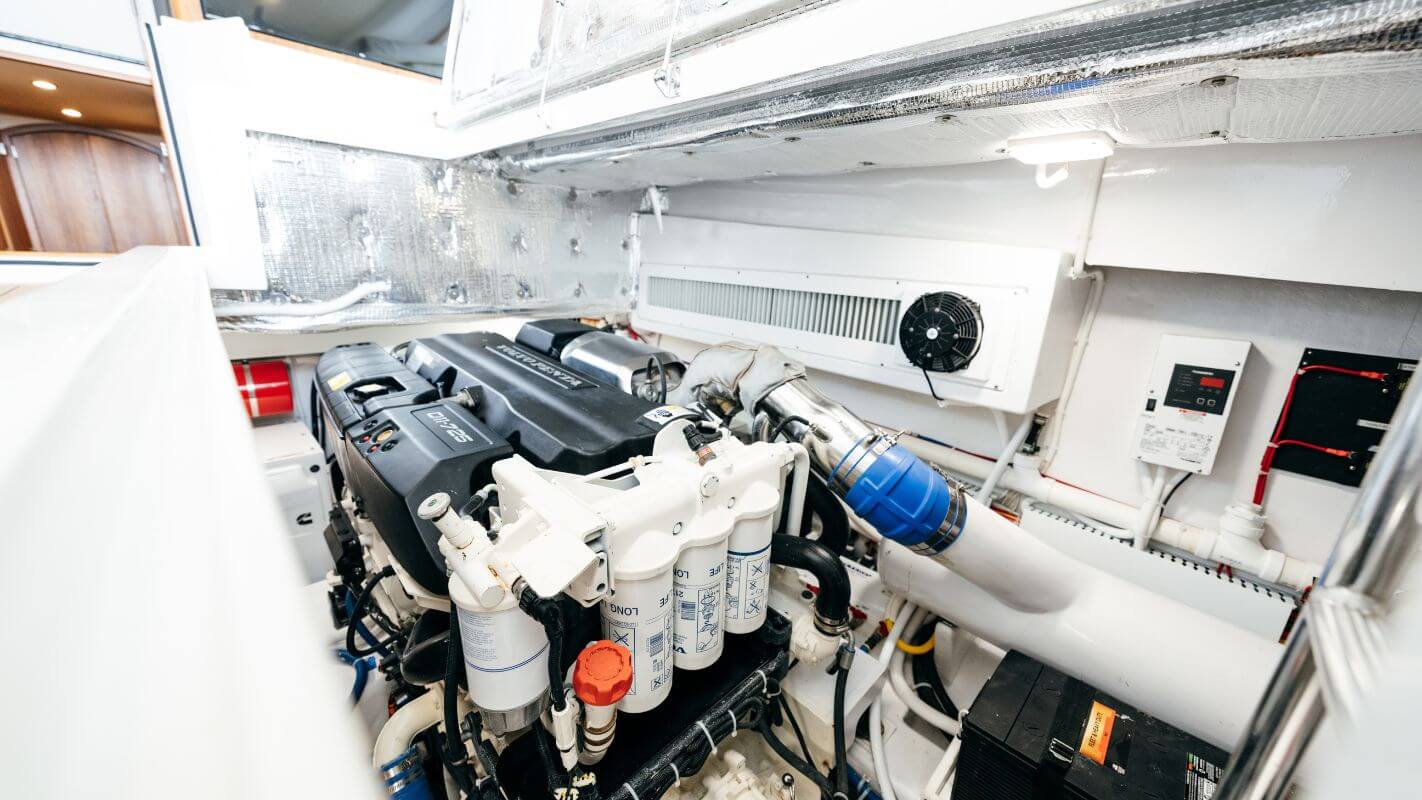
Powered by two standard Cummins QSB6.7 550HP diesel engines, the 43 Gameboat can reach a top speed of 35 knots and a cruising speed of 30. Customizable options include 600-horsepower Cummins QSC and Volvo Penta D-8 engines, an Omni sonar, a Seakeeper 6 stabilizer, and various tower options.
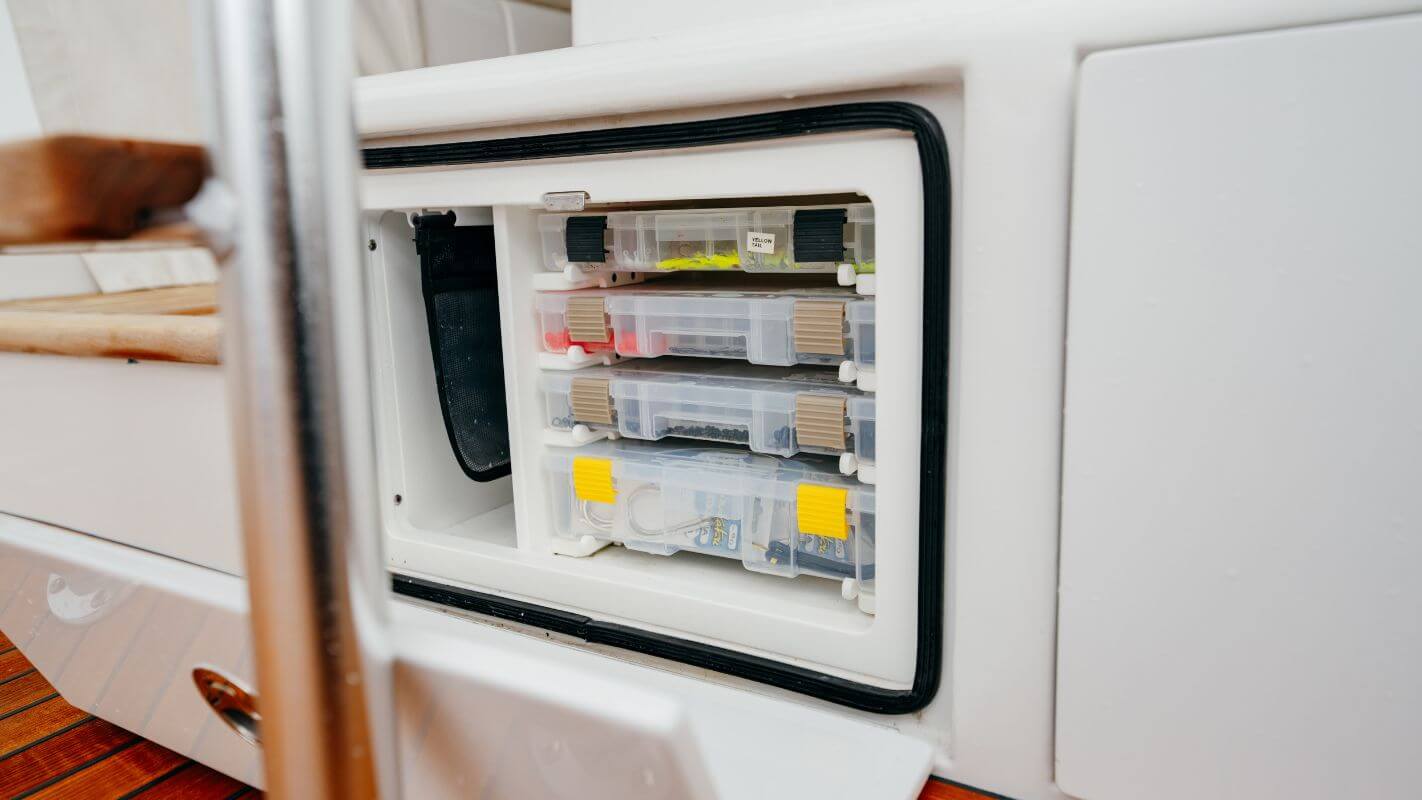
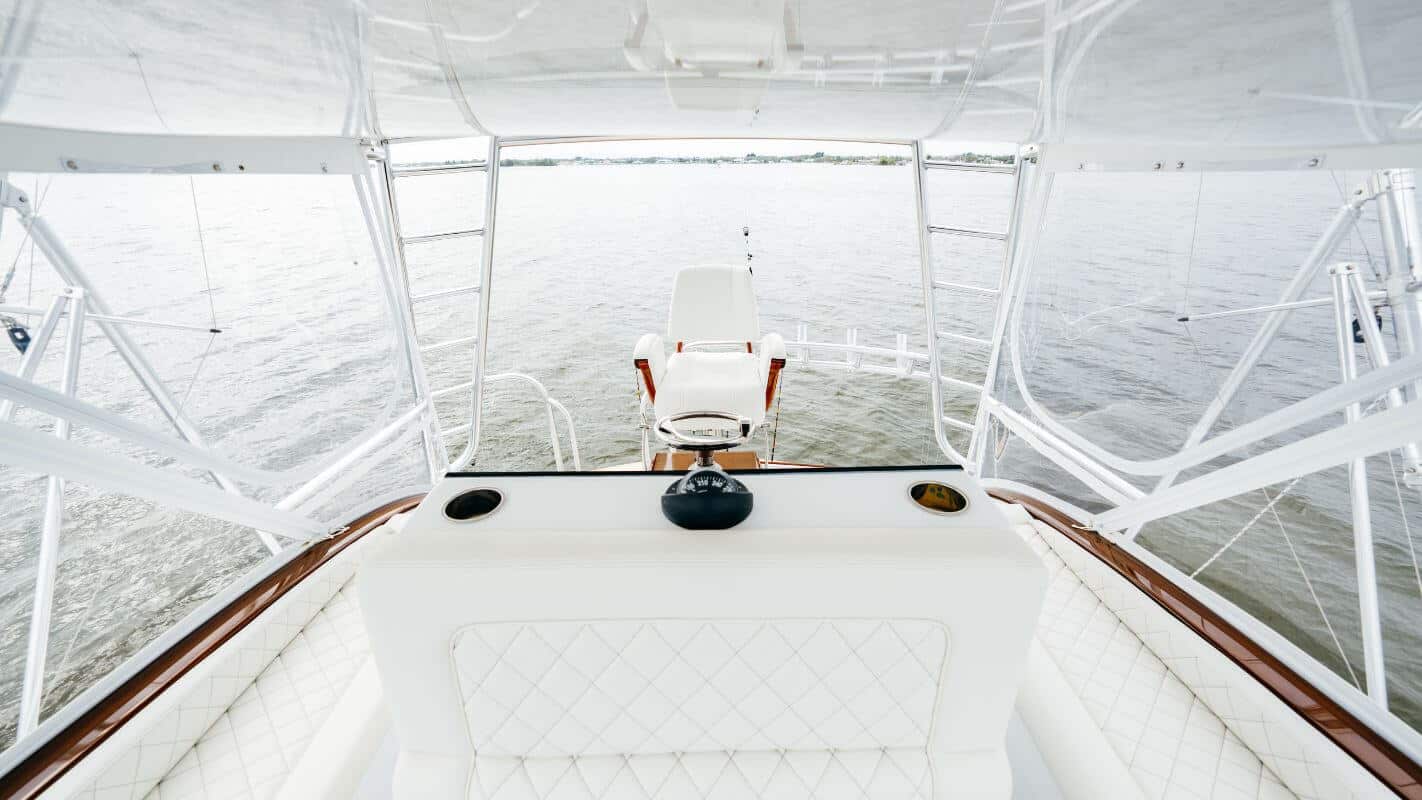
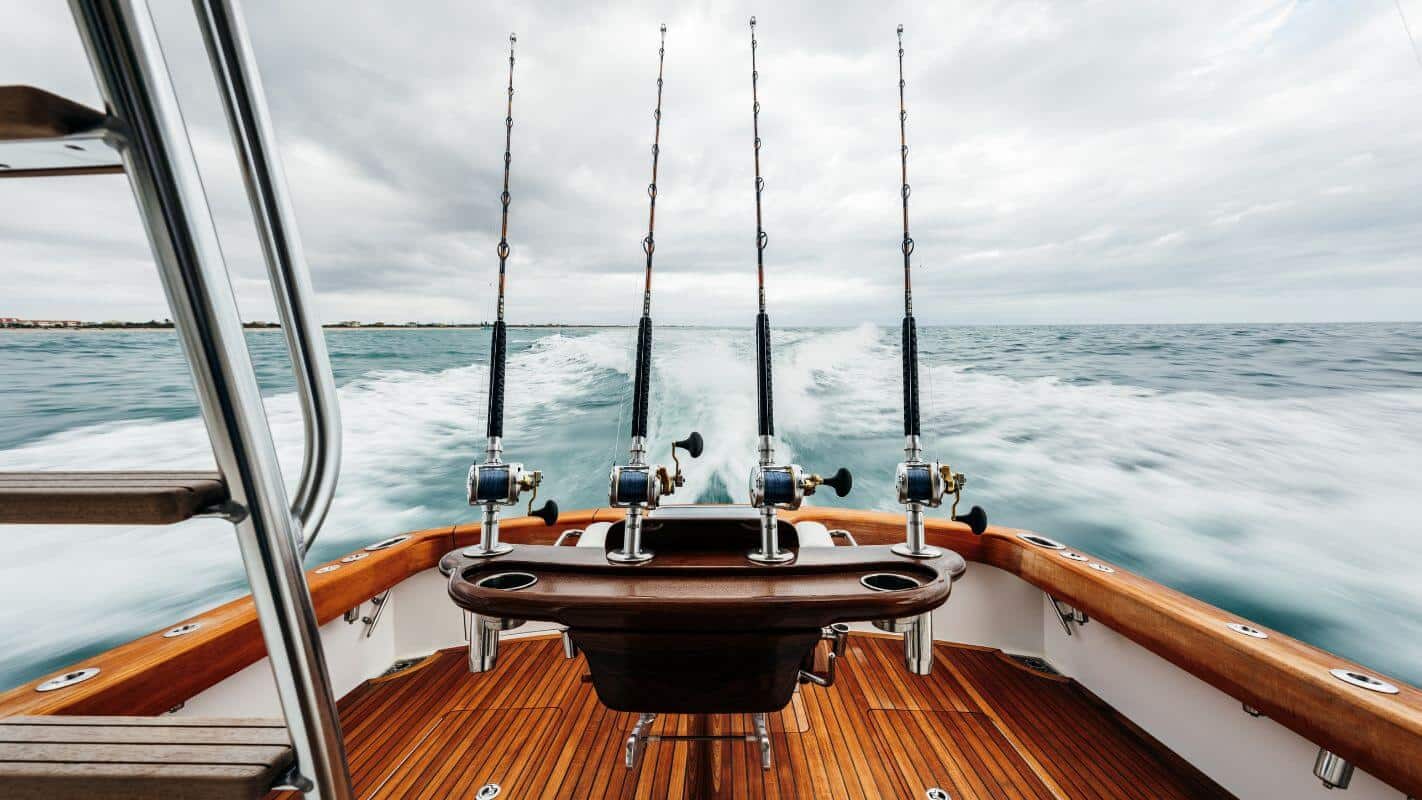
Of course, the boat is equipped for fishing, featuring a rich standard equipment set including a spacious 140-square-foot cockpit, electronic controls at the helm, assisted hydraulic steering, an 11.5 kW Onan generator, and much more.
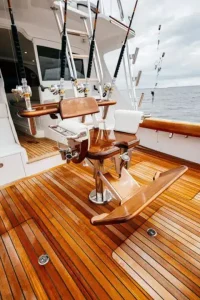 With the 43 Gameboat, Release Boatworks aims to continue its commitment to building custom boats that embody timeless beauty and the functionality of maneuverability, spaciousness, and comfort that customers seek and appreciate.
“It’s a fishing boat suitable for families,” said Jim Turner, director of Release Boatworks. The 43 Gameboat combines a classic maritime design with luxurious interiors and a cockpit ideal for open-sea adventures.
The Release Boatworks 43 Gameboat merges the elegance of classic designs with modern technology and high-performance, establishing itself as one of the most coveted fishing platforms in the market. Available in Walkaround, Flybridge Walkaround and Express versions, the 43 Gameboat promises an unparalleled fishing experience.
The post Release Boatworks introduces the new 43 Gameboat: an evolution of performance and style in deep-sea fishing appeared first on Yachting News.
]]>The post Deep sea trolling in the Mediterranean appeared first on Yachting News.
]]>Deep sea trolling: preys, areas and periods
Deep sea trolling is an offshore fishing technique practiced all over the world, which targets large pelagic predators and which, even in the Mediterranean, can give great excitement to anglers who enthusiastically embrace it.
In many places on the planet, especially where this technique is practiced in ocean waters, this discipline is often referenced when speaking of Big Game Fishing.
It is the type of fishing experienced, and narrated in his novels, by ‘Papa’ Hemingway, who so thrilled and continues to thrill sea lovers like us, recounting his adventures in search of his big marlin, navigating the waters of the Gulf Stream.
It is a type of fast trolling (in the Mediterranean it is practiced on average between 6 and 8 knots), mostly done with artificial baits, or combinations of artificial and natural baits (sometimes only with natural baits rigged in a particular way), which is often practised on deep waters and most often at a considerable distance from the coast.
Prey, depths and distances from the coast
As in all fishing techniques, even in the deep sea trolling the bait is dropped where the fish we are looking for are thought to be, so what makes us choose the bathymetric, and therefore the relative distance from the coast for our fishing action, are precisely the prey typical of this type of trolling.
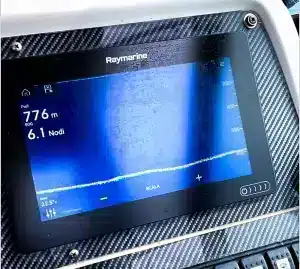
The bathymetrics for deep sea fishing in the Mediterranean range from 100 to 2000 metres, and the average speed is between 6 and 8 knots.
With the warming of our sea, the landscape of target prey, like the best time to fish them, is changing.
Deep sea trolling is very much linked to the warming of the surface water, the photoperiod and, in general, to the availability of food and the food chain that is created in the higher waters at certain times of the year.
Generally speaking, the best times are late spring, summer and, in recent years, great results are also achieved in the first half of autumn.
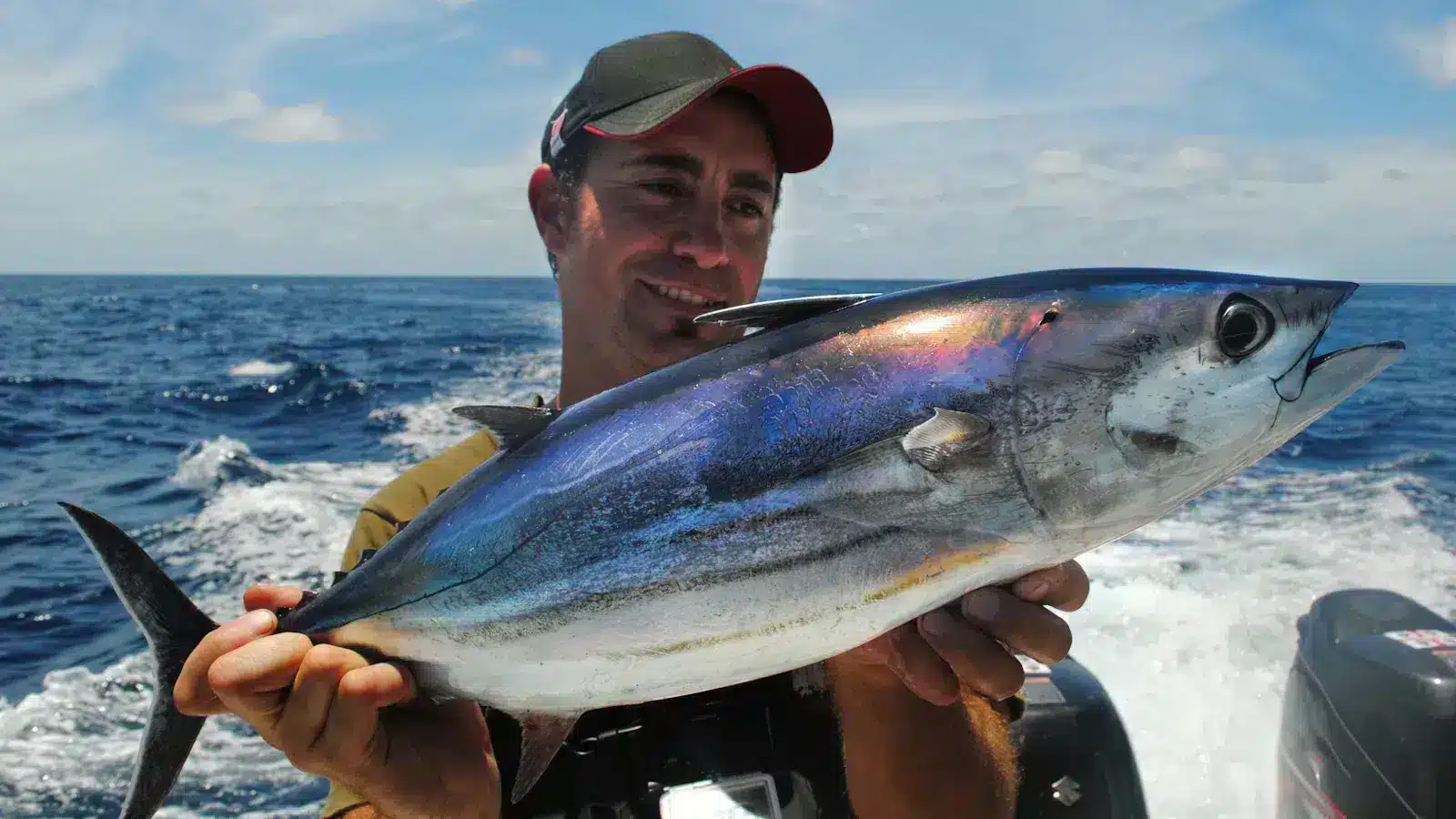
The iconic prey of deep sea trolling is surely the albacore, a fish that also lives at great depths but which, precisely, can be caught by deep sea trolling at certain times of the year, on the surface.
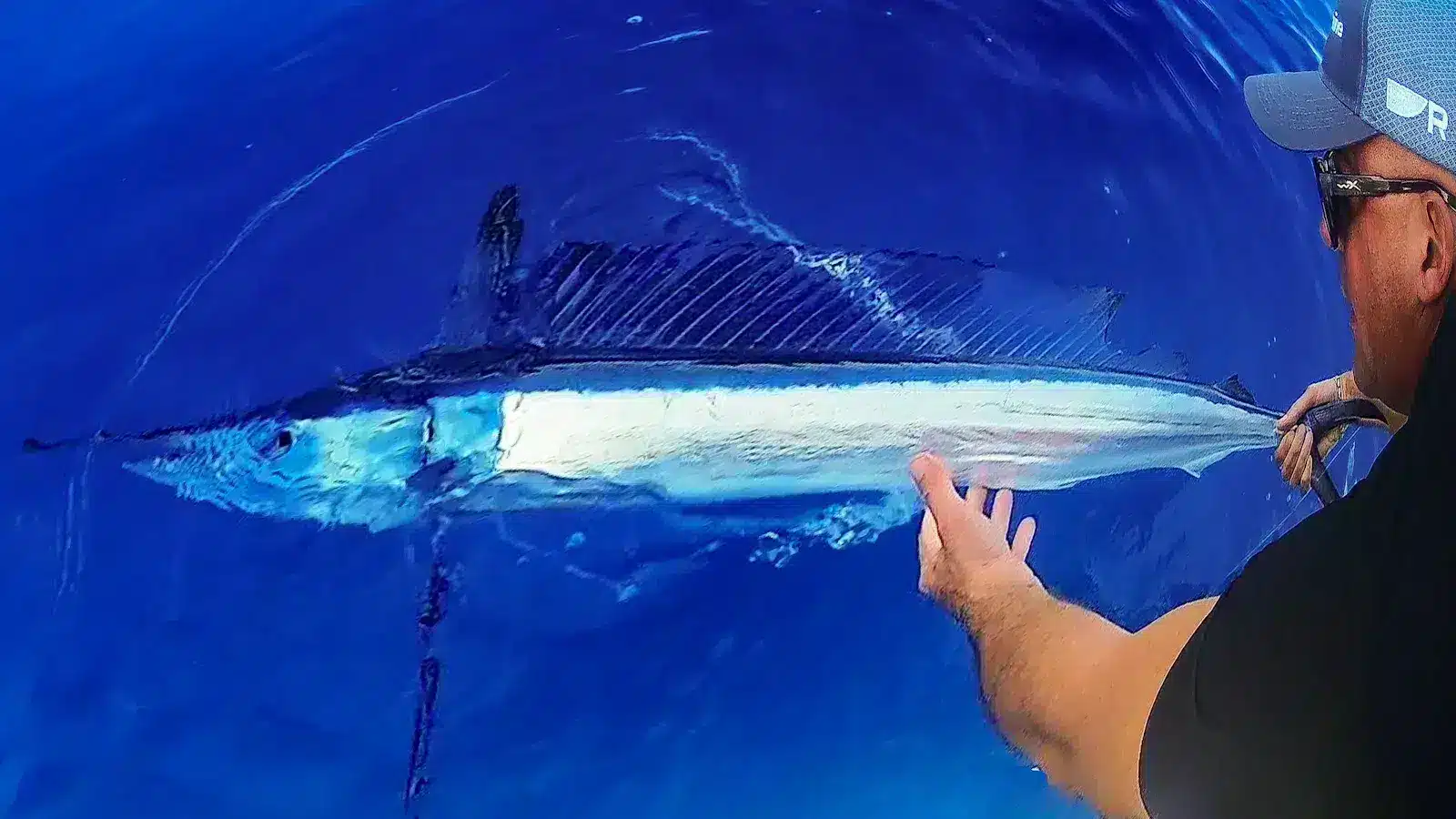
Other sought-after fish are the rostrata, the most common prey being the imperial garfish (Tetrapturus belone). This predator is increasingly frequent in many areas but is, however, to be caught with extreme restraint. This is an endemic pelagic of the Mediterranean, a close relative of the marlin. Congeners, very similar to our imperial garfish but of Atlantic origin, can also occasionally occur in our waters, as there are also, albeit rare, cases of white marlin being caught.
Another sought-after rostrum is the swordfish, which, although a frequenter of the deep during the day, a fish that swims towards the shallowest parts of the water column especially at night, on certain occasions and periods is a predator that attacks deep sea trolling lures during daylight hours (it should be pointed out that there are specific approaches to swordfish trolling that are practised at night).
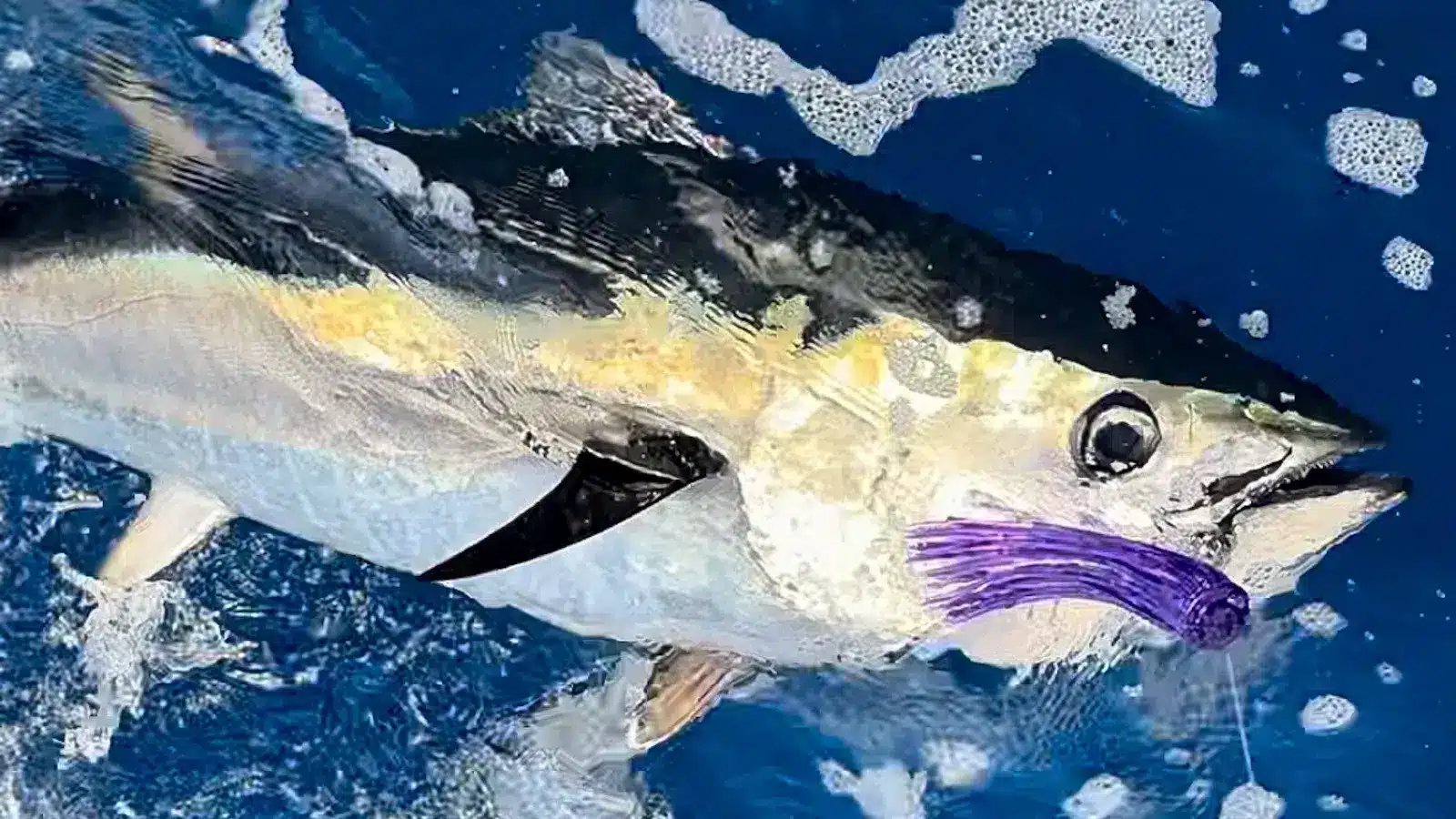
Another fish much loved by the deep sea troller is bluefin tuna: a species that frequently attacks trolling lures, especially if they are young specimens (school tuna frequenting the deep sea), which in most of the Tyrrhenian Sea have an average size of between 15 and 40 kg (in the Adriatic, the average size of tuna in deep-sea trolling can be higher).
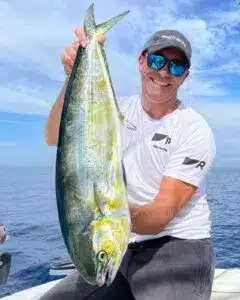
Another target prey is the dolphinfish: catches of large specimens of this species have become increasingly frequent in recent years.
Probably also as a result of the warming of the sea, the skipjack tuna, a fish that was already being caught in some areas in the past, is much more frequent in our waters, only to disappear and return with some frequency in recent years. It is a cosmopolitan fish, found in many temperate and warm seas that recently, even in Italy, can often provide entertaining fights, especially if caught with light equipment.
Bathymetrics
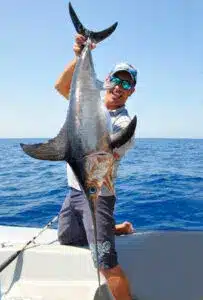
The bathymetries of the deep sea trolling are closely linked to the habits of the target fish you are looking for (not all target fish in the deep sea frequent the same areas at the same time), however, in general, in many areas of Italy, the most profitable depths are between 500 and 2000 m, especially if we are talking about albacore, skipjack or bluefin tuna. But the situation is different if we are looking for imperial garfish, in fact in many areas these fish also frequent bathymetries between 70 and 500 m, especially in summer and early autumn.
This is especially the case if these bathymetries are at the edge of submerged canyons, or near fast ascents from 500 m up to 100. In these particular spots, at certain times we can also find the other target fish of the deep sea.
So, before rigidly deciding on fishing areas based on bathymetrics, it is important to understand what the best areas might be, also making reference to the area you are fishing in, the habits of the fish in that area of the sea, and also bearing in mind the time of year.
Deep sea trolling: the best areas
Generally speaking, in order to broadly understand the best areas in which to fish, it is important to study the nautical charts, i.e. the cartography of the area you want to explore, paying close attention to the bathymetric dips characterized by the steepest gradients.

In fact, it is the sudden jumps in the seabed, i.e. steep drops, shoals rising for many hundreds of metres, submerged canyons, that can make an area particularly profitable. This happens because the strong currents coming in from the open sea, once they collide with a sudden upwelling of the seabed, only push the deeper, nutrient-rich waters towards the surface (a phenomenon called upwelling). Thus, these phytoplankton- and zooplankton-rich waters, having reached the higher reaches of the water column, trigger an important food chain. Sardines, anchovies, mackerel, flying fish, and many other species (also juvenile stages of larger predators), being plantophagous, i.e. fish that feed mainly on zooplankton, catalyze in these areas, thus attracting here pelagic predators that feed on these small fish.
The food chain that is triggered draws all the fish that are the targets of your fishing trip to these areas, so it is in these stretches of sea that you will be practising deep sea trolling.
This discipline, in order to be practiced at its best, must follow some important rules, linked to the type of bait, the number of rods spun in the water and their set-up, as well as the trolling location itself. Very important aspects that we will discuss in future articles, again here on Yachtingnews Fishing.
The post Deep sea trolling in the Mediterranean appeared first on Yachting News.
]]>The post Soft plastic lures for vertical fishing: let’s talk about shads appeared first on Yachting News.
]]>For about 9 or 10 years now, I have been talking and writing about vertical fishing with soft plastic lures and, even today, the most frequent question I am asked is: how do you choose your bait?
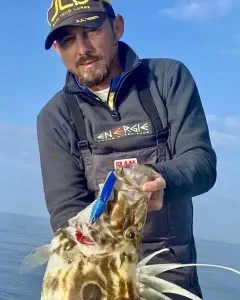
Well, to be honest, the first thing I would say is that you should not save money when buying bait, perhaps buying ugly copies of well-known and efficient baits, just to save a few euros.
If a bait is more expensive, it is because a lot of work has gone into it, the choice of design and material used have taken many hours of effort, and it has been thoroughly tested over a long period before being put on the market. Therefore, its validity is more than established.
I often find
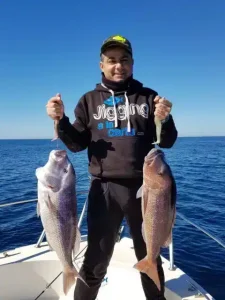
myself talking to owners of important boats, who go out fishing with very expensive rods, but want to save money on plastic lures. What I would like to make everyone think about, regardless of whether they are fishing from a 3m dinghy or a 50-foot fisherman, is that the bait, i.e. the object that will induce the predator to attack, is the most important thing in the fishing system. It is only after the bait has been set that rods, reels, etc. etc. come into play.
So, as a first rule, rely on top-quality baits and on companies that deal exclusively with the development of this kind of product.
As for the models to be preferred, a separate discourse should be made on what fish we want to target, and what depths to fish.
In this article, we are going to talk about the most common vertical fishing, i.e. fishing between 20 and 120 metres on average, and aimed at the major predators in our waters, starting with benthic fish such as brown groupers, or smaller groupers, snappers, bream, crenellated snappers, and ending with fish that swim higher off the bottom, such as amberjacks, bonitos, bluefin tuna, little tunnies, etc.
Soft plastic lures: jig heads and shads
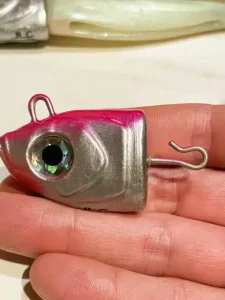
Regarding the models that I find most profitable, with a transversal effectiveness on several target species, I would recommend the use of shad and cuttlefish and squid imitations (but we will talk about the latter in the next article). Focusing our attention now on shads (i.e. jig heads of various weights, combined with classic -paddle tail- soft lures), we can say that, using them in sizes between 15 and 21 cm (considering the length of the mounted bait), we will be able to cover many of our needs.
As far as the weight of the jig head is concerned, and remembering that you fish better the more you can stay on the vertical of the bait, we say that we will choose the weight according to fishing depth and current.
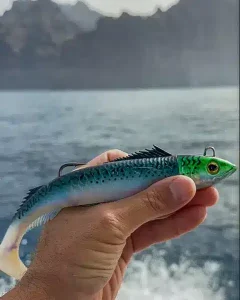
Assuming an ideal day with little current and little drift (which we may be able to counter with small motor strokes every now and then), without going into the matter of fishing with an electric motor and controlled drift (something we will perhaps discuss on another occasion), we can say that on depths between 20 and 30 m, we will be able to fish well with weights ranging from 70 to 120 g.
Beyond these depths,
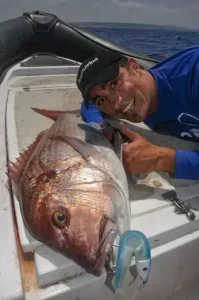
let’s say 30-50m, we will be able to fish with weights between 120 and 150g; between 50 and 100m depths, we will instead be able to cope with a bit of everything with jig heads between 150 and 200g. However, for more extreme situations, there are also baits on the market with heads up to 300 g.
As far as colour is concerned, starting from the fact that in depth it is the shape, and the vibrations emitted by the bait, that counts more than the colour, however, we can say that the choice can fall either on very realistic colours – in this case I prefer colours that imitate the livery of sardine or mackerel – or opt for more fancy colours. In this case, there are many winning options and colour combinations such as pink/pearl, silver/pearl, khaki/gold, khaki/pink or white/blue, just to give some examples.
The post Soft plastic lures for vertical fishing: let’s talk about shads appeared first on Yachting News.
]]>The post Vertical fishing with soft plastic lures: which rod to choose? appeared first on Yachting News.
]]>Which rod 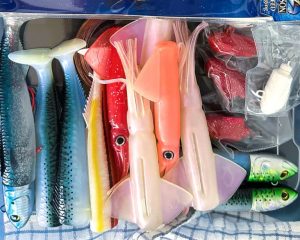 to choose when approaching to vertical fishing with soft plastic lures?
This is the first question that a beginner justifiably raises and which most of the time he or she cannot answer, since opinions are often conflicting and sometimes the terminology used is incorrect.
The first thing I want to say is that whether you are a beginner or an experienced angler, vertical fishing with soft plastic lures can be practiced just as well with a fixed reel rod as with a rod with a bait casting handle (with the typical trigger at the bottom of the reel plate) and then rotating reel.
So, let’s dispel the myth that some, perhaps for commercial reasons, have created, namely, that fishing with a rotating rod gives better results and more efficient fishing. This is not true! Therefore, choose your rods according to your needs and personal taste.
However, what rod to choose?
Regardless of whether it is from a rotating or a fixed reel, the choice is often confusing since there is also confusion in the nomenclature of the rods.
In fact, some recommend slow jigging rods, some vertical jigging, some light jigging, some slow pitch ones.
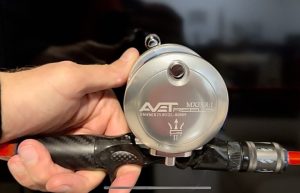 The fact is that these terms are often used in a very generalistic way by rod manufacturers, often trying to make rods that people then only choose based on their own needs after trying them out, even though none are then referred to as rods for vertical fishing with soft plastic lures. In fact, vertical fishing with soft plastic lures is none of the aforementioned techniques, but a technique apart. Slow pitch, slow jigging or vertical jigging are, in fact, disciplines that require specific retrieval methods, to maneuver metal lures, often with particular jerk solutions.
But this does not exactly coincide with the technique we practice with soft plastic lures, which generally involves rather linear retrieves of the artificial lures, such as may be rubber imitations of cephalopods, such as JLC’s famous Xipi or Xoco, or shad and leadhead. These linear retrieves are often animated with speed changes, stop and go, or slow retrieves that are progressively brought up to a sustained speed. At other times, during the retrieve, we can insert light, short jerks(for those who are not familiar with the term jerk: we are talking about the oscillations that we will make with the rod, slightly raising and lowering the line, during the retrieve phase), which can have a more or less intense rhythm, but in any case with a movement which is completely different from jerks that must be impressed to animate metal jigs for vertical jigging or even slow jigging.
In some ways, 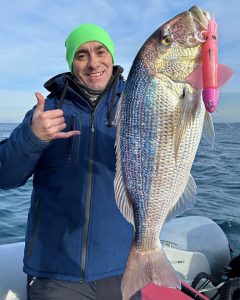 then, rods for soft plastic lures do not have very specialized features, like those designed for very technical, and perhaps even difficult, retrieves.
This is the reason why we often see people practicing this technique even with very different rods, but still succeeding in getting good results.
Lately it seems that some companies have changed the trend, indicating some rods as specific gear for soft plastic lures, but regardless of what is written on the shaft of a rod, whether it is slow jig, slow pitch, vertical jigging, etc., always try, in your choice, to rely on companies that deal with this technique specifically, even better if they produce artificial lures of this type, and that have a good knowledge of how the lures should be maneuvered and which are the most efficient rods. However, if in purchasing you are still in confusion, look for companies that have been manufacturing and offering rods for many years, and therefore know how to pick up on small important technical differences in manufacturing, also leaning on expert consultants.
Is there an ideal rod for soft plastic lures?
Considering the fact that when fishing with soft plastic lures you can use baits with 50 gr heads, as well as 250 gr, you can look for in the subcoastal maybe medium-powered fish, such as bass or skipjack, but fishing also on deeper bottoms, looking for big armor snappers, powerful brown or white groupers, snappers and amberjacks, it seems complicated, if not impossible, to think that one rod can cover all our needs.
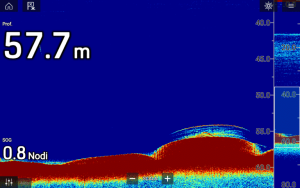 However, in general, if you are buying your first rod, opt for gear that can handle baits averaging 90 to 180 gr, perhaps even on good depths (on average you will be fishing between 25 and 90 m, with some exceptions on shallower bottoms and some areas where you will go as far as 120-130, some areas in the southern Mediterranean come to mind or perhaps those fishing abroad, for example in the Canary Islands). Always choose high quality rods (this is not a fishery where you can play when you hook powerful predators), gear capable of countering very powerful fish and therefore with a high reserve of energy in the back, but at the same time that have a not too stiff tip. In this fishery there is no need for an overly sinewy top, which is required in other techniques related to metal bait handling.
It will be thanks to the particular action of these rods that we will be able to maneuver in the best, therefore smoother, way our baits as much with slow, cadenced movements as in faster retrieves.
As a general rule, but also according to personal taste, anglers use rods ranging from 1.80 to 2 meters, so from about 5’9” to 6’7”, and that will be matched, according to power, to reels with a max drag of at least 7-10 Kg (employing braids that on average will range from 40 to 60 lb).
The post Vertical fishing with soft plastic lures: which rod to choose? appeared first on Yachting News.
]]>The post Vertical fishing with soft plastic lures: definition and history appeared first on Yachting News.
]]>Vertical fishing with soft plastic lures is a fishing technique that makes history by itself. This is precisely why I disagree when it is defined as a variant of other vertical disciplines such as, for example, slow jigging. The latter technique, in fact, involves particular artificial lures and certain retrieves that do not correspond to the technique covered in this article.
Vertical fishing: a bit of history
For those like me, who in the first decade of the 2000s had devoted considerable time and effort (including physical effort…), to vertical jigging, the arrival in our areas, around 2010-2012, of new vertical techniques, which had completely different approaches, gave a strong boost in continuing to believe in the search for predators by jigging, since the classic vertical, for a number of reasons, was beginning to yield less results at that time.
The technique that personally intrigued me the most at that time was fishing with jig heads and shads. Shads are long artificial lures made of colored rubber that resemble a fish and are distinguished by a particular paddle tail that gives them, once animated with the retrieve, a characteristic “waggle,” which is completely deadly for unleashing the extreme voracity and aggressiveness of predators that often attack these artificial lures out of territoriality and, therefore, not always out of hunger.
The first to tell me about these lures was a Spaniard, Andres Rosado, who at that time was manufacturing artificial lures mainly for personal use and for a few friends and first customers (I never imagined that this guy, who later became my friend, would create over time the largest European company selling silicone jigging artificial lures: the JLC).
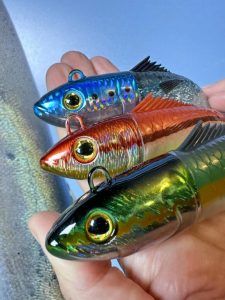
Initially a bit skeptical, I started fishing with soft plastic lures in many areas of the Mediterranean, even in spots where traditional metal jigs were no longer successful and, I must confess, I was totally shocked by the fish that could be fooled and the potential that these new artificial lures had in finding all my target predators.
Around 2014 I wrote my first articles in Italy covering this topic but, at the time, very few anglers followed my advice. Today, instead, seeing the vast number of fishermen who are involved in and passionate about vertical fishing with soft plastic lures truly leaves me speechless. Perhaps needless to say, only a successful technique can involve such a large number of anglers. Not surprisingly, we at YachtingNews Fishing have decided to dedicate a series of articles (this is the first of four) to this discipline in order see, in detail, all its characteristics.
What fish can be caught?
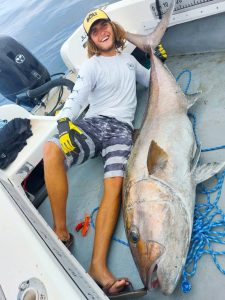
Perhaps, as those who practice fishing with soft plastic lures know, it would be better to ask: which fish cannot be caught when fishing with this type of artificial lure?
Indeed, over time, vertical fishing with soft plastic lures has led to the development of many different lures that, each with its own swimming and particular technical features, allow the anglers to aspire to catch all kinds of predators.
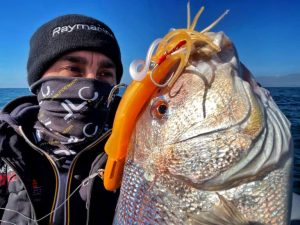
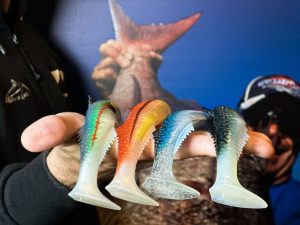
The most successful artificial lures, apart from the above-mentioned shad and jig heads, resemble, in shape and in their various sizes, cuttlefish and squid; used in different weights, depending on the bottom and the current, they allow to catch all benthic predators, including scorpionfish, St. Pierre fish, snappers, groupers or large pink dentex fish.
Soft plastic lures can be used to explore and search for predators all along the water column, so possible targets include pelagic predators, such as skipjack, skipjack tuna, amberjack (and huge ones have been caught), and the king of our seas, the bluefin tuna.
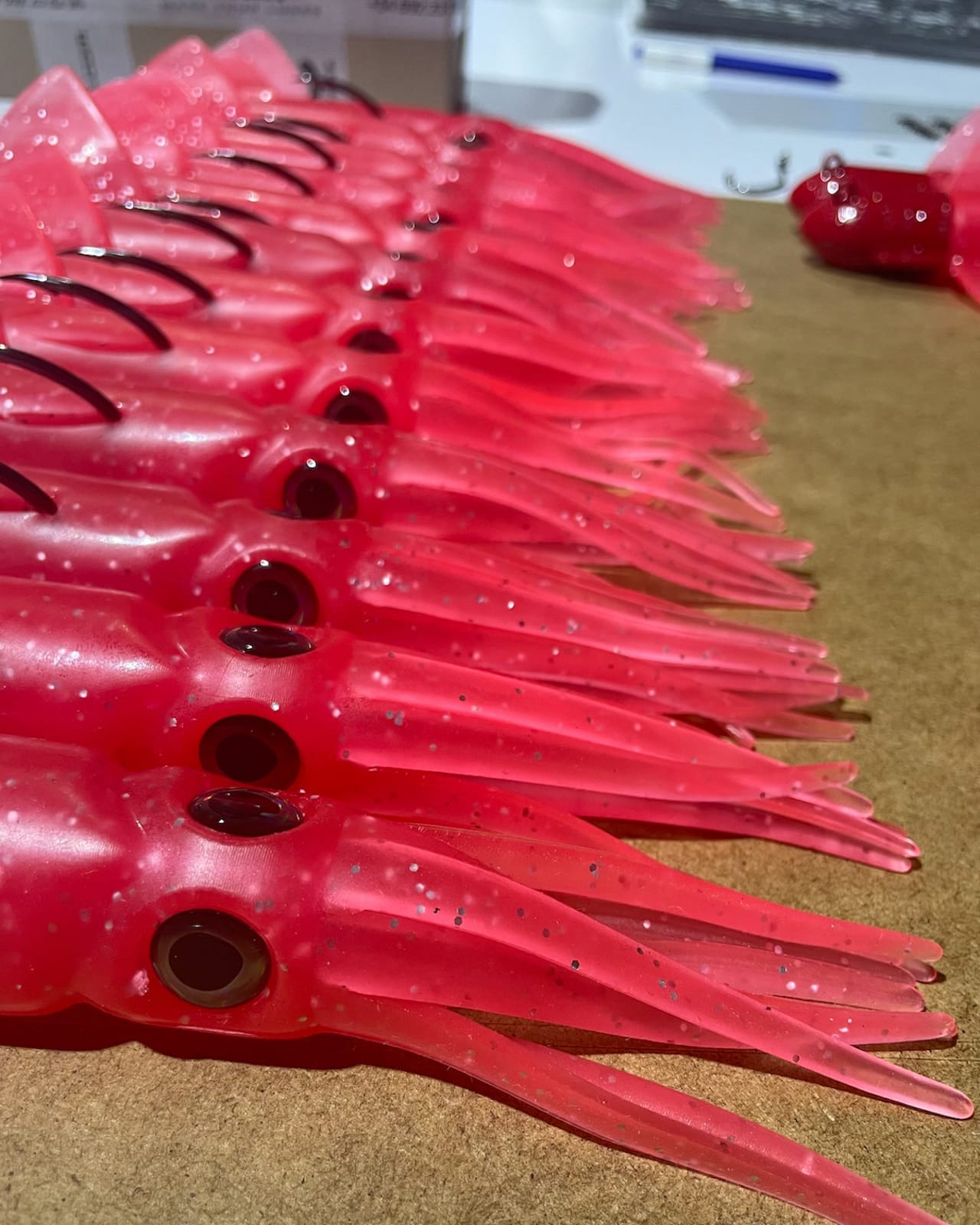
The red colour is one of the most commonly used colors among anglers fishing with these lures.
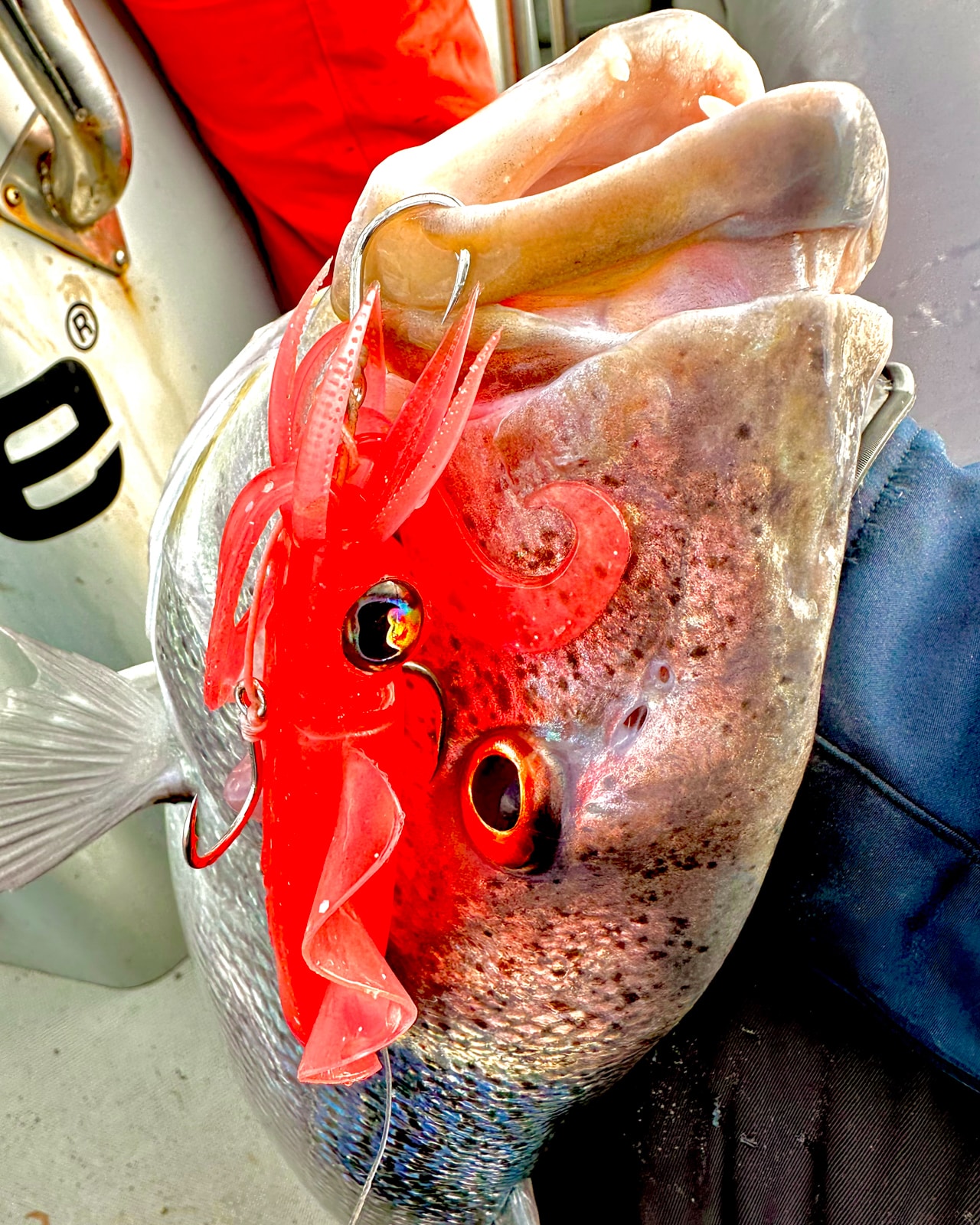
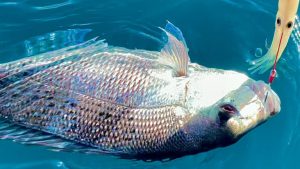
A large winter snapper, caught with a soft plastic lure imitating in shape and movement a cuttlefish.
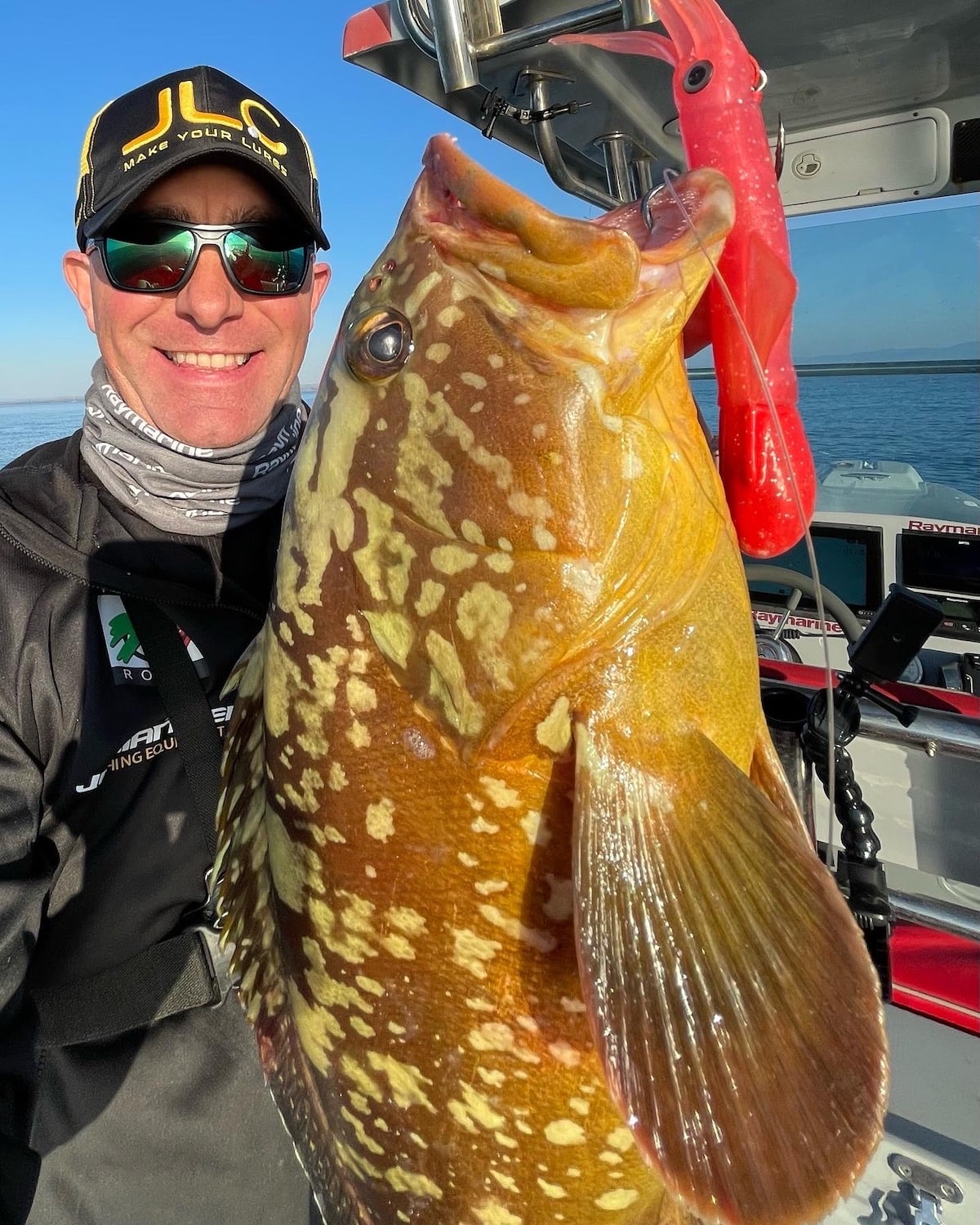
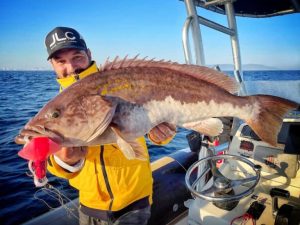
The brown grouper is one of the most sought-after prey among those jigging with soft plastic lures
In future articles we will talk in detail about many aspects such as, for example, what are the most suitable equipment, the most effective types of retrievals, how to choose bait and how to make our lines but, now, my final question is: why has vertical fishing with soft plastic lures been gaining so much appreciation for several years, and the number of enthusiasts keeps on growing?
The answer encompasses several aspects: we can say that it is a fishing technique that everyone can practice, both in terms of age, since it is not as tiring as vertical jigging (which requires movements and rhythms that are often frenetic), and also because it is practicable with any type of boat, starting from a 4.00 m dinghy to a 60-foot fisherman, as well as from a kayak a short distance from the coast.
The retrieves do not require great technical preparations, in fact the lures emit vibrations that are very attractive to the fish, already descending to the bottom, as well as when they are retrieved in a very linear manner, so even a beginner can succeed, by lowering in the right place, to fool an important prey. Good results, arriving already on the first outings, have caused many to fall in love with a technique that they have then continued to practice with great confidence.
Another aspect, which is very important in my opinion, is the equipment: all that is needed is a rod, a reel (which can also be purchased at affordable prices) and some bait in the box. This way, the fisherman has everything he needs to face a day at sea in search of strong emotions.
This discipline therefore differs from other techniques, such as, for example, live trolling (another widely practiced fishing technique), where finding bait can often be a big problem, the action can require a lot of time, dedication, as well as technical knowledge, which can change from area to area and month to month.
In short, we can really say that vertical fishing with soft plastic lures can be considered within everyone’s reach (being able to give great excitement and satisfaction at every outing), and easily practiced throughout the year.
The post Vertical fishing with soft plastic lures: definition and history appeared first on Yachting News.
]]>The post Emiliano Gabrielli is back! Every 15 days a new article on boat fishing appeared first on Yachting News.
]]>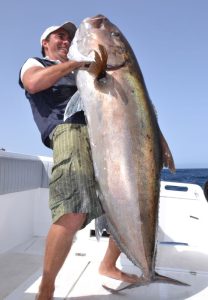 Emiliano Gabrielli, a journalist and great popularizer with a lifelong passion for the world of fishing, returns to the large family of The International Yachting Media, picking up where he left off, namely from Yachtingnews Fishing: a popular section of our magazine that Emiliano himself had helped launch, with all his expertise and professionalism.
A fisherman since he was a child, Emiliano has travelled the world with his fishing rods, both as a passionate angler and as a fishing guide: a journey that led him to describe his knowledge in some of the leading international fishing magazines.
A long journey, which eventually allowed him to reach his most important goal, which is the convocation as a Blue Athlete, in the Italian National Big Game Fishing team to compete in the World Championships in Portugal.
A lover of writing and of the sea, Emiliano Gabrielli will return to the pages of Yachtingnews to talk about fishing techniques, tell us his secrets, but also and above all to remark on the importance of sustainable sport fishing, the topic of the thesis that will soon allow him to obtain a degree in Biology.
“I decided to approach my graduation thesis,’ Emiliano says, ‘by focusing on the theme of the right balance between exploitation of the fishery resources of sport fishing and wise management of marine systems through nature reserves. I would like fishing to link the fisherman to the magic of nature”.
Of course,  the sector is always evolving, and as of today it is unthinkable to do outreach without being able to manage multiple platforms. This is how Emiliano has developed new channels in recent years, starting with Youtube, where his ‘Fishingworld by Emiliano Gabrielli” has already totaled more than 6 million views, and then moving on to Facebook (Emiliano Gabrielli), Instagram (emiliano_gabrielli) and, most recently, Tik Tok.
“I live this communication transition day by day, learning new ways of communicating myself. – Emiliano continues – I have always believed in dissemination initially linked to print and writing, however, I have also understood over time the many facets of the communication evolution: beautiful, clean intelligent communication can also be done on social channels..
I learned to adapt, and of course I also had to become a filmmaker, but I have to admit I am very happy to go back to writing, and in particular for Yachtingnews Fishing, which is magazine section that was born with me and was, and still is, very successful with half a million readers a month.
I come back to writing because I think a sport like fishing has so many steps to take in, and reading it, enriched by beautiful step-by-step photos, can give important insights to beginners but also to the more experienced. Social media runs, writing gives you time to assimilate”.
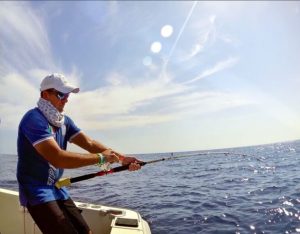 In the coming months Emiliano Gabrielli will take us back into his world, fully immersing us in the new techniques and innovations of a sector that is evolving and growing every day, along with a new generation of fishermen with more and more tools at their disposal, but not always with all the necessary skills.
“We have prepared a lineup with 12 articles in the next semester focused on the disciplines that are affecting sport fishermen and vertical fishing in recent years. – says Emiliano – We will talk about Slow Jigging, the technique that has revolutionized the search for predators, and how to choose rods, lines and reels.
We will also delve into Live Kab and choosing the right artificial, and again trolling, exploring the differences between vertical and horizontal trolling. But this is just the beginning of course”.
In short, Emiliano’s expertise 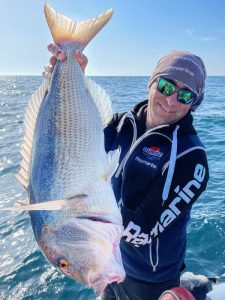 returns to fill the pages of our magazines and is available again to readers all over the world: from those who are approaching the sport, to those who want to implement their knowledge, to the professional in the field, everyone will find the most suitable insights.
“I will be waiting for you on the Yachtingnews Fishing pages,” Emiliano Gabrielli concludes –“Keep following us because it is through quality journalism that we evolve as fishermen, and studying is good in fishing for both a beginner and more experienced fishermen who want to modernize.
We will be present and on time every 15 days with interesting and stimulating articles, which I am sure will bring innovative elements to your fishing techniques”.
So all that remains is to stay connected on our pages, to get lost in the fantastic world of sport fishing.
From all our Editors: ‘Good work Emiliano’.
The post Emiliano Gabrielli is back! Every 15 days a new article on boat fishing appeared first on Yachting News.
]]>The post Tuccoli T210VM: compact in size, extreme in comfort appeared first on Yachting News.
]]>Compact, agile, comfortable: the T210VM is the new Tuccoli fisherman 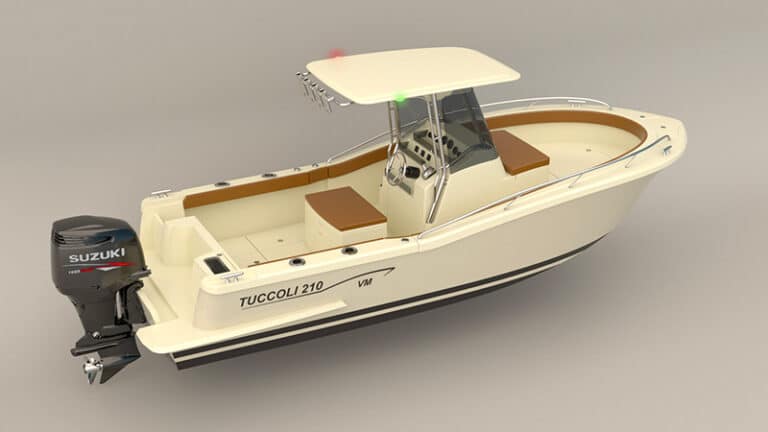 which gives priority to comfort and volumes aboard. After the great success of the T250 Capraia and VM, the historic Italian boat manufacturer carries on the construction of fishing boats with the launch of its 2021 new entry, the T210VM, an entry-level registration-free boat capable of satisfying the most demanding fisherman who want to enjoy their fishing activities from a compact yet comfortable boat.
Compactness is, in fact, one of the main strengths of the T210VM ( she is 6.80 meters long and 2.55 meters wide), which therefore takes advantage from a very large walkable surface: 13.5 square meters of space, perfect for both the practical needs of the owner/ fisherman and to enjoy relax with family and friends when at anchor.
As for the fishing comforts offered by the T210VM, Tuccoli has left nothing to chance. The central bench, for example, houses a compartment inside for the sports equipment box. The new boat has nine lockers in total, arranged in various areas of the deck. At the stern, there is a live bait tank, whose top represents a comfortable work surface.
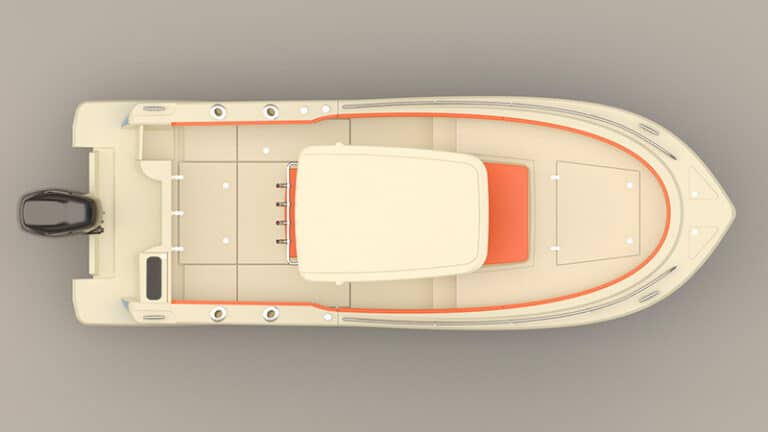 The shower head is located at the rear of the boat and, as in the larger model, the owner can even choose to install an additional one amidships. Furthermore, on demand, it is possible to install some padded gunwales to make the fishing session even easier. In short, the new T210VM is compact in size but extreme in terms of technical fishing contents.
Over the last few years, the Collesalvetti-based shipyard has developed a collaboration with Marco Volpi, multiple Italian and world fishing champion in various boat fishing specialties.
This collaboration has resulted into several projects, all focused on fishermen, as evidenced by the T250VM and the new T210VM. The recently produced Tuccoli fisherman are all based on a strategic arrangement of spaces that allows the owner to concentrate exclusively on the sea. Aboard every Tuccoli model, navigation is linear and comfortable and the T210VM is the perfect option to sail the Mediterranean Sea in any weather condition.
The hull is in full laminate, with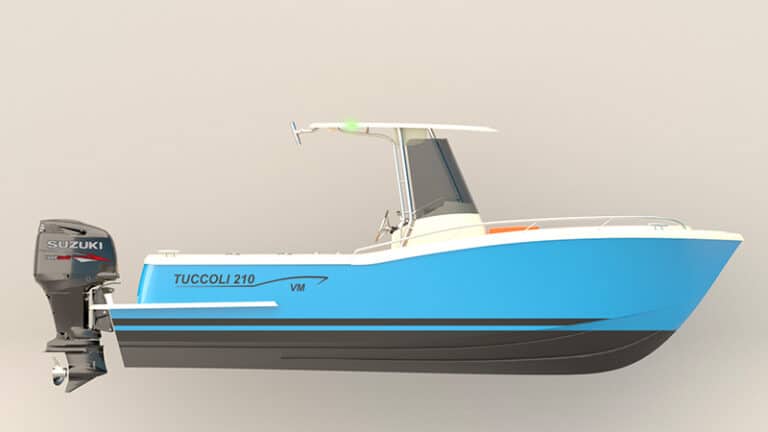 variable thickness ranging from 8 mm on the side to 15 mm on the keel, all reinforced with a partially counter-molded structural grid. The construction of the boat is in hand-layered vinylester and polyester, while the deck has been designed as a “sandwich”. The core is made of 15 mm PVC and with a density of 60 kilograms per cubic meter, the thicknesses are variable and between 20 and 25 millimeters.
” These values meet the structural requirements imposed by the ISO standard calculation, a fundamental part of the technical file for the certifications issued by the certifying bodies” explains designer Oris Martino D’Ubaldo.
” It is important to know that, for boats between 6 and 6 meters in length, the structural requirements imposed by the ISO calculation are largely oversized – underlines Oris Martino D’Ubaldo – So, when these requirements are satisfied, the safety ratio is greater than other calculation criteria. The safety ratio identifies the safety margin with respect to the minimum values envisaged by the direct calculation “.
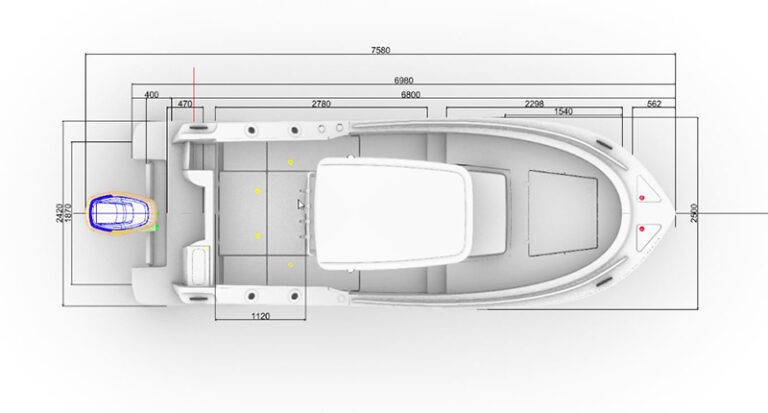 The T210VM is equally performing. Outboard propulsion ranges from 140 to 250HP. In her most “extreme” version, the T210VM reaches a cruising speed of 25-27 knots and a top speed of 43. In accordance with her size and top speed, the deadrise angle has been set at 20 degrees.
The new T210VM is offered for sale at a very interesting price. The basic price of the Hard Top version is € 37,000.00 + VAT. Furthermore, the first 5 buyers will have the opportunity to have their new boat for just € 28,652.00 + VAT.
T210VM: the quality of a flaghsip with the price of an entry-level. An absolutely unmissable fisherman.
Tuccoli T210VM: Technical Specs
| Length | 6.80 m |
| Width | 2.55 m |
| Draft | 0.40 m |
| Displacement | 1,800 kg |
| Water Tank Capacity | 40 l |
| Fuel Tank Capacity | 250 l |
| Outboard propulsion, Max Power | 250 HP |
| EC Category | C – 5 people |
Click here to visit the page dedicated to Tuccoli fisherman on our Virtual Boat Show
The post Tuccoli T210VM: compact in size, extreme in comfort appeared first on Yachting News.
]]>The post Tuccoli: all-purpose fishing boats appeared first on Yachting News.
]]>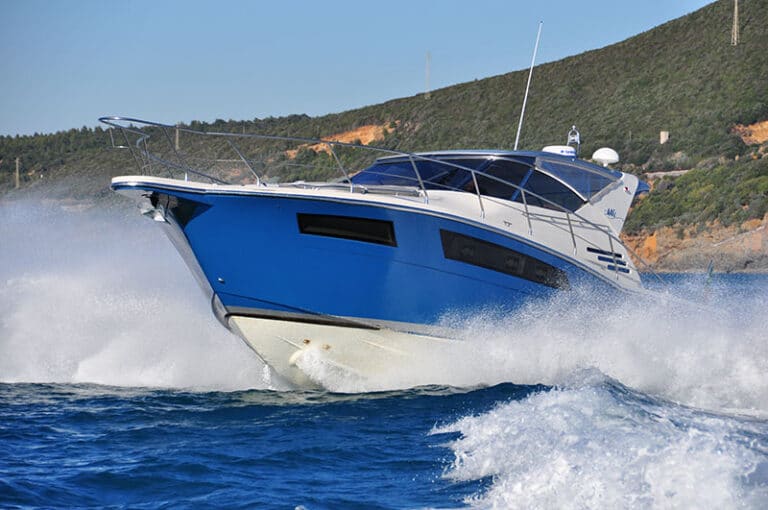
Boasting a 70-year tradition handed down across three generations, the Italian shipyard Tuccoli has certainly made fisherman boats a true artisanal culture.
“ It all began with my grandfather who, in the 1950s, built wood fishing boats – explains Tuccoli Site and Production Manager Marco Tuccoli – Then, in the 1970s, my father started to build fiberglass fishing and planing boats. I joined the company in 1977 and, today, continue a family passion“.
For the Tuccoli famioly, in fact, fishing boats are a deep-rooted passion, as well as a mission aimed at ongoing modernization based on market dynamics, Not surprisingly, over time, Tuccoli fishing boats have progressively turned into recreational yachts of the highest quality, also thanks to the collaboration with skilled designers and world-class fishermen.
” The quality of the materials is our categorical imperative. Through careful processing of materials, we provide our boats with two essential elements: sturdiness and reliability. Unlike recreational boaters, fishermen are used to go to the sea even in the harshest conditions, in winter and the in the coolest times of the year. That’s why they must feel safe on board their boat”.
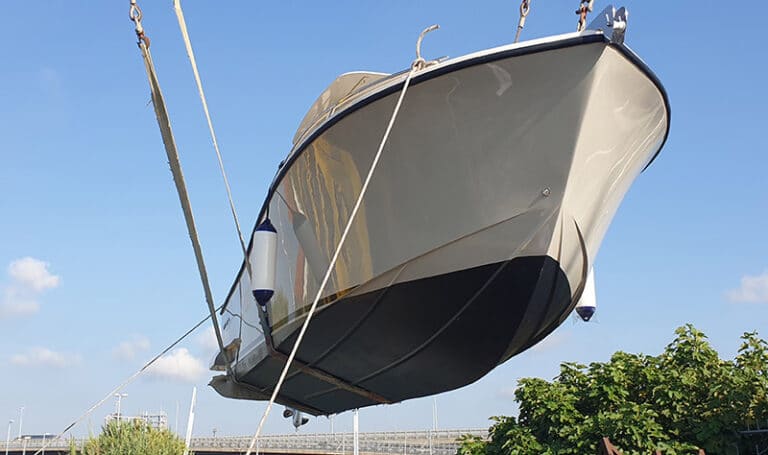
The hull is certainly the main strength of all Tuccoli boats. While professional fishermen are more concerned with stability than with speed, Tuccoli does not neglect nautical performance, precisely because Tuccoli boats are fully-fledged yachts with remarkable seaworthiness.
” Our particularly deep hulls are made with an advanced technology that gives the hull a good level of speed as well as excellent balance. Waterlines are soft and allow to sail at around 18-20 knots. They are specifically designed to deal with the most insidious waves, while stability is guaranteed by the enlarged bow, which drastically reduces the rolling motion. Another outstanding feature is the balanced distribution of weights, which allows to fully take advantage of the engine thrust while mainting a good trim and enjoing low fuel consumption. In short, we do not disdain performance. However, what is really important for us is the sailing comfort at cruising speed”.
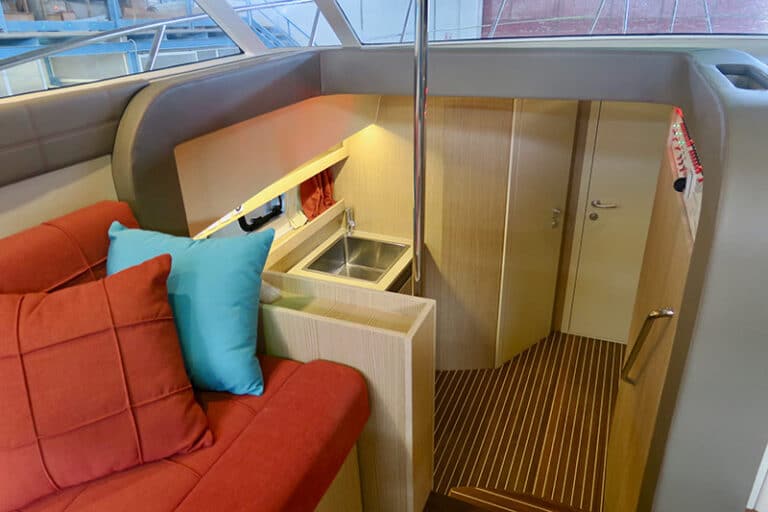
Furthermore, Tuccoli boats are widely customizable: the fisherman is a demanding owner; that’s why the Italian shipyard is happy to meet the owner’s wishes, in both functional and aesthetic terms.
“ There are those who ask to move the indoor galley to make room for a storage compartment for fishing equipment, those who want ten rod holders, those who ask for only two, those who ask for built-in night lights. We try to please all of them, without upsetting the original structure of the boat. We learn a lot from our customers’ requests. Not surprisingly, many of them have been developed by our shipyard, subsequently becoming standard elements”.
Tuccoli boats, where the comfort of the great interior volumes is maximized without however sacrificing the fishing area, have different souls: they are cruisers, like the T440 Hard-Top; sporty, like the T370 Coupé; fishing-oriented like the T250 Capraia and the T250 VM; easy-rider like the T280 inboard or outboard, to which Marco Tuccoli is very attached “because it is a historic boat that has given us so much satisfaction. It is liked for its appeal and its large spaces on board: three comfortable berths, indoor galley, head, bow sundeck and a cozy cockpit on the water level. Since 1998, we have built more than two hundred. This model is still in great demand today “.
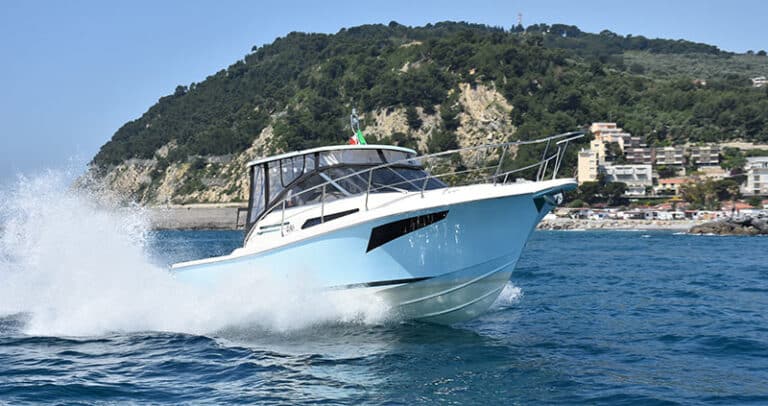
The post Tuccoli: all-purpose fishing boats appeared first on Yachting News.
]]>