The post Aquila Group enters the sailing catamaran market appeared first on Yachting News.
]]>Nicholas Harvey, chief revenue officer of Aquila Group, opened the press conference at the Annapolis Sailboat Show with significant enthusiasm as he announced Aquila Group’s expansion into the sailing catamaran market. “In a way, we’re returning to our roots,” he said. “Lex and Alain Raas (company founders) started in sailing and we have deep expertise in charter as well.”
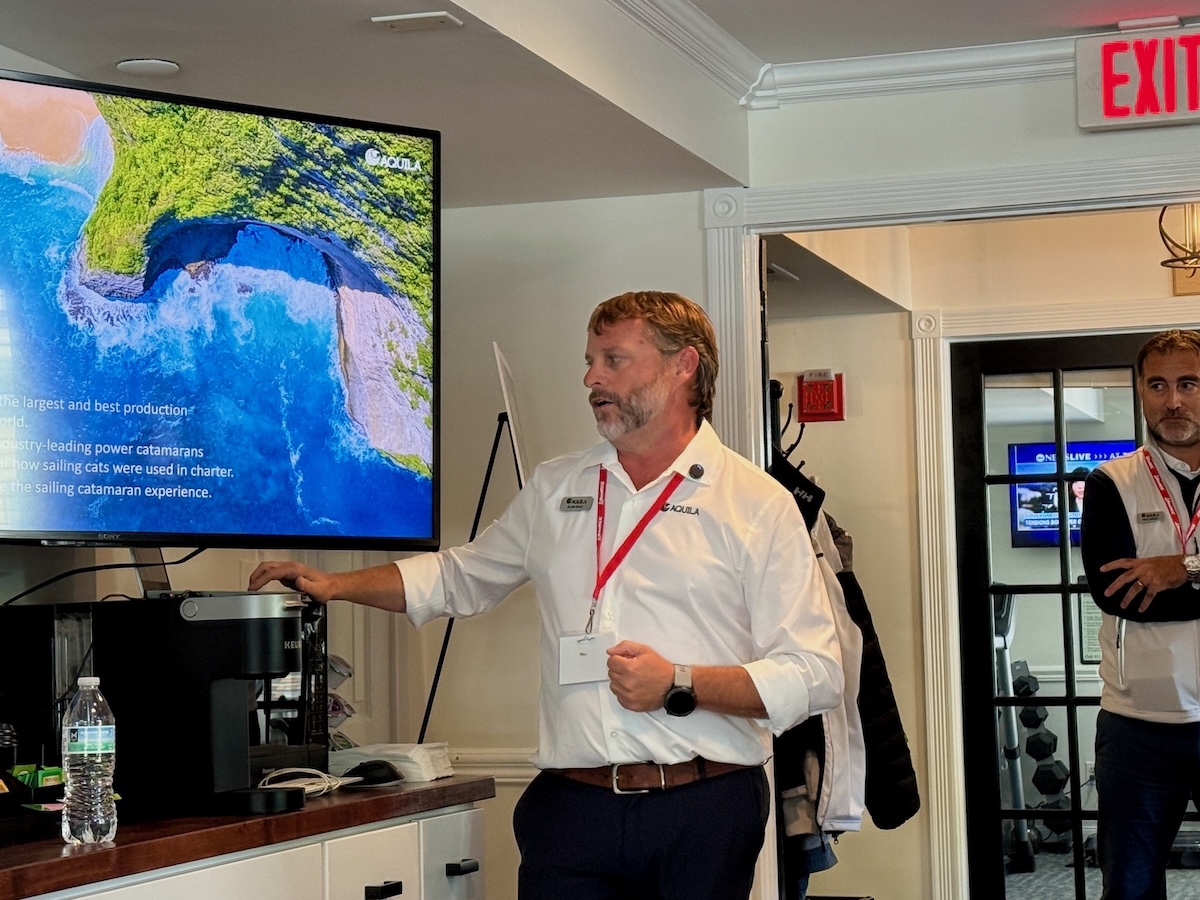
Aquila Bets on the Sailing Catamaran Market
Most builders today are moving production from sailing to powercats but Aquila is bucking that trend. “The sailing catamaran market measures about 1100-1200 new units per year while powercats are currently at half that around 450-500 units,” added Harvey who has extensive knowledge of the sailing market from his days at Beneteau and Jeanneau. “That leaves a lot of room for growth and we’re determined to make our mark.”
With this initiative Aquila is pursuing their mission of becoming the “number one catamaran company in the world” but they’re also entering a crowded market with at least a half dozen established production sailing catamaran brands already vying for attention.
Aquila’s global launch plan
Aquila will offer models for both charter and private ownership. Many Aquila signature features will cross over from their powercats including the forward steps from the deck to the flybridge, a solid foredeck, the centerline helm, panoramic windows, a large home-style refrigerator, and the popular aft bar area with stools. Four to six cabins will be available each with their own direct entry and it will be possible to convert a multi-cabin charter layout to an owner’s suite configuration as an aftermarket change. The hulls will be built in a single mold and options will include Aquila’s patented dinghy crane and Hybrid Ocean Drive with engines from Volvo Penta and electric motors from Torqeedo.
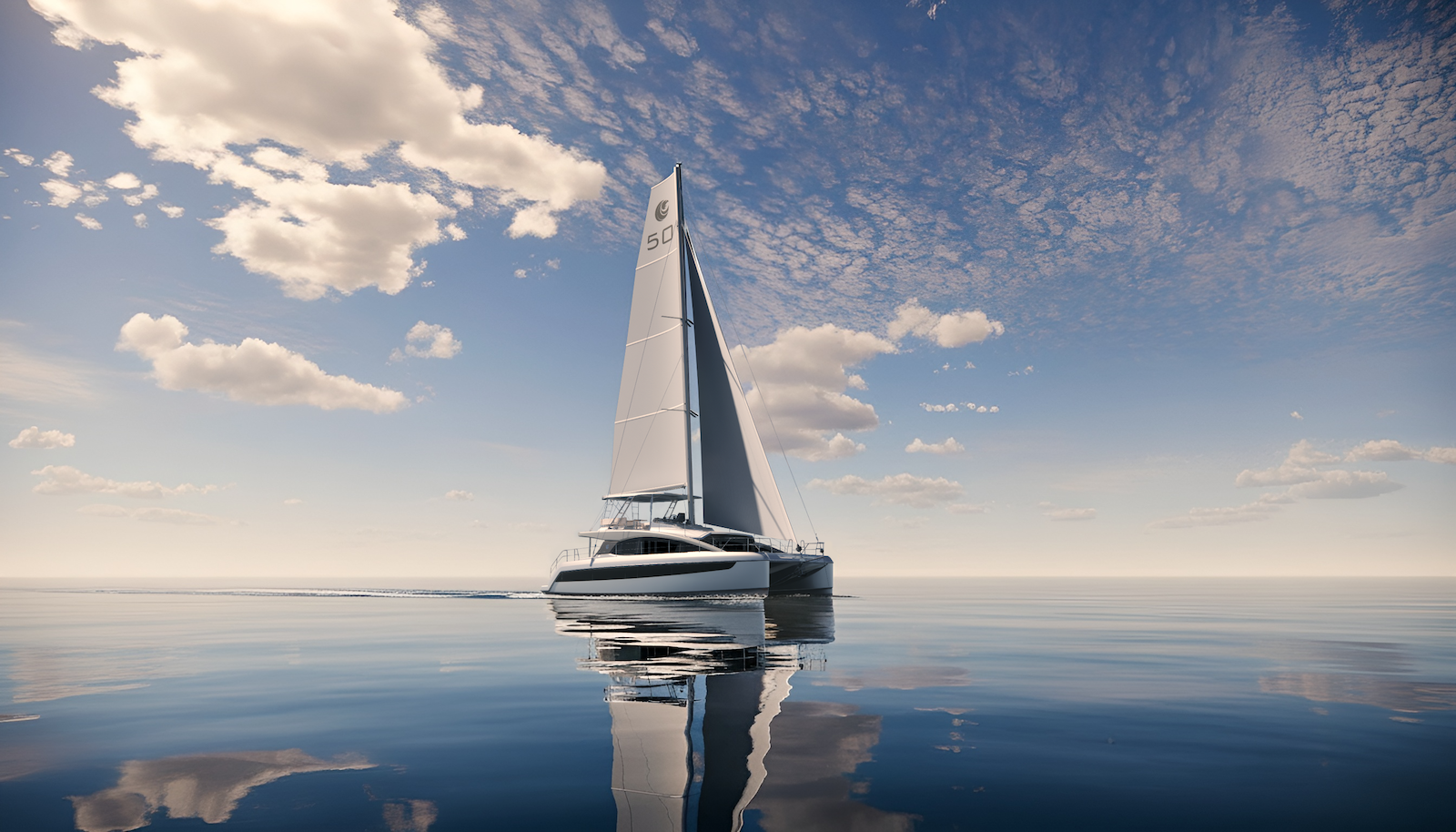
Representatives from Aquila noted that these models won’t be just their current line of powercats with masts and smaller engines but rather from-scratch designs from J&J Design. Sino Eagle Group, Aquila’s parent company, operates a 120-square-meter shipyard and enjoys significant purchasing power, and although pricing hasn’t been released, it is expected to be competitive.
In the U.S., Mexico and the Caribbean, exclusive distribution will be done by The Catamaran Company. A dealer network is yet to be determined for Europe and other parts of the world.
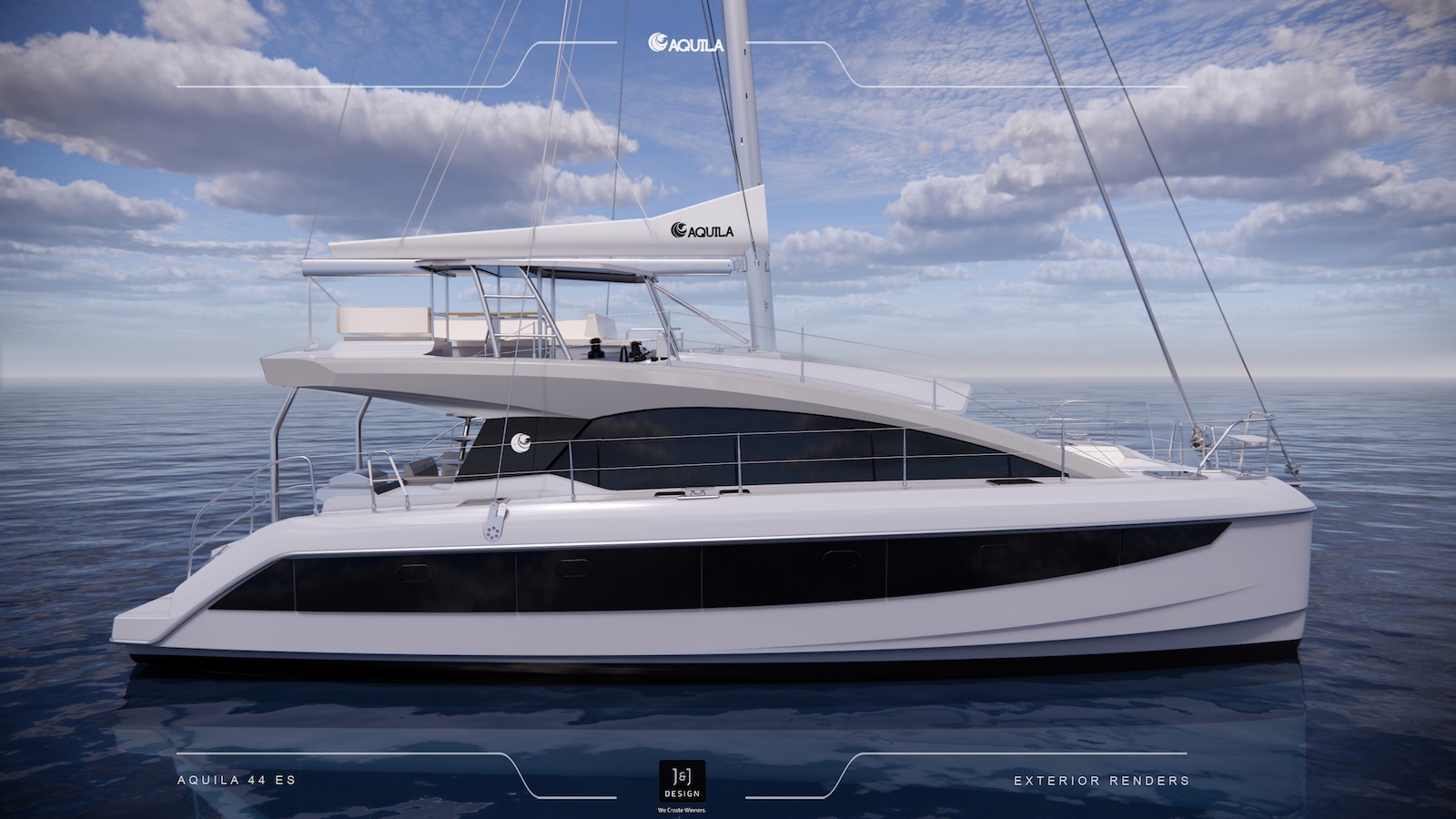
The launch of the new models is scheduled to start in February 2026 with the Aquila 50ES debuting at the Miami International Boat Show followed by its appearance at the International Multihull Show in La Grande Motte in the south of France in April. The 44ES will follow in late 2026 and the 63ES is expected to premier in 2027.
“We’re looking to create category killer with this series,” adds Harvey. “I think we have a set of real winners in these new models.”
The post Aquila Group enters the sailing catamaran market appeared first on Yachting News.
]]>The post Aquila 50 Sail, world debut of the shipyard in the sailing world at the Cannes Yachting Festival appeared first on Yachting News.
]]>Aquila Yachts, today the world leader in the production of power catamarans, unveiled its long-awaited first sailing model, the Aquila 50 Sail, at the Cannes Yachting Festival. This marks a historic step for the brand, bringing into sailing the industrial strength and expertise it has gained in the powercat sector. “Many people wonder why a powercat brand would step into sailing – explained Nick Harvey, Chief Revenue Officer of Aquila International – The answer is simple: the sailing catamaran market is much larger, and we have the technical and industrial foundation to deliver a credible and competitive product”.
After the debut of the 50 Sail, Aquila already has plans to expand its sailing range with the Aquila 44ES and Aquila 63ES, which will be unveiled at upcoming boat shows. Two complementary options: on one side, a compact and versatile cruising catamaran, and on the other, a flagship model that combines luxury, space, and autonomy for long ocean passages.
A team born from sailing
The project brings the signature of a group with deep sailing roots. Leading the way is Lex Raas, Executive Director of Aquila and a key figure in the modern history of catamarans, joined by his sons: Jean Raas, CEO of Aquila USA and former Olympic windsurfing athlete, and Alain Raas, Global Brand Director with racing and ocean crossing experience.
The design was overseen by Jure Žule, Aquila’s Chief Designer and creator of projects such as Shipman and the Swan Club 50, while the architectural work was issued from a collaboration with J&J Design, a long-standing partner of the shipyard. “We wanted to merge our sailing roots with the strength of a group that is now a leader in powercats – said Alain Raas – It’s a combination that allows us to speak the same language as owners, whether private or charter”. Equally crucial was the support of Frank Xiong, CEO of Sino Eagle Group and the driving force behind the brand’s industrial development, and Gareth Wood, Global Service Manager, who contributed his expertise in creating sophisticated and functional spaces.
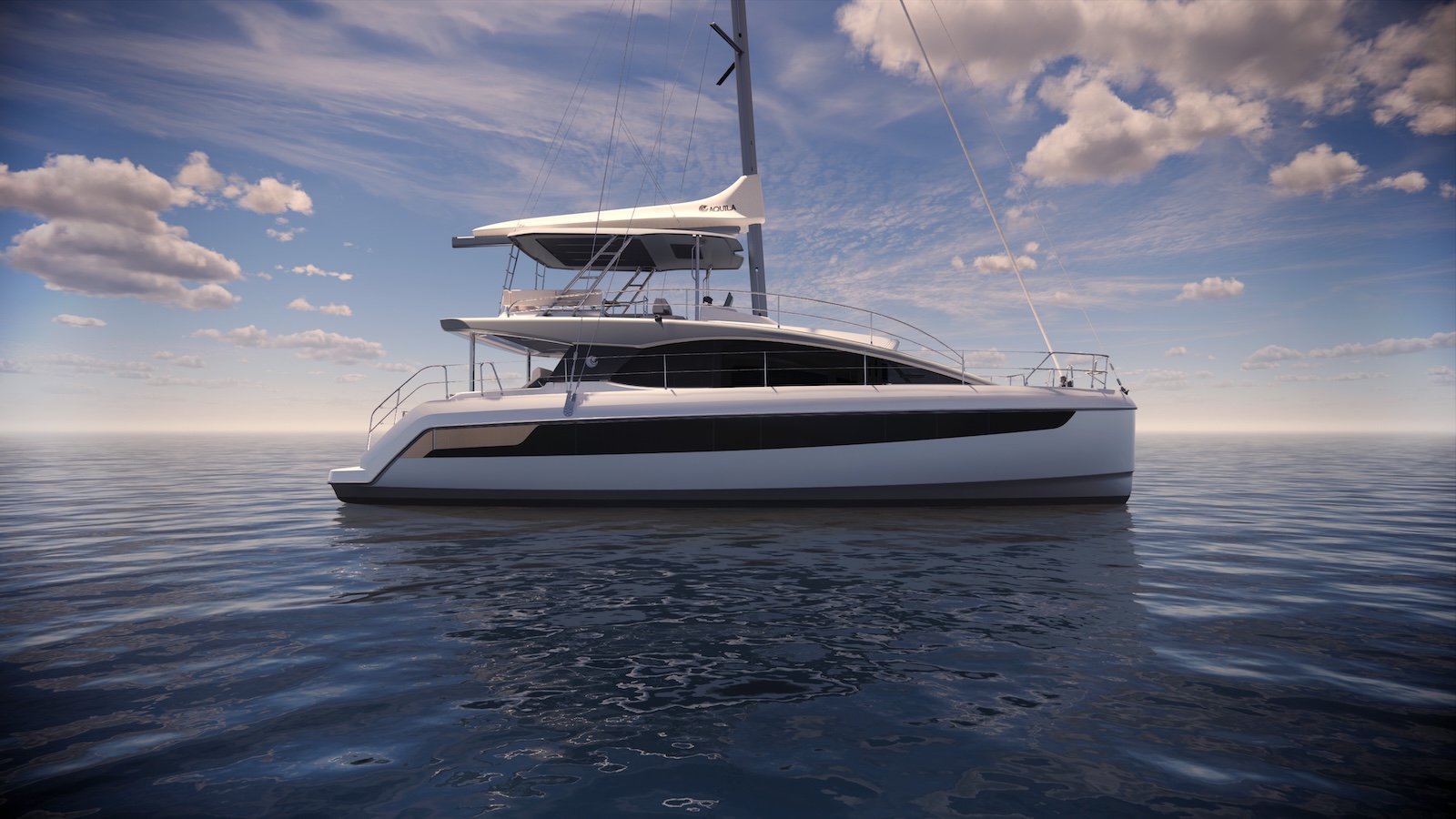
Aquila 50 Sail: Architecture and Design
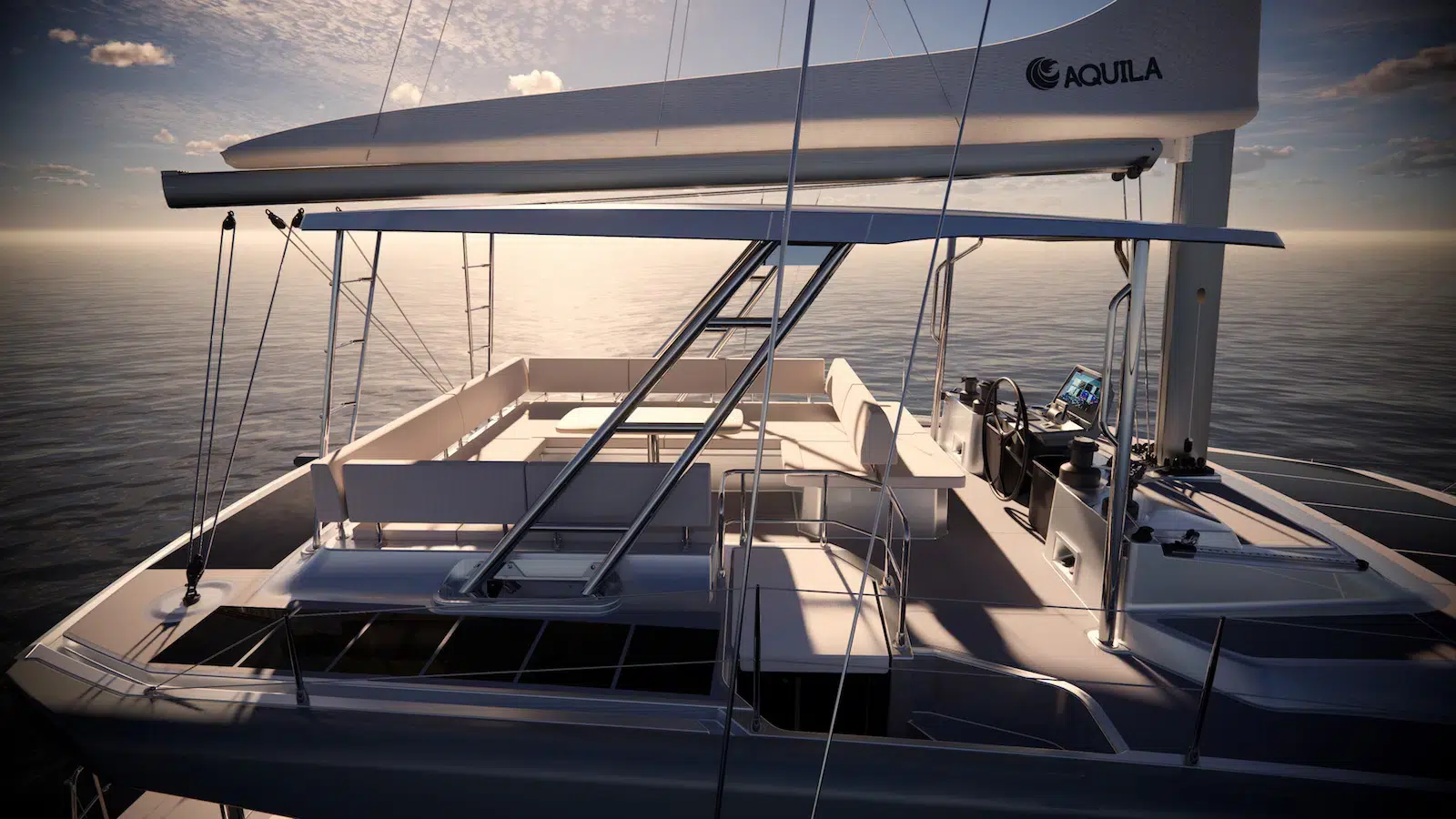
One of the most distinctive choices is the bow: the Aquila 50 Sail does away with the traditional trampoline in favor of an enclosed foredeck. “For us it was natural – explained Jean Raas – We have extensive experience with enclosed decks on powercats and wanted to bring that same strength to sailing. The result is a bow that turns into a real social area, safe and comfortable, with seating and sunpads offered in a way no one else does”.
The Aquila family feeling is instantly recognizable: sleek lines, a streamlined superstructure, and a glazed coachroof with gull wing windows that flood the interiors with light and height. “We wanted a boat that could be recognized from two miles away – added Alain Raas – When someone sees the new Aquila, they should immediately say: yes, that’s her”.
Layout: privacy and modularity
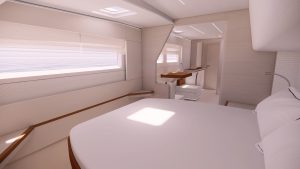 The interior stands out for its modularity and six independent cabin entrances, eliminating corridors and maximizing living space. Layout options range from four to six cabins, all with en suite bathrooms. The forward cabins can be set up for the crew, complete with bed and bathroom, or converted into technical or storage areas.
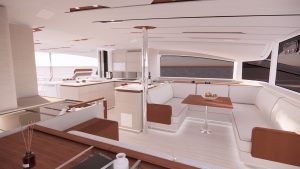 The dinette reflects Aquila’s DNA, featuring a bar that connects inside and out, a full-size refrigerator, a forward door leading to the front cockpit, and a dedicated nav- station.
The “secret move”: from 6 to 5 cabins
One of the most popular innovations is the option to easily convert the layout from six to five cabins, thus creating a true owner’s suite. “This is not a compromise – Harvey explained – We engineered the project to make this conversion simple and non-intrusive. With just a few moves, the owner can have a suite with dual access, a laundry area, and generous storage, completely transforming the feel of the boat”.
Aquila 50 Sail: Navigation and Performance
With a length of 14.97 meters, a beam of 7.86 meters and a displacement of about 19 tons, the Aquila 50 positions itself right in the heart of the cruising catamaran market. The sail plan is designed to deliver top-tier performance without going to extremes. “We’re not looking to build a racing catamaran – noted Jean Raas – Our goal is fast, safe, and comfortable cruising. That’s why we didn’t include daggerboards: we aim at a competitive product suited for families and fleets”.
Propulsion: hybrid or diesel
The range is offered with two distinct packages. The first units feature Torqeedo hybrid-electric propulsion, with two 50 kW motors and an integrated battery and generator system. “This isn’t some niche option – Harvey emphasized – Hybrid is an integral part of the project and will be available from the very first hulls. It’s the direction the market is heading, and we want to lead the way”.
Alongside the hybrid version, there is also a traditional configuration with two 50 hp Nanni diesel saildrives, designed mainly with charter operators in mind.
Construction: Technology and Strength
The Aquila 50 Sail is built at Sino Eagle Group’s catamaran-dedicated facility, created specifically for this purpose. Hulls are infused in climate-controlled environments, complex parts are crafted with five-axis CNC machines, and components such as stainless steel fittings and upholstery are produced in-house.
“We don’t use plywood in structural areas – explained Jean Raas – Our bulkheads and grids are composite-laminated, with unidirectional reinforcements and sacrificial keels. It’s the same philosophy that allows us to build powercats capable of running at 70 knots without structural failure. We’ve brought that same strength into our sailcats”.
Scheda tecnica – Aquila 50 Sail
| Metric | Imperial | |
|---|---|---|
| Length | 14.97 m | 49′ 4″ |
| Beam | 7.86 m | 25′ 10″ |
| Draft | 1.45 m | 4′ 8″ |
| Light displacement | 19,000 kg | 41,900 lbs |
| Square top mainsail area | 92 sq m | 990 sq ft |
| Jib / Genoa area | 66 sq m | 710 sq ft |
| Code 0 / Gennaker area (optional) | 116 sq m | 1,249 sq ft |
| Sleeps (up to) | 14 | |
| Max passengers | 24 | |
| Cabins / heads | 4 / 5 / 6 | |
| Fuel tank (total) | 900 L | 238 gal |
| Water tank (total) | 900 L | 238 gal |
| Holding tank (total) | 250 L | 66 gal |
| CE Certification A (Ocean) | 12 | |
| CE Certification B (Offshore) | 14 | |
| CE Certification C (Coastal) | 20 | |
| CE Certification D (Inland) | 30 | |
| Standard Propulsion (Electric Sail Version) | 2 × Torqeedo Deep Blue i Motors / 50 kW with single 80 kW propulsion battery | |
| Standard Propulsion (Diesel Sail Version) | 2 × Nanni N4.50 (50 hp) with ZF SD12 sail drives | |
Aquila 50 Sail, the new “natural choice” in the 48/52-foot segment
Priced similarly to a 48–49 footer but offering the space and features typical of a 52, the Aquila 50 Sail positions itself as “the natural choice” in the most competitive segment of the market. The combination of an enclosed forward deck, independent cabin access, charter-to-owner conversion, and solutions derived from powercats makes the new model a strong contender.
“We offer more space and more options at a competitive price – Harvey concluded – And of course, with the strength of a brand that knows how to build sturdy and innovative multihulls”.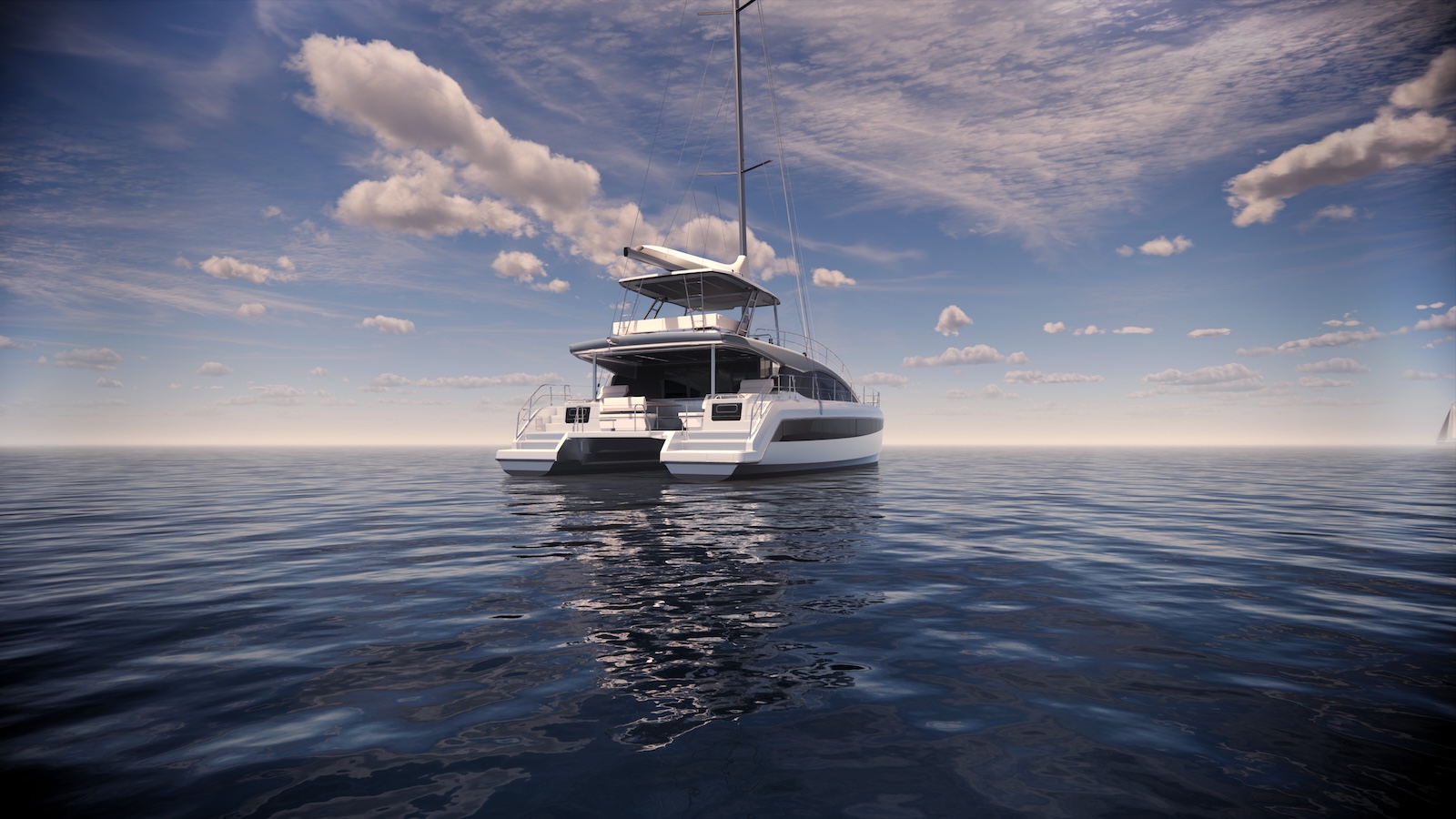
Aquila 44ES and Aquila 63ES
The new Aquila 44ES marks the shipyard’s entry into the mid-size sailing catamaran segment, blending contemporary lines with practical solutions for cruising. Standout features include the fixed forward cockpit, the panoramic salon with large windows, and independent cabins with private bathrooms. Designed to provide comfort and conviviality on board, the 44ES also offers the option of the Hybrid Ocean Drive propulsion system for quiet and efficient maneuvering.
The Aquila 63ES combines luxury, space, and innovation. With elegant lines and a design focused on long ocean passages (CE Category A certification), it offers generous indoor and outdoor living spaces, cabins with private entrances, and premium amenities for life at sea. The hybrid system option and construction to the highest structural standards ensure safe, eco-friendly performance.
The post Aquila 50 Sail, world debut of the shipyard in the sailing world at the Cannes Yachting Festival appeared first on Yachting News.
]]>The post HOLLD Yachts debuts at Cannes Yachting Festival 2025 appeared first on Yachting News.
]]>“Our goal was not simply to build another production catamaran – says Guido Achtelik, founder of the brand – We wanted to completely rethink this type of yacht from the ground up, using carbon, epoxy resin infusion, digital construction processes, and an obsessive attention to precision, longevity, and performance, all finished to superyacht standards”.
“At HOLLD we believe owners should no longer have to choose between thrilling performance and absolute comfort – adds co-founder Mo Ouass – Every HOLLD yacht will be designed and built to reflect the owner’s personal vision while staying true to the Dutch shipbuilding tradition, synonymous with precision and innovation”.
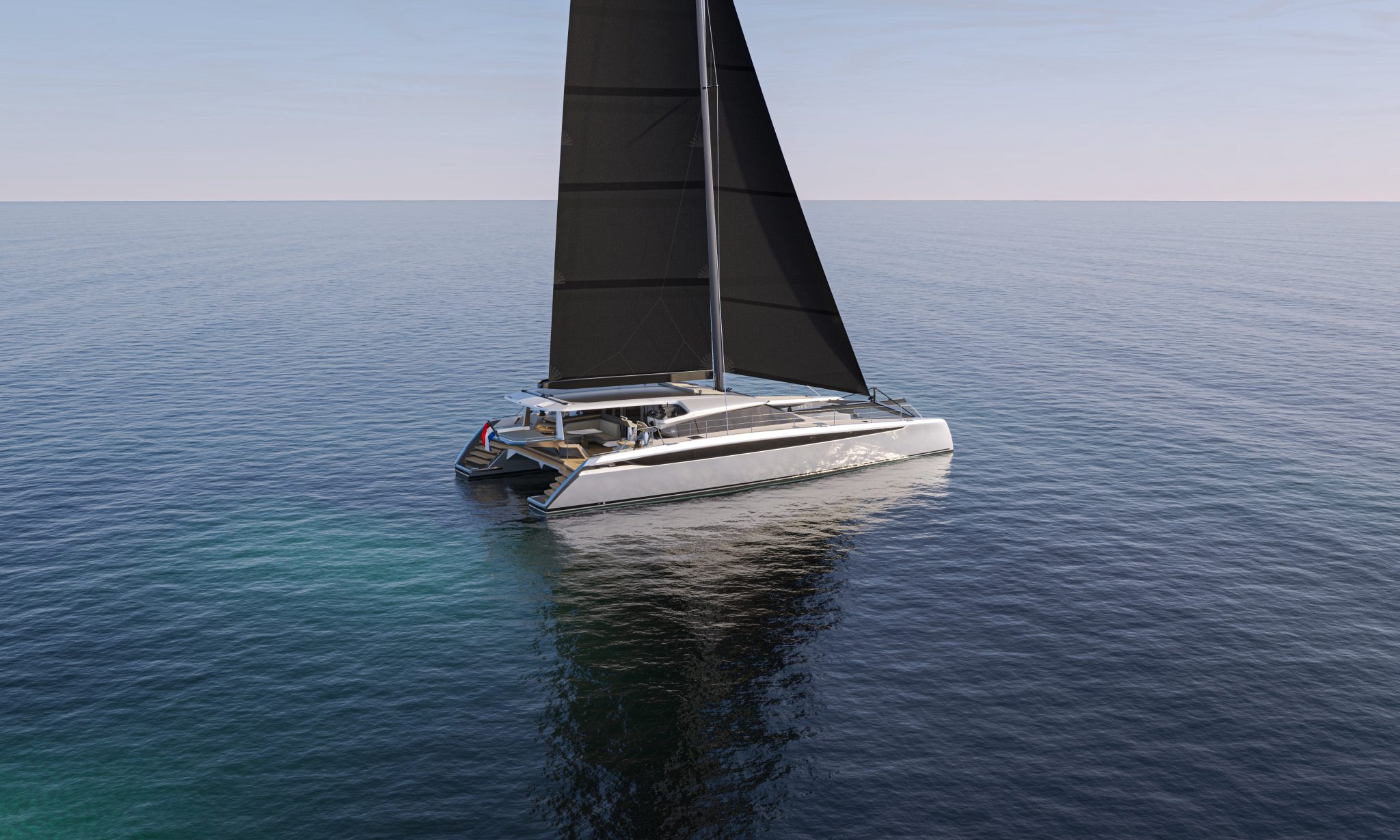
HOLLD 74
Construction of the first HOLLD 74 is currently underway, with delivery scheduled for 2026. This 22.5-meter carbon catamaran fully embodies the brand’s philosophy: lightweight construction, modular design, and interiors crafted with meticulous attention to detail, in line with the highest Dutch quality standards.
Each HOLLD catamaran stands out for its advanced composite hulls, lightweight structures built using epoxy resin infusion, and onboard systems integrated with digital control, ensuring high performance, maximum efficiency, and optimized navigation management.
TECHNICAL SPECS | |
|---|---|
LOA | 22.55 m / 74 ft |
LWL | 22.00 m / 72.20 ft |
BOA | 10.20 m / 33.5 ft |
Draft | 1.45 m / 4.75 ft |
Mast Height | 27.20 m / 89 ft |
Air Draft | 31.00 m / 102 ft |
Material | Full Carbon Fiber |
Unladen Displacement | 23.95 t |
Max Displacement | 30.00 t |
Engines | 2 x Yanmar 4LV150 SD |
Bow Thruster | Sleipner 210 |
Generator | MASE 17.5 kW |
Fuel Capacity | 1,648 L / 435 gal |
Fresh Water Capacity | 1,024 L / 271 gal |
Black Water Capacity | 694 L / 183 gal |
See you at Cannes Yachting Festival 2025
The Cannes Yachting Festival will be the first opportunity to discover HOLLD up close, where the brand will officially present its vision to the public at its stand in Port Canto, Roseraie, SAIL142.
The post HOLLD Yachts debuts at Cannes Yachting Festival 2025 appeared first on Yachting News.
]]>The post Aquila Power Catamarans unveils four premieres at Cannes Yachting Festival appeared first on Yachting News.
]]>Aquila Power Catamarans will be at the 2025 Cannes Yachting Festival (September 9–14) at booth QML 020, Vieux Port – Quai Max Laubeuf, to unveil four major premieres: the world launch of the new Aquila 46 Yacht, the European debut of the Aquila 50 Yacht, and the European premieres of the 42 and 46 Coupe with inboard propulsion.
“We’re excited to return to the Cannes Yachting Festival with such an innovative lineup – says Alain Raas, the company’s Global Brand Director – These four models are the evolution of our commitment to innovation, quality, and performance. Cannes is the perfect stage to showcase how we’re redefining the motor catamaran concept”.
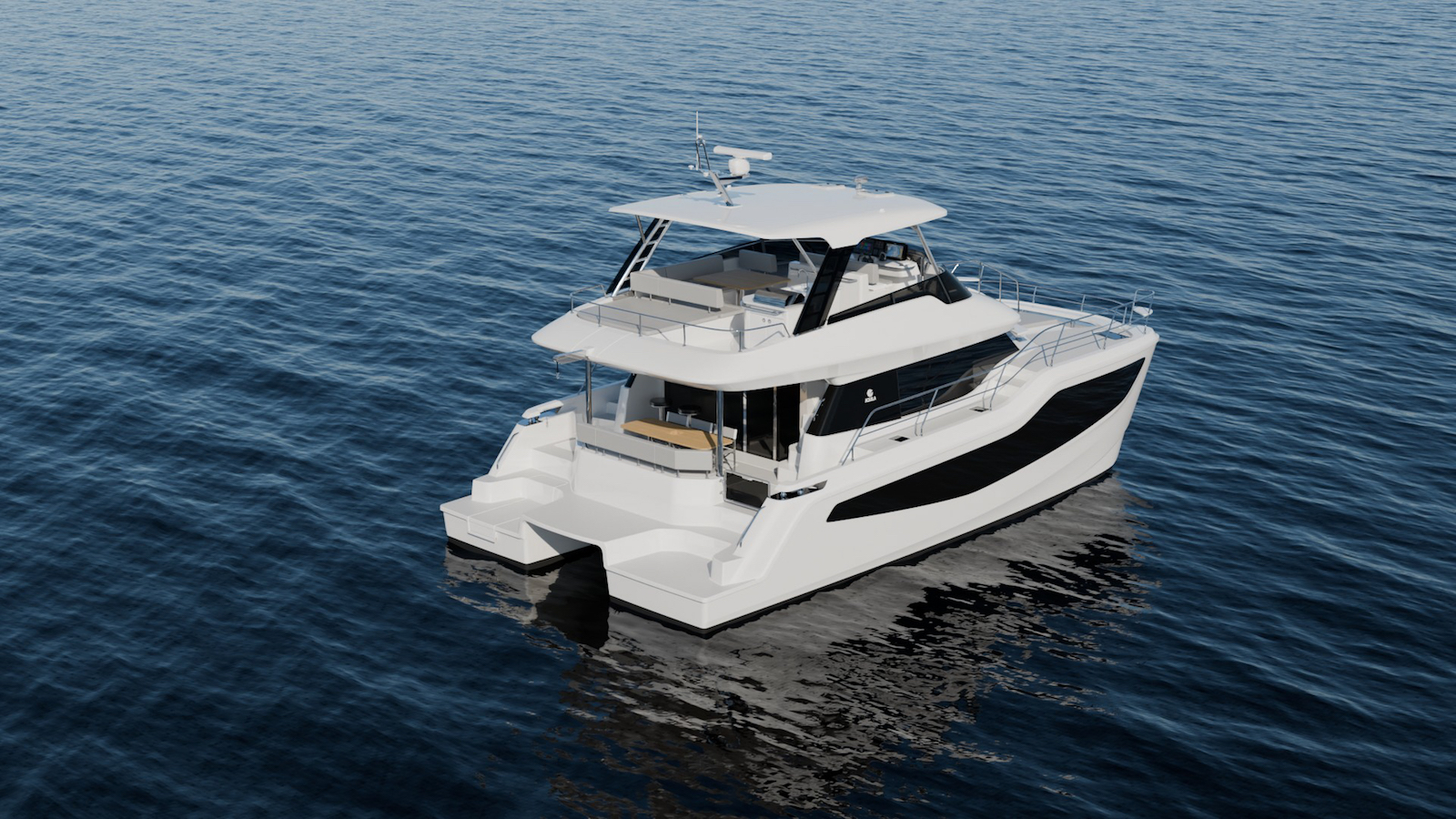
The new Aquila 46 Yacht
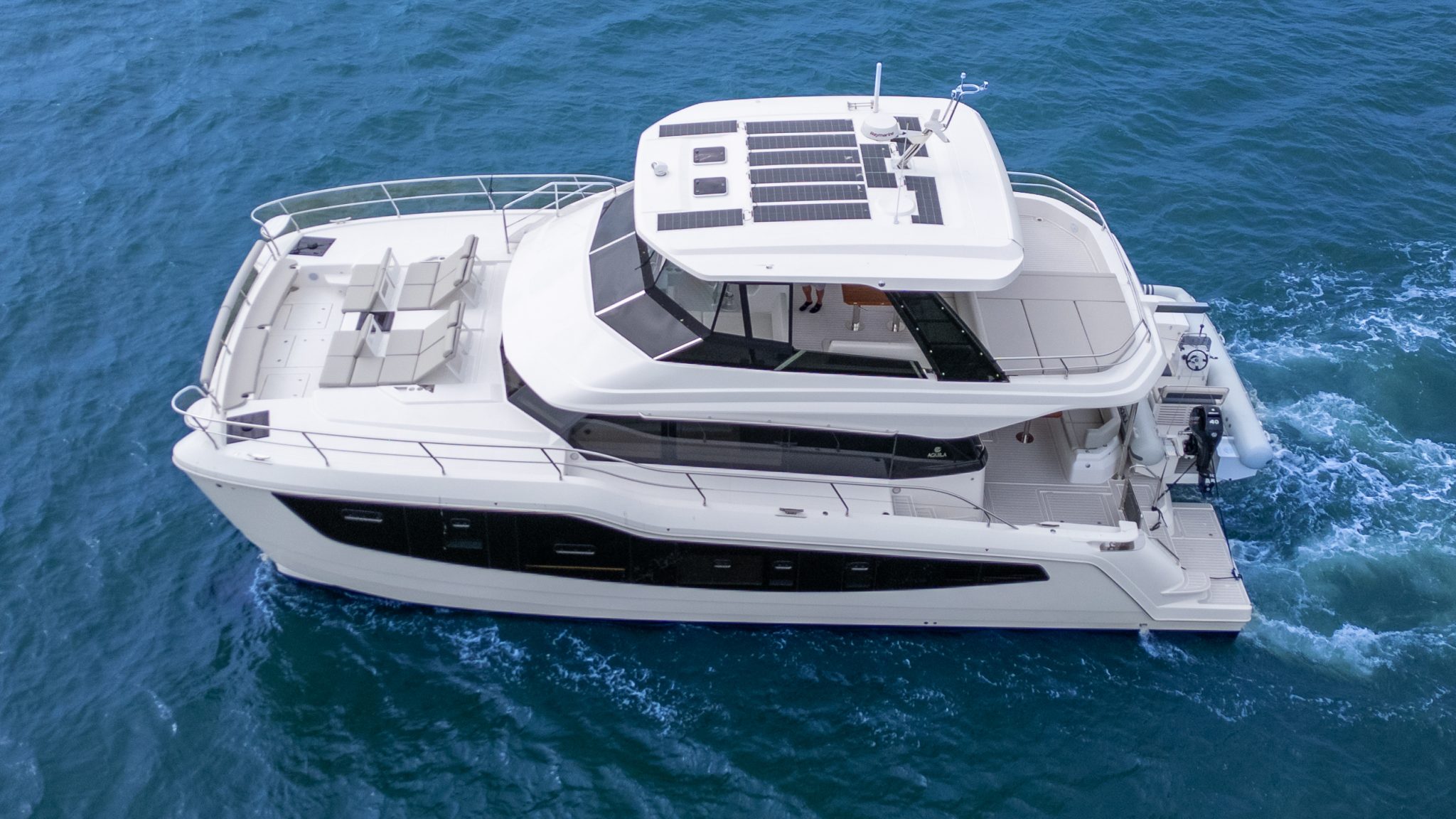
The brand-new Aquila 46 Yacht embodies the perfect balance between luxury and performance. Boasting a cutting-edge design, it delivers stability, generous living spaces, and excellent fuel efficiency. Additionally, the 46 Yacht features relaxing areas designed for conviviality, premium cabins, and state-of-the-art marine technology, making it ideal even for extended cruising.
TECHNICAL SPECS | |
|---|---|
| LOA | 14,36 m / 47’2″ |
| Max Beam | 7,10 m / 23’3″ |
| Height on the waterline (with hardtop) | 5,95 m / 19’5″ |
| Draft | 1,24 m / 4’1″ |
| Foil | Opzionali |
| Berths | 10 |
| Max Passengers Capacity | 24 |
| Cabins | 3 / 4 / 5 |
| Bathrooms with shower | 3 / 4 / 5 |
| Fuel Tank Capacity | 1.800 L / 476 gal |
| Additional Fuel Tank (opt) | 800 L / 211 gal |
| Water Tank Capacity | 800 L / 211 gal |
| Black Water Tank Capacity | 240 L / 63 gal |
| Engines (standard) | 2 x Volvo Penta D4 320 HP |
| Category | A:12, B:12, C:16, D:24 |
The new 42 and 46 Coupe
 In Cannes, visitors can also get a close look at the new 42 and 46 Coupe. Designed to maximize space, both models feature versatile layouts, refined interiors, and advanced technology. Equipped with the carbon fiber Aquila Hydro Glide® system, these catamarans ensure efficient and high-performance cruising. Also making their debut in Cannes are the new inboard versions, powered by Volvo Penta DPI Dual Prop engines, offering a cutting-edge solution that adapts to different navigation needs.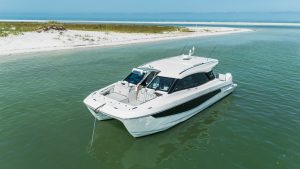
46 C TECHNICAL SPECS | |
|---|---|
| LOA | 14,44 m / 47’4″ |
| Max Beam | 5,46 m / 17’11” |
| Height on the water level (with hardtop) | 3,36 m / 11’0″ |
| Draft (engines raised with foil) | 1,08 m / 3’7″ |
| Draft (outboards lowered with foil) | 1,13 m / 3’9″ |
| Draft (sterndrives lowered with foil) | 1,23 m / 4’1″ |
| Dry Displacement | 14.500 kg / 31.970 lb |
| Fuel Tank Capacity | 2.334 L / 616 gal |
| Category | B:14, C:22, D:32 |
| Cabins / Bathrooms with separate shower | 2 / 2 |
42 C TECHNICAL SPECS | |
|---|---|
| LOA (with ourboards) | 13,06 m / 42’10” |
| LOA (with sterndrives) | 12,88 m / 42’3″ |
| Max Beam | 4,85 m / 15’11” |
| Height on the water level (with hardtop) | 3,13 m / 10’3″ |
| Draft (outboards raised with foil) | 0,88 m / 2’10” |
| Draft (outboards lowered) | 0,90 m / 2’11” |
| Draft (sterndrives lowered) | 0,98 m / 3’3″ |
| Dry Displacement | 8.500 kg / 18.740 lb |
| Fuel Tank Capacity | 1.552 L / 410 galloni |
| Category | B:12, C:20, D:29 |
| Cabins / Bathrooms with separate shower | 2 / 2 |
Aquila 50 Yacht
Also making its official European debut is the impressive Aquila 50 Yacht. This catamaran stands out for its generous living volumes, build quality, and a design conceived to deliver comfort, safety, and versatility. With multiple entertainment areas, spacious cabins, and top-level technical equipment, the 50 Yacht is built to CE Category A standards, ensuring maximum reliability even on offshore cruising.
TECHNICAL SPECS | |
|---|---|
| LOA | 15,9 m / 52’2″ |
| Max Beam | 7,76 m / 25’6″ |
| Fuel Tank Capacity (standard) | 1.600 L / 422 gal |
| Engines (standard) | 2 x Volvo Penta D6 380 HP |
| Cabins (standard) | 3 cabin / 3 bathrooms + technical room |
| Cabins (opt) | 4 cabins/ 4 bathrooms + crew cabin (opt) |
| Estimated performance (non-contractual data) | Max Speed: 22 kn / Cruising Speed: 18–19 kn |
The post Aquila Power Catamarans unveils four premieres at Cannes Yachting Festival appeared first on Yachting News.
]]>The post Four Winns launches new TH33 and TH38 power catamarans appeared first on Yachting News.
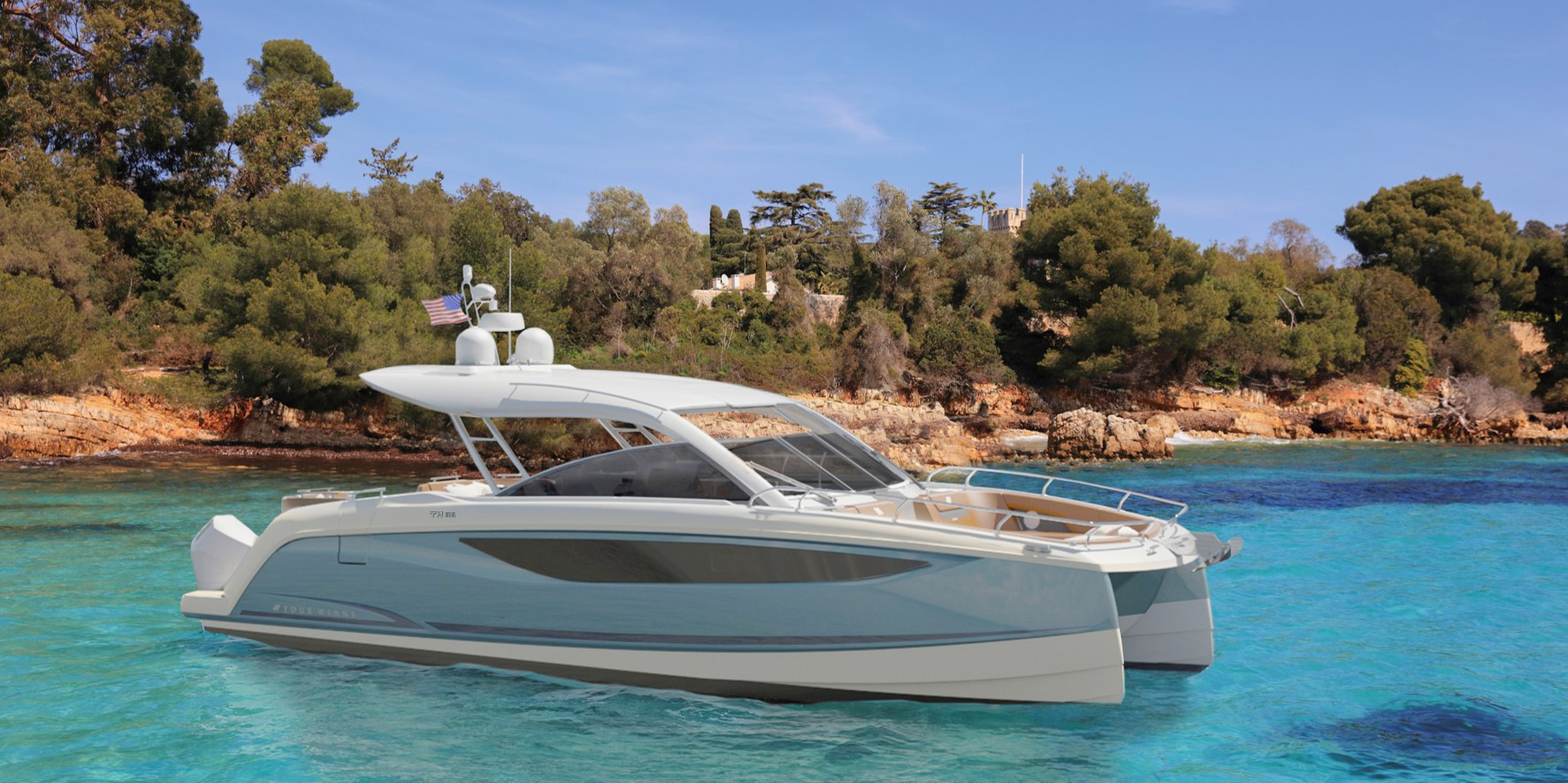
]]>Four Winns presents its two new power catamarans, the TH33 and TH38. Designed to turn every outing into an elegant escape, these new models set a new standard in the power catamaran category while expanding the TH (Twin Hull) range launched in 2023.
Four Winns TH33: redefining horizons without compromise
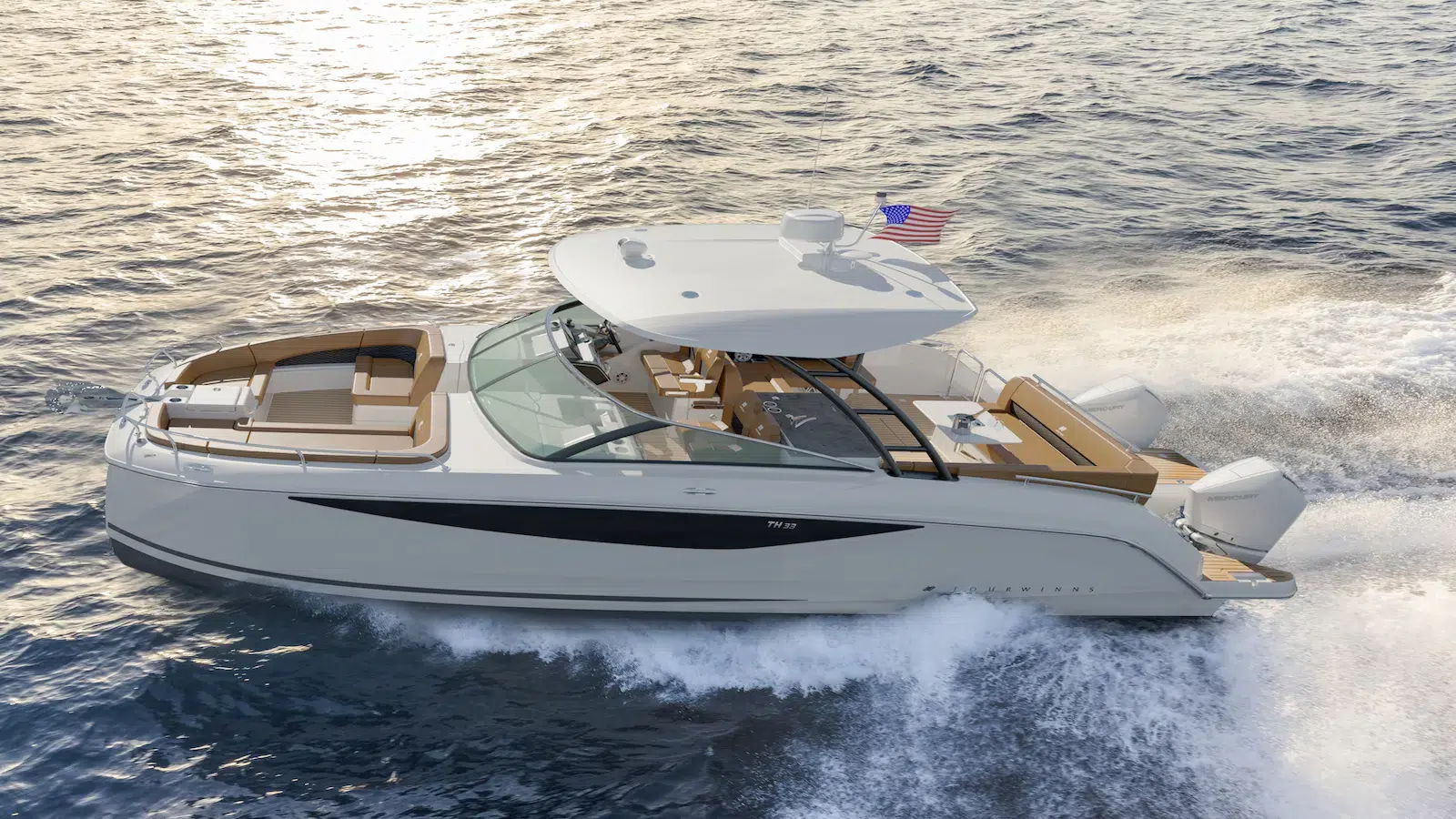
The Four Winns TH33 blends Four Winns’ 50 years of premium American craftsmanship and iconic design with bold innovation. The evolution of the first launch in the series, the TH33 is an instinctive power catamaran meticulously designed for those who demand more space and stability.
“The TH33 is a unique concept that simply brings more to boaters – says Four Winns Product Manager Alexis Chas – The TH33 is more than a new addition to the TH line—it’s a bold new step in redefining the experience of boaters”.
More space, stability and efficiency
The Four Winns TH33’s power catamaran twin-hull design impressively offers boaters the space of a 40’ (12.92m) monohull. Using the entire 12’6” (3.81m) beam of the 33-footer, over 400 square feet of versatile living space is available for relaxing, entertaining, and enjoying sun-filled days cruising on the lake or through coastal waters. Below deck, there is also ample storage space.
The width between the twin hulls brings enhanced stability. Its wide stature distributes weight evenly across a broader footprint than monohulls, significantly reducing roll motion and making navigation significantly more comfortable.
The increased stability also allows for more efficient cruising. The TH33 glides through the water with less resistance, requiring less power and fuel to reach comfortable cruising speeds.
Clever design for refined comfort
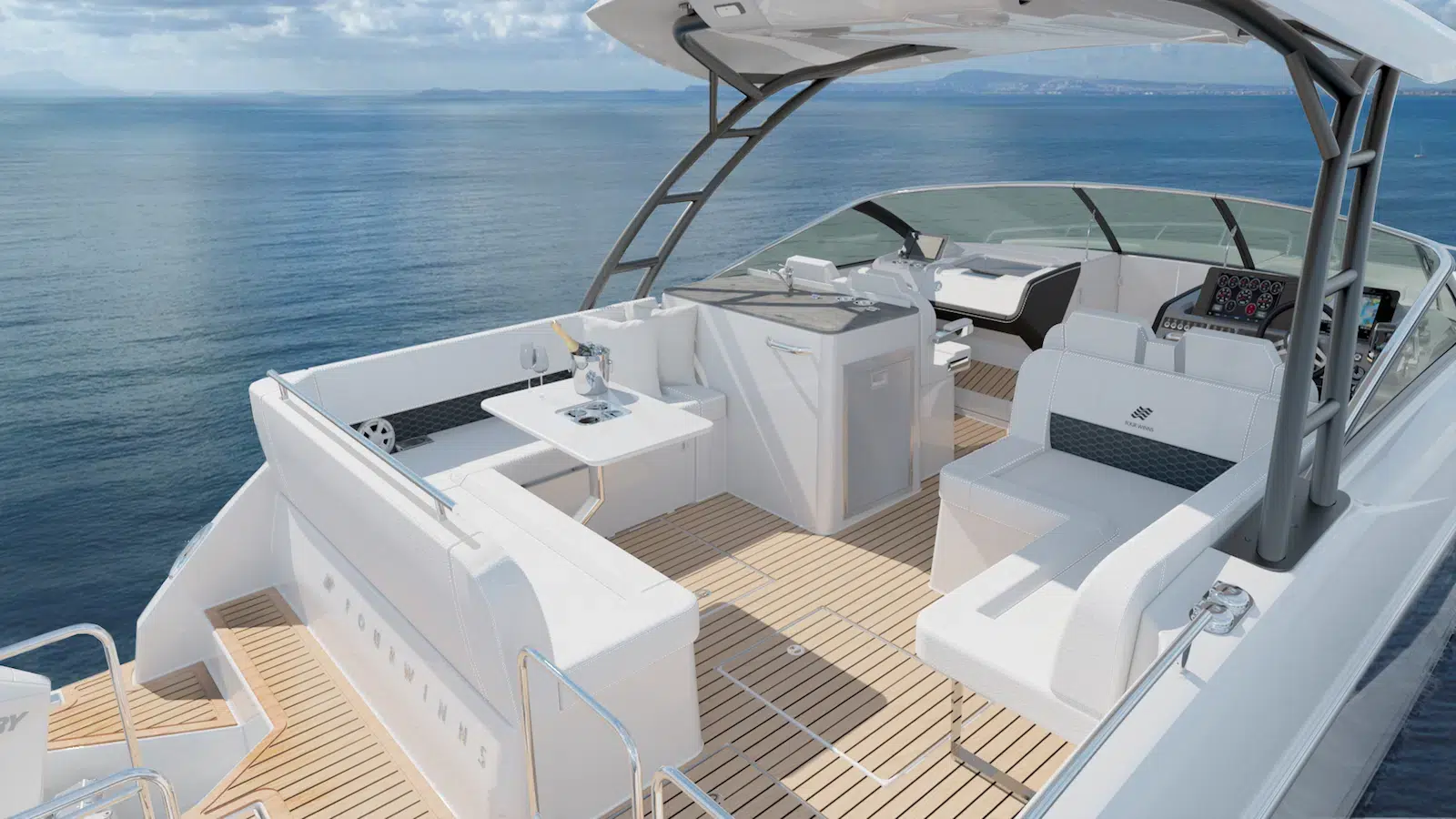
Every detail of the Four Winns TH33 has been designed to deliver a premium onboard experience. The spacious deck areas make it perfect for socializing. At the helm, two extra-large forward-facing seats are paired with dual 12” Garmin displays and a 7” passenger display, all protected by the signature Four Winns curved panoramic windshield. An optional hardtop is also available for maximum protection in any season.
At the stern, a wide swim ladder positioned between the Mercury engines allows safe and easy access to the water.
Getting around on board is simple and safe. The central access and well-placed bathroom enhance usability, while natural wood or Marine Mat flooring coordinated with the furnishings adds to the interior elegance. At the heart of the living space is a fully equipped galley with a sink, refrigerator, waste compartment, and an optional electric grill.
Four Winns TH33, handcrafted attention to every detail
Craftsmanship is the hallmark of the Four Winns TH33. From the hand-stitched cognac leather seats to the light grey fabric version, every surface is designed to enhance the onboard experience.
“The craftsmanship is unmistakable—from the signature curved windshield to the upscale textures and finishes – says Alexis Chas – It’s where modern design meets the Four Winns legacy”.
Technical Specs |
|
|---|---|
| LOA | 34’4″ / 10,49 m |
| LH | 21’9″ / 9,70 m |
| Width | 12’6″ / 3,83 m |
| Fuel Tank Capacity | 238 gal / 900 L |
| Water Tank Capacity | 25 gal / 95 L |
| Displacement | 12471 lbs / 5657 kg |
| Max Power | 600 HP |
Four Winns TH38: the evolution of the dayboat concept
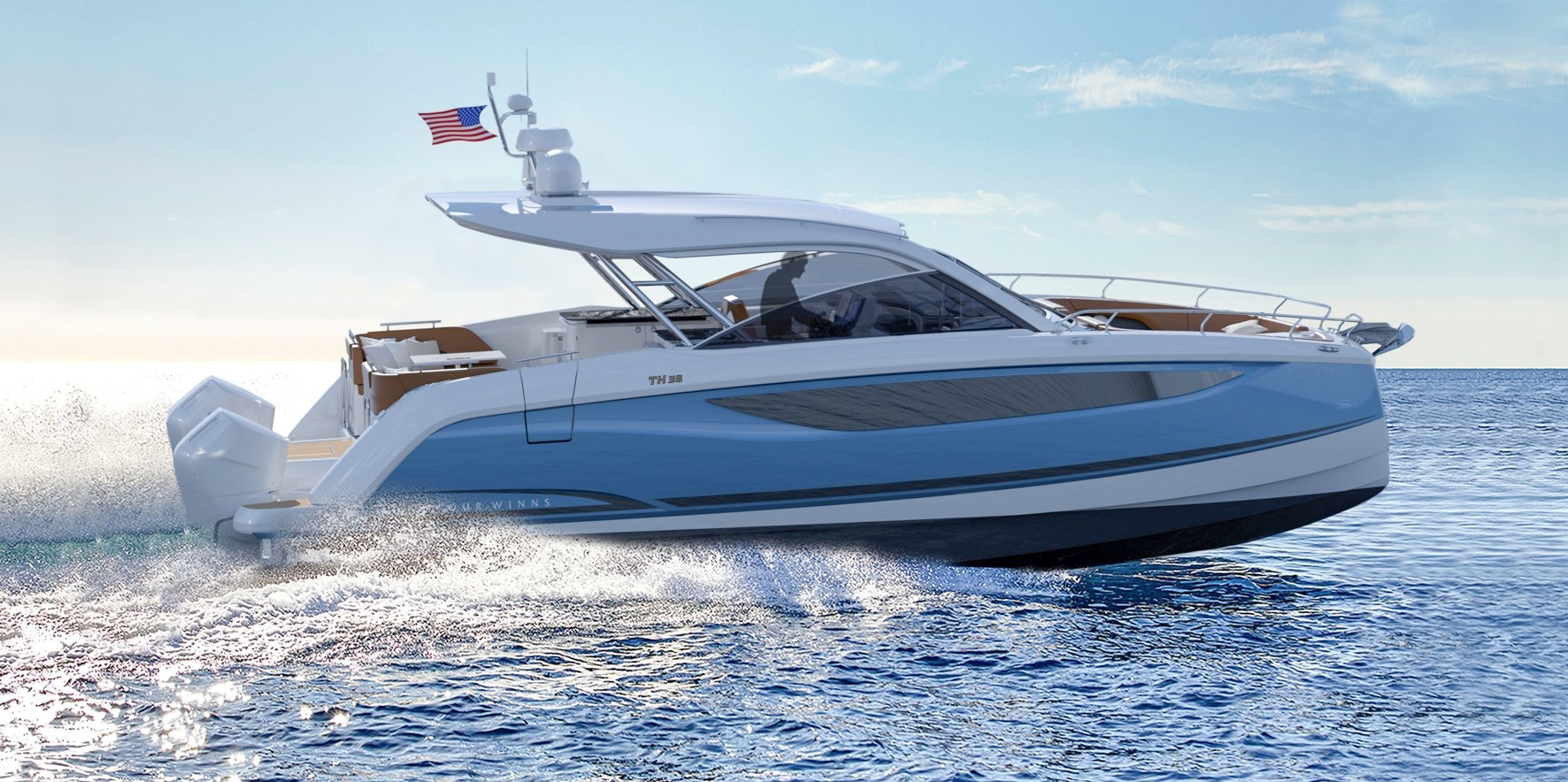
The Four Winns TH38 takes safety, living space, and comfort to a new level, while preserving the core qualities of the TH range: stability, accessibility, and performance.
More freedom, more protection
Designed in collaboration with Garroni Design and naval architect Marc Lombard, the TH38 combines the adventurous spirit of a dayboat with the elegance of a cruiser. Two windshield versions are available: a full-height option for optimal protection and year-round use, and a low version (which can be fitted with side protections) for increased openness and ventilation.
“The TH38 breaks down barriers for those who love the sea: now you can enjoy boating life in any season and any place – says Alexis Chas – The twin hull ensures stable and comfortable cruising wherever you go”.
The modular deck allows you to use the space however you like—from a social lounge to a dining area—in complete safety.
Outdoor living, in style
With a beam of 4.47 meters and over 46 square meters of deck space, the Four Winns TH38 accommodates up to 14 people, offering plenty of room to relax, have fun, and enjoy every aspect of life on board. The joystick steering system, dual digital displays, and advanced helm provide intuitive control even in tight spaces. The hand-stitched front seats ensure comfort at the helm as well. A centrally positioned swim ladder between the engines makes getting in and out of the water easy and safe.
Comfort even below deck
Below deck, the TH38 offers two identical, air-conditioned cabins, each with a double bed, generous storage space, blackout curtains, and a private bathroom with a large glass shower. Large side windows allow natural light to fill the interior.
“The TH38 is a refined response to the needs of today’s boaters: more space, more stability, and the freedom to choose – says Alexis Chas – A boat designed for new adventures”.
The Four Winns TH38 combines the comfort of a cruiser, the practicality of a family catamaran, and an open layout with no compromises. It can be customized with a wide selection of finishes, options, and electronic packages.
Technical Specs |
|
|---|---|
| LOA | 38’9″ / 11,82 m |
| LH | 37’5″ / 11,42 m |
| Width | 14’8″ / 4,47 m |
| Fuel Tank Capacity | 244 gal / 930 L |
| Water Tank Capacity | 190 gal / 50 L |
| Displacement | 16356 lbs / 7419 kg |
| Max Power | 700 hp |
The new Four Winns TH33 and TH38 will make their world premiere at the Cannes Yachting Festival (Port Canto) from September 9 to 14, 2025. Their U.S. debut is scheduled for the Miami International Boat Show, from February 11 to 15, 2026.
The post Four Winns launches new TH33 and TH38 power catamarans appeared first on Yachting News.
]]>The post Aquila 36 Molokai, the uncompromising fishing catamaran appeared first on Yachting News.
]]>A comfortable and versatile 36-foot fishing boat. Aquila Power Catamarans introduces the Aquila 36 Molokai, the latest addition to the renowned Molokai catamaran series. Building on the proven success of the 47 Molokai, this new model promises pure efficiency and thrilling performance for uncompromising fishing adventures.
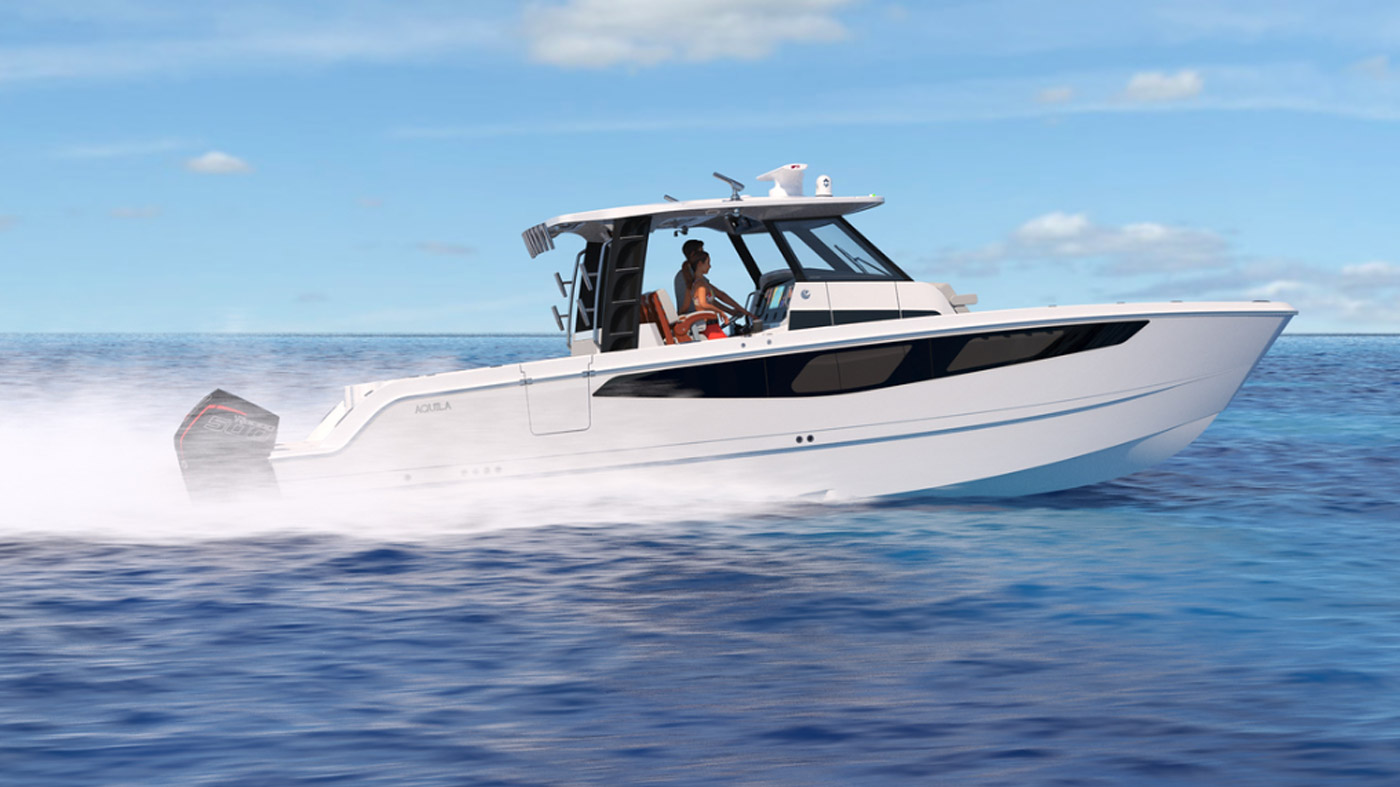
Specifically, the Aquila 36 Molokai inherits the design philosophy that made its larger sibling a benchmark: extreme fishing capabilities paired with immense comfort—all condensed into a vessel specifically designed to put fishing first. The smart deck layout maximizes space and functionality, while the twin-hull design ensures the stability and ride quality catamaran enthusiasts expect.
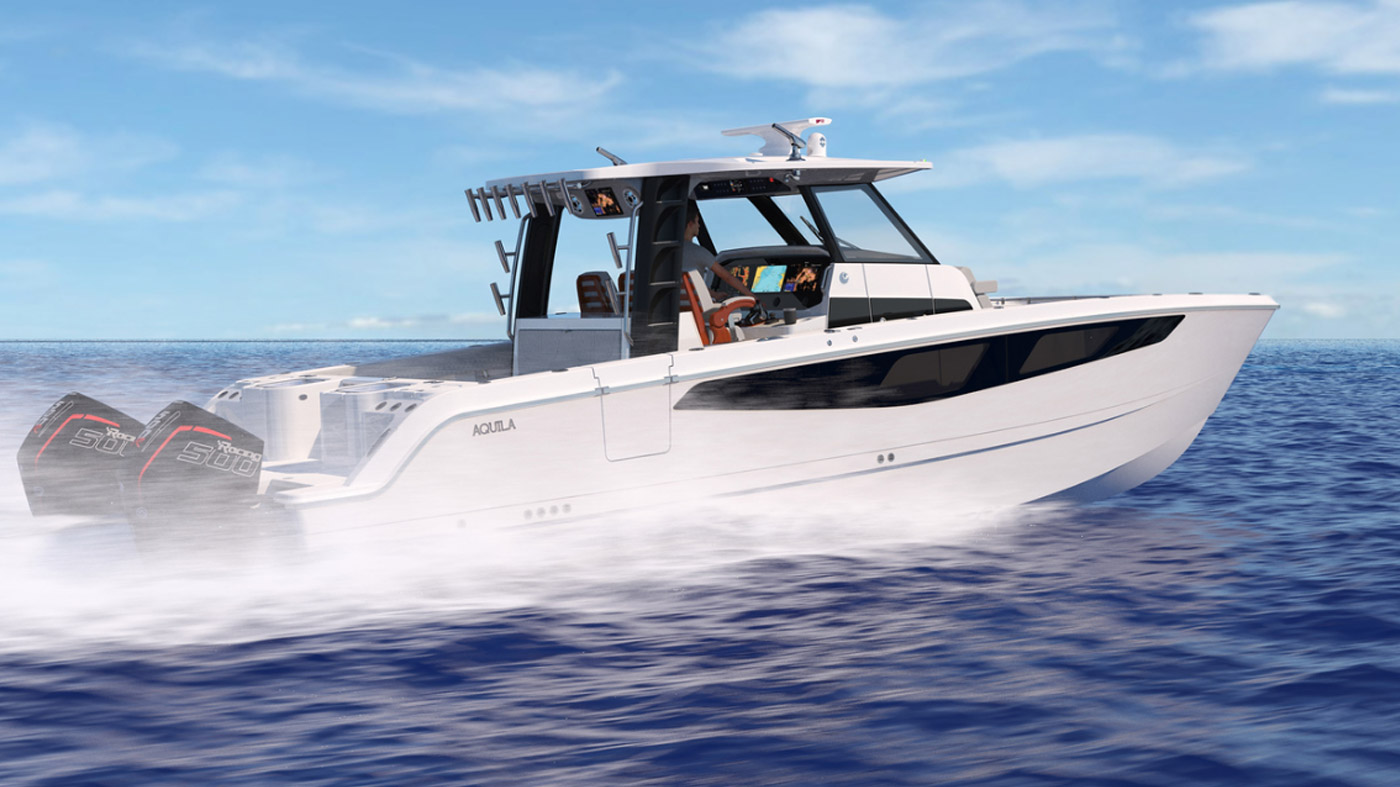
The advanced construction techniques of the Aquila 36 Molokai guarantee maximum reliability, even in challenging conditions. Whether fishing near the coast or offshore, this fishing catamaran delivers the performance and features serious anglers demand, with meticulous design details from bow to stern to make every fishing trip both productive and enjoyable.
“We didn’t set out to build just another 36-foot boat – said Jean Raas, CEO of Aquia USA and Chief Product Officer – We built a fishing weapon that happens to be 36 feet long. Every design decision was made with serious anglers in mind. The beautiful thing is it’s also a great boat for entertaining family and friends”.
The smart design features of the Aquila 36 Molokai
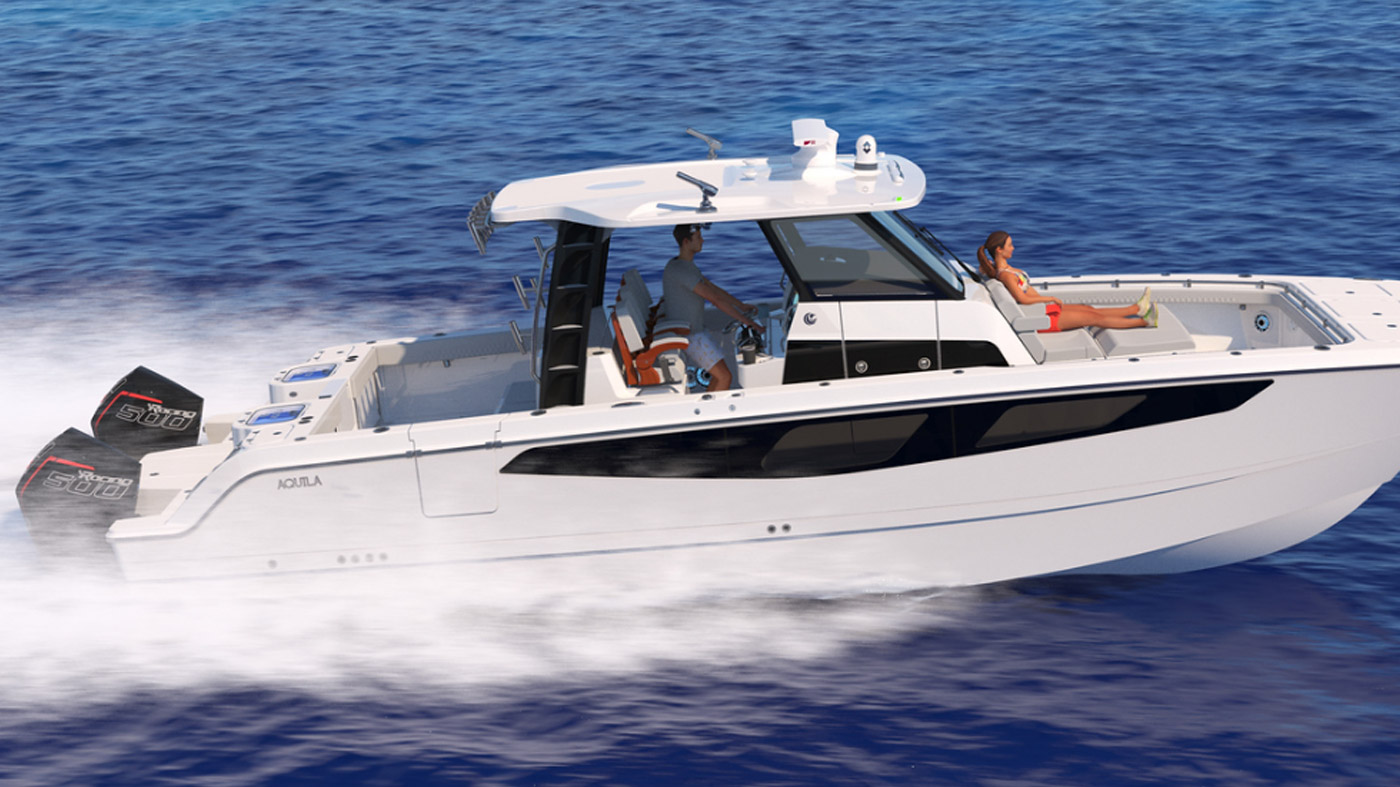
World-renowned Peart Yacht Design, which also developed the highly successful Aquila 47 Molokai, was able to blend hardcore offshore fishability with luxury power catamaran comfort. Efficient hull forms that slice through waves, intelligent deck layouts that maximize fishing functionality, and the structural integrity to handle heavy seas and big fish are only some of the main strengths of this extraordinary catamaran. With the 36 Molokai, Peart has distilled the proven formula of their larger sibling in a 36-foot model. The result is a boat that doesn’t compromise on the serious fishing capabilities that made the 47 a standout in its class.
The Aquila 36 Molokai’s bow area exemplifies intelligent design, seamlessly blending relaxation with serious fishing functionality. Bow sun loungers provide comfortable seating for three (3) crew or guests during transit or downtime, with optional storage beneath for tackle organization and gear. This optional storage feature allows owners to customize their layout based on priorities.
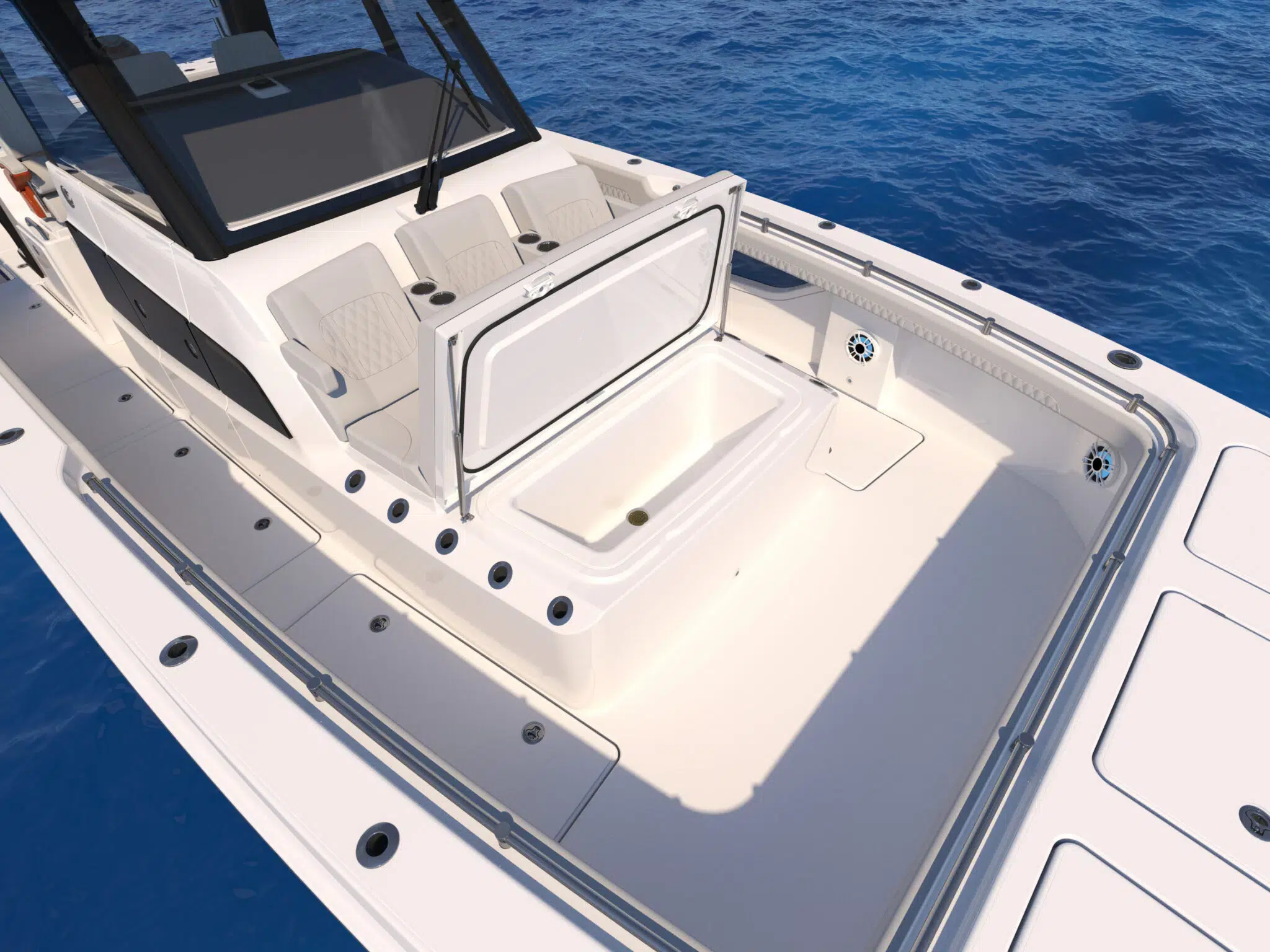
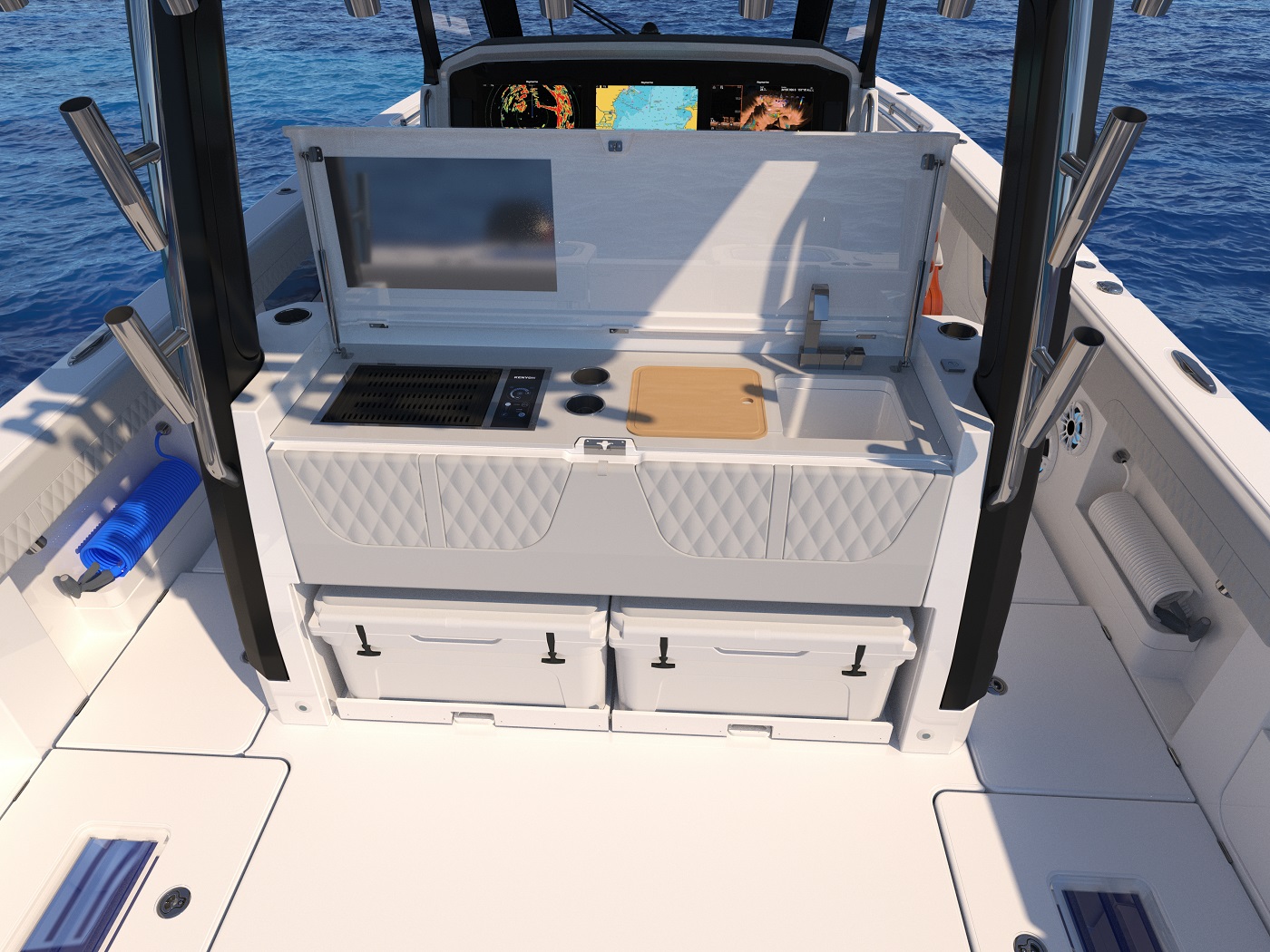
An integrated tackle station keeps fishing gear organized and accessible, while the summer kitchen with optional BBQ transforms the boat into an entertaining platform. Pull-out coolers provide convenient storage and create additional aft-facing seating, ensuring ample room for crew and guests whether fishing or relaxing.
Top-tier comfort and performance
The Aquila 36 Molokai’s carbon fiber hardtop delivers exceptional structural integrity. Unlike traditional fiberglass hardtops that may flex or require extensive reinforcement, the carbon fiber construction provides an inherently strong, rigid foundation that can handle the demanding loads of a tuna tower installation without additional structural reinforcements required. The advanced composite material distributes stresses evenly across the structure, ensuring the hardtop maintains its strength and durability even when supporting heavy tower configurations.
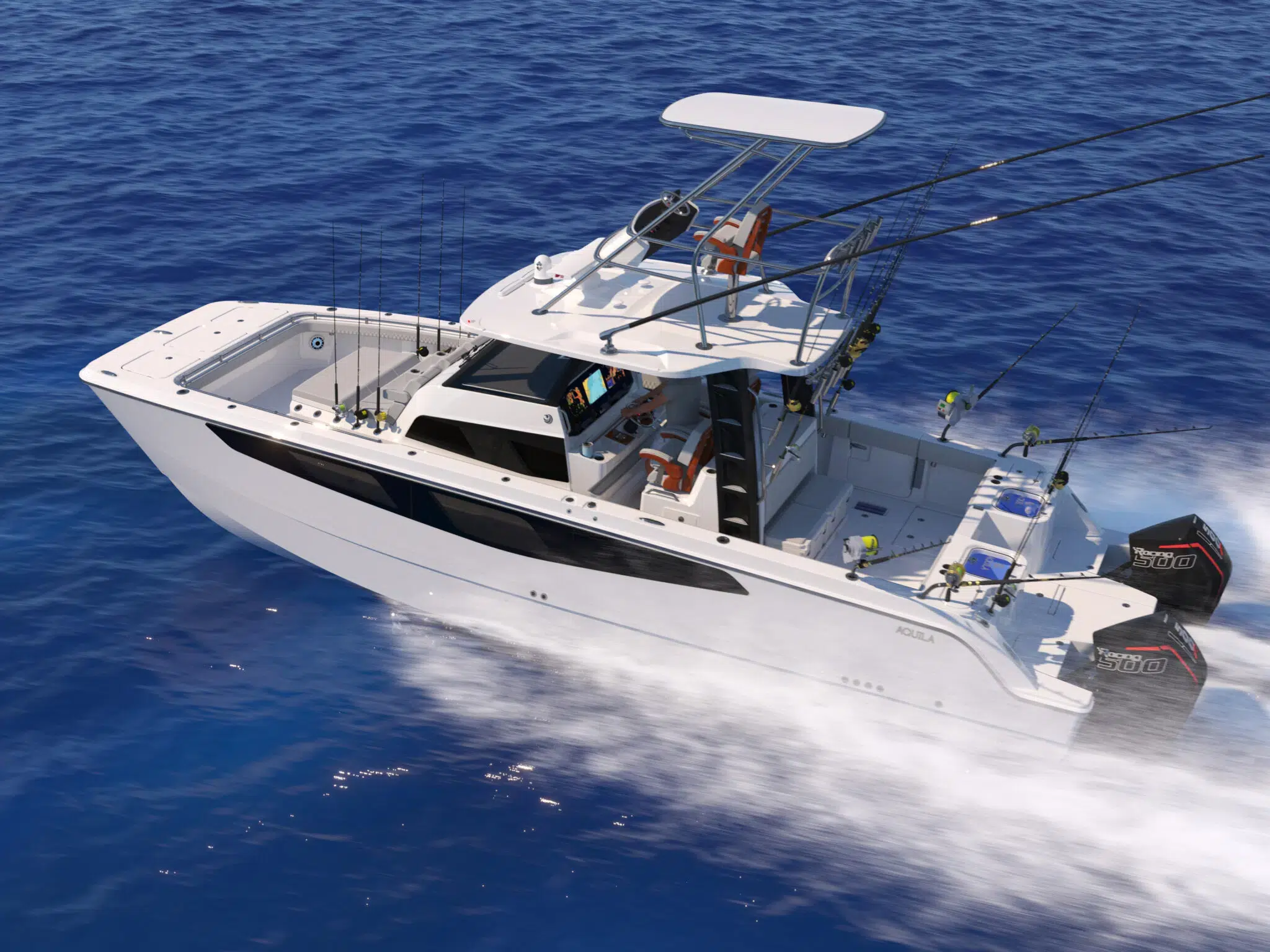
Equally noteworthy is the cabin. While most fishing boats leave crews exposed to the elements all day, the Aquila 36 Molokai includes a thoughtfully designed sleeping cabin with private head. This comfortable refuge below deck allows anglers to extend single-day trips into overnight adventures, reaching distant fishing grounds that were previously out of range. The cabin also provides a welcome retreat for family members who need a break from the sun and wind, making the boat more inclusive for mixed-group outings where not everyone wants to fish all day.
The post Aquila 36 Molokai, the uncompromising fishing catamaran appeared first on Yachting News.
]]>The post Prestige M7 Video Test: an out-of-the-ordinary power catamaran appeared first on Yachting News.
]]>Prestige M7 Sea Trial
Our video test on board the Prestige M7 begins at idle, cruising at 600 rpm and 4 knots. It’s a perfect day: the sun is shining and the sea is calm, with just a slight residual long swell coming from the southwest. From the flybridge, we can immediately feel that the stability is out of the ordinary. Pushing our Prestige M7 are two Volvo D8 engines delivering 550 horsepower each, for a total of 1100 horsepower—perfectly suited for a boat of this size. We throttle up to 1300 rpm, reaching 8.3 knots while consuming less than 24 liters per hour. At this speed, the boat’s range exceeds 1600 nautical miles, which is truly impressive: with performance like this, you can cover long distances without worrying about refueling.
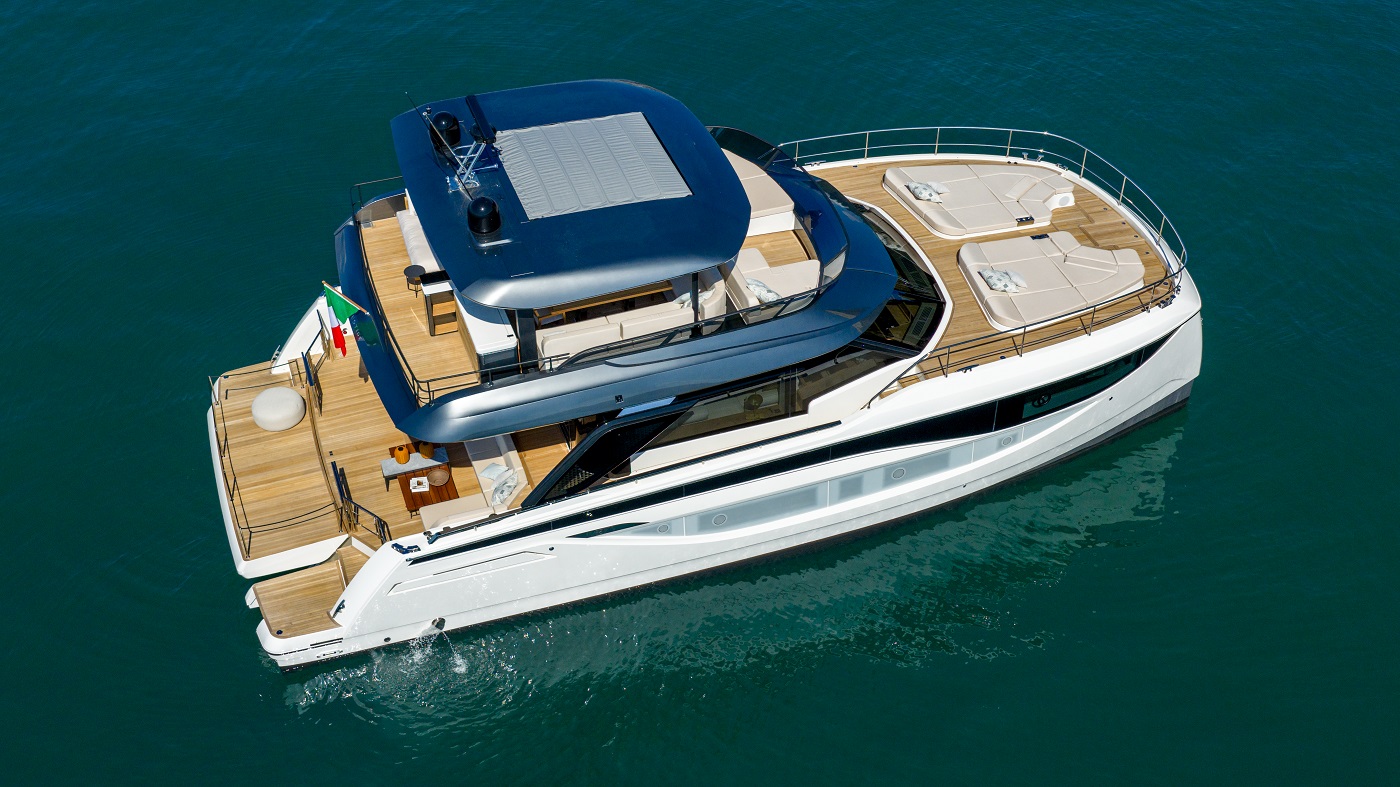
But we want to see how the Prestige M7 performs at higher speeds, so we push up to 10 knots—another typical cruising speed. We’re at 1600 rpm and fuel consumption is around 48 liters per hour, still very low. Ten knots is quite a strategic speed for covering these passages, which are often done overnight. At 2500 rpm and 17 knots, the Prestige M7 reveals another side of its character: it’s a boat capable of fast transfers when needed, or of getting out of bad weather if necessary. Of course, at this speed, fuel consumption rises to 160 liters per hour, but that’s still lower than what you’d expect from other boats of this size. As for top speed, we manage to push the catamaran to an impressive 20.3 knots at 2950 rpm. But the real surprise with the Prestige M7 is how it behaves during turns and counter-turns. The catamaran handles like a superyacht, as you can see in the video: the level of comfort is extremely high, and you don’t feel the impact of the waves at all.
Comfortable and outsized living spaces
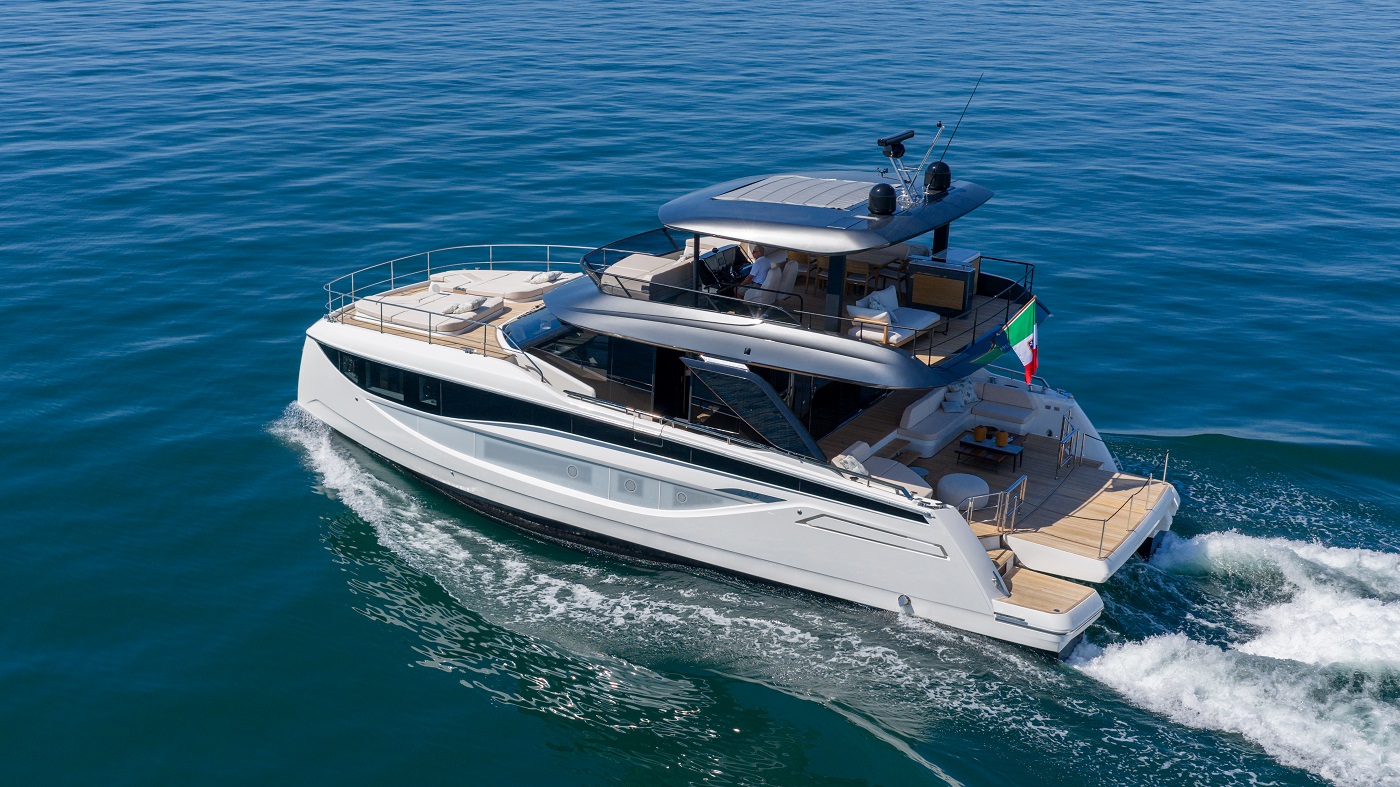
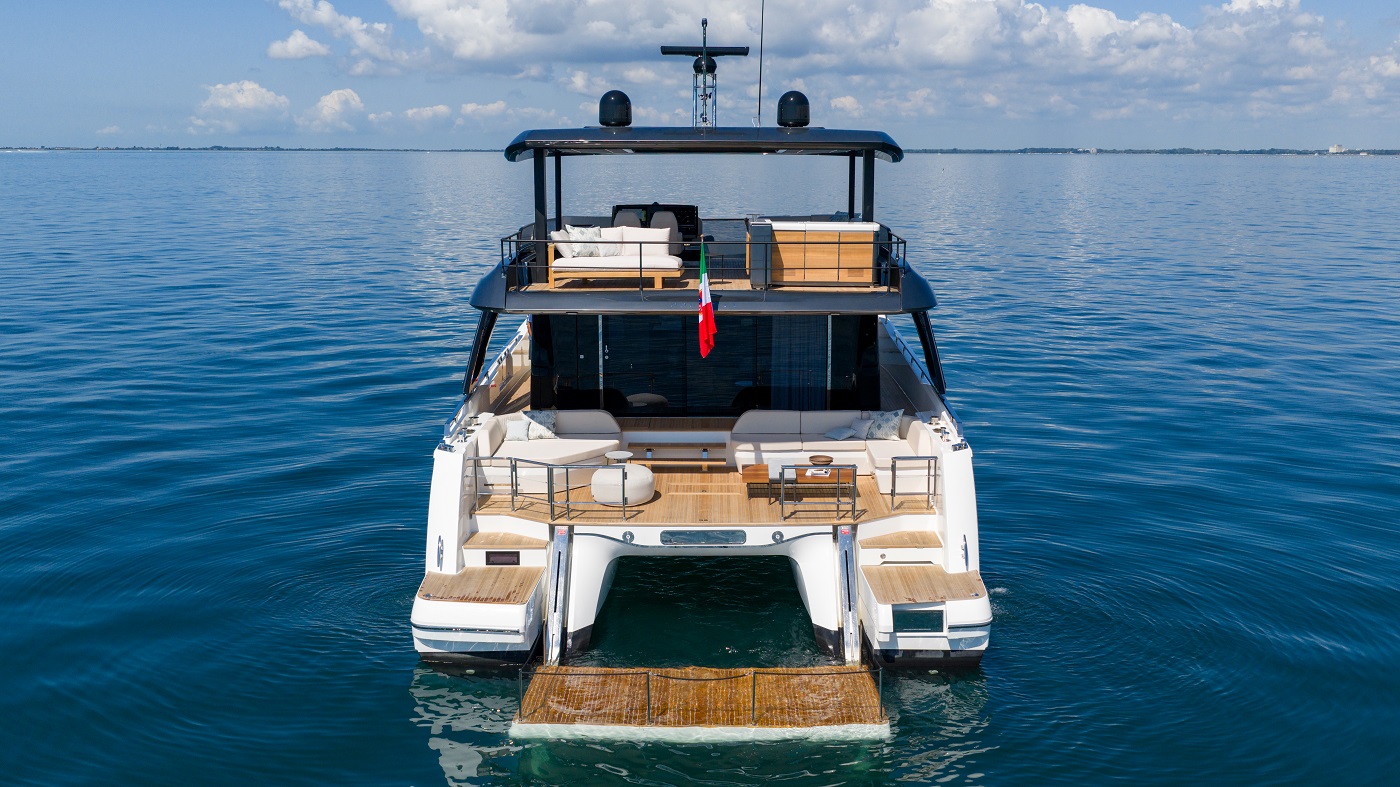
The Prestige M7 features an impressive beam of 7.5 meters, which allows for very spacious and comfortable interiors. The outdoor living area is split into two distinct zones: on the port side, there’s a relaxation area with a large two-person chaise longue that can also be converted into a sunbed, while to starboard there’s a central table surrounded by a large L-shaped sofa that seats 4 to 5 guests. Everything here is designed with style in mind, and the sense of luxury is tangible throughout. At the stern, another key feature of the Prestige M7 is the huge platform, perfect for imagining evening dinners. But more importantly, this area can be lowered to align with the two other decks, or even be submerged below the waterline, making boarding and disembarking much easier. It’s a feature that truly changes life on board.
As impressive as the stern is, it’s nothing compared to the grand saloon on the main deck, which genuinely takes our breath away. It houses a large sofa with a table and opposing poufs, along with another armchair. There’s space here for 10 to 12 people, and luxury is front and center.
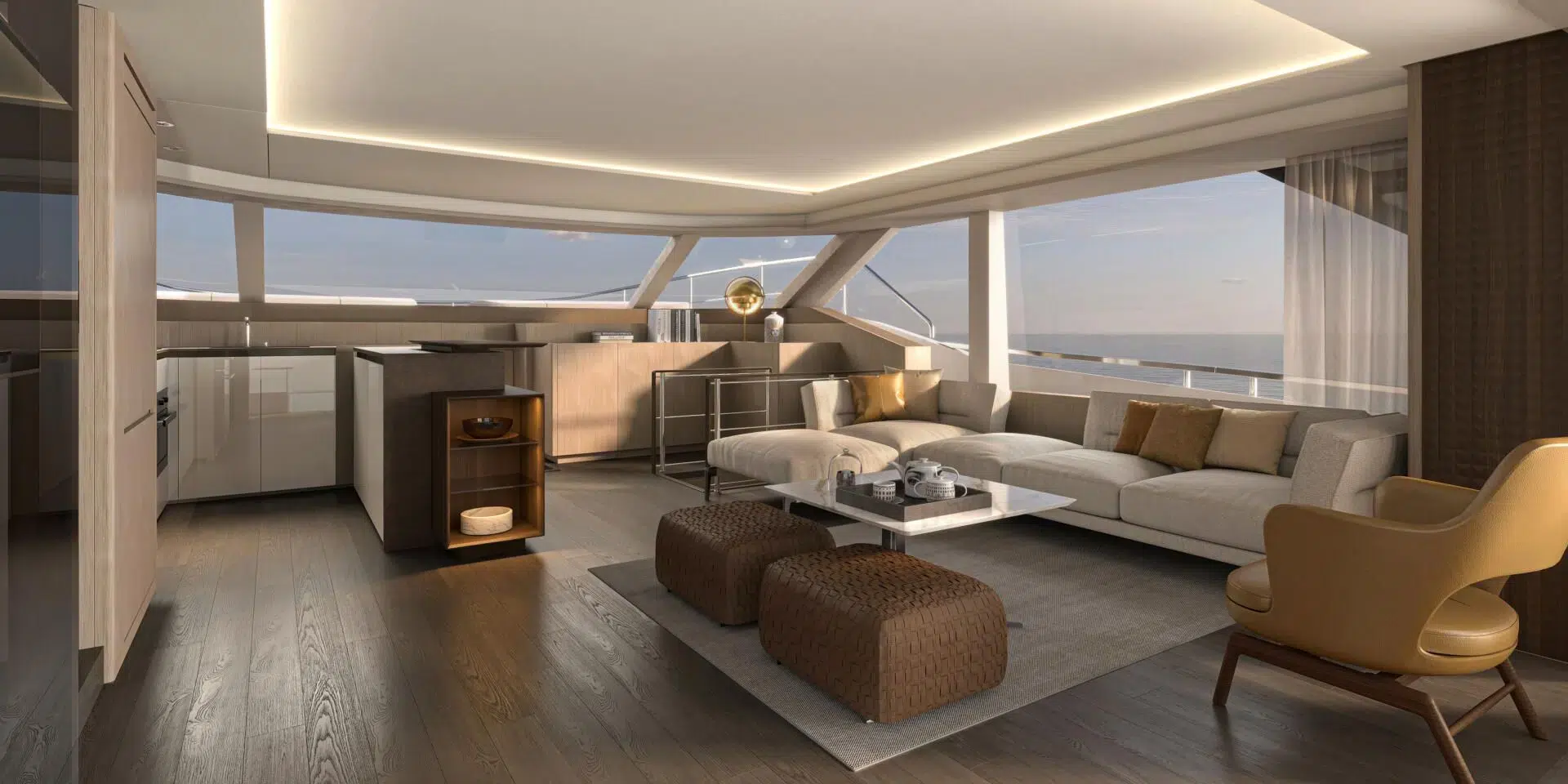
Walking forward, we find a large U-shaped galley, fully equipped with everything you might need at sea: a full-size refrigerator, oven, sink, induction cooktop, and plenty of additional accessories. At the bow, there’s a second helm station cleverly concealed within an elegant side cabinet wrapped in fine leather. It’s designed for navigating in bad weather, offering protection from the elements. But it also plays a key role during docking, thanks to the presence of throttles and a joystick.
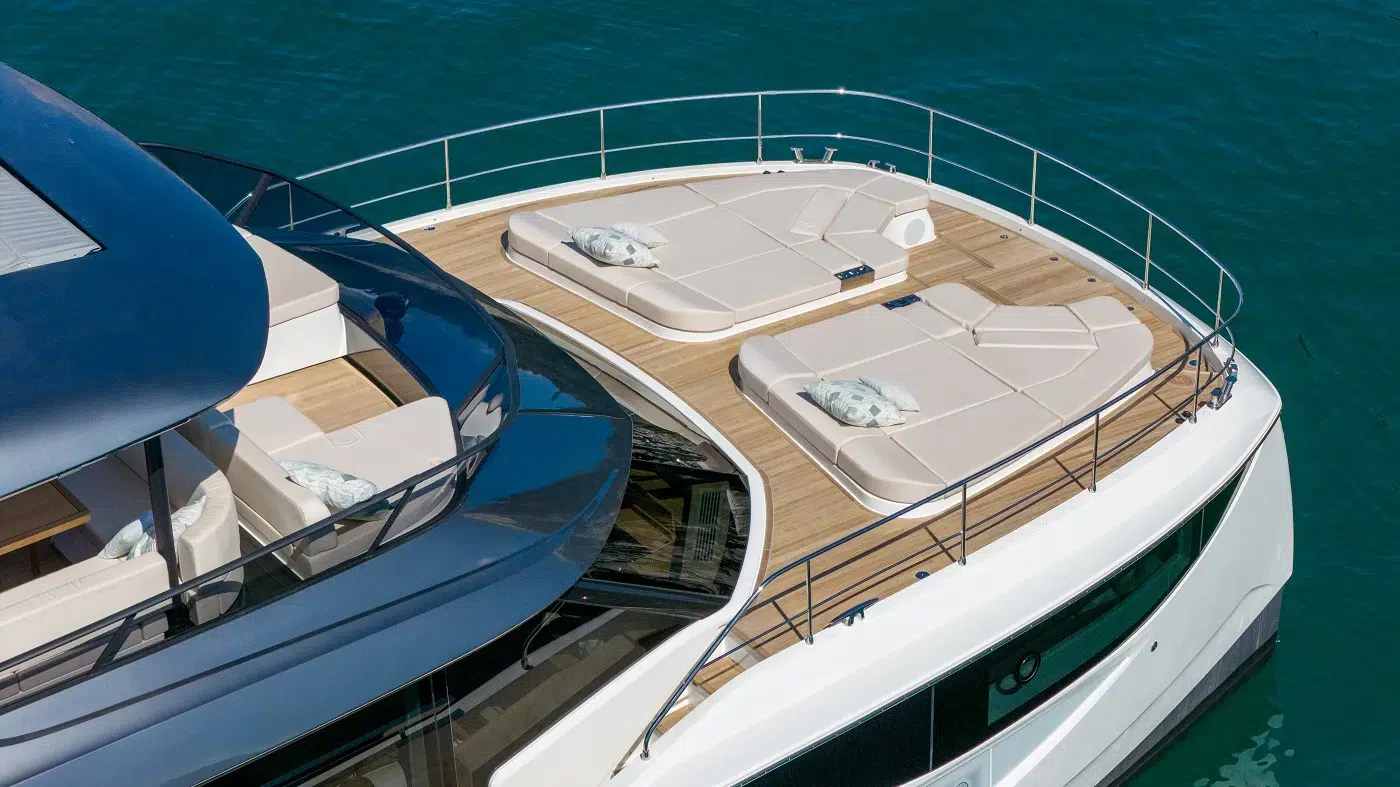
When it comes to conviviality, the flybridge of the Prestige M7 is the ideal setting. In addition to the helm station, there’s a table for eight and a fully equipped bar unit with a grill, sink, and double refrigerator. Toward the bow, there are two more large sofas, and the furniture layout in this area can be customized to suit the owner’s preferences. Everything is sheltered by a comfortable hardtop. As for the sleeping quarters, the master cabin on the Prestige M7 is simply stunning. Every detail—from the finishes to the lighting—reflects a dedication to luxury and design. At the center is a king-size bed flanked by two nightstands, and to the left, there’s a large chaise longue that can be converted into a sofa. The spacious en-suite bathroom features double sinks and a separate shower. Completing this beautiful owner’s suite are two large semi-transparent wardrobes, which are more like walk-in closets in terms of size.
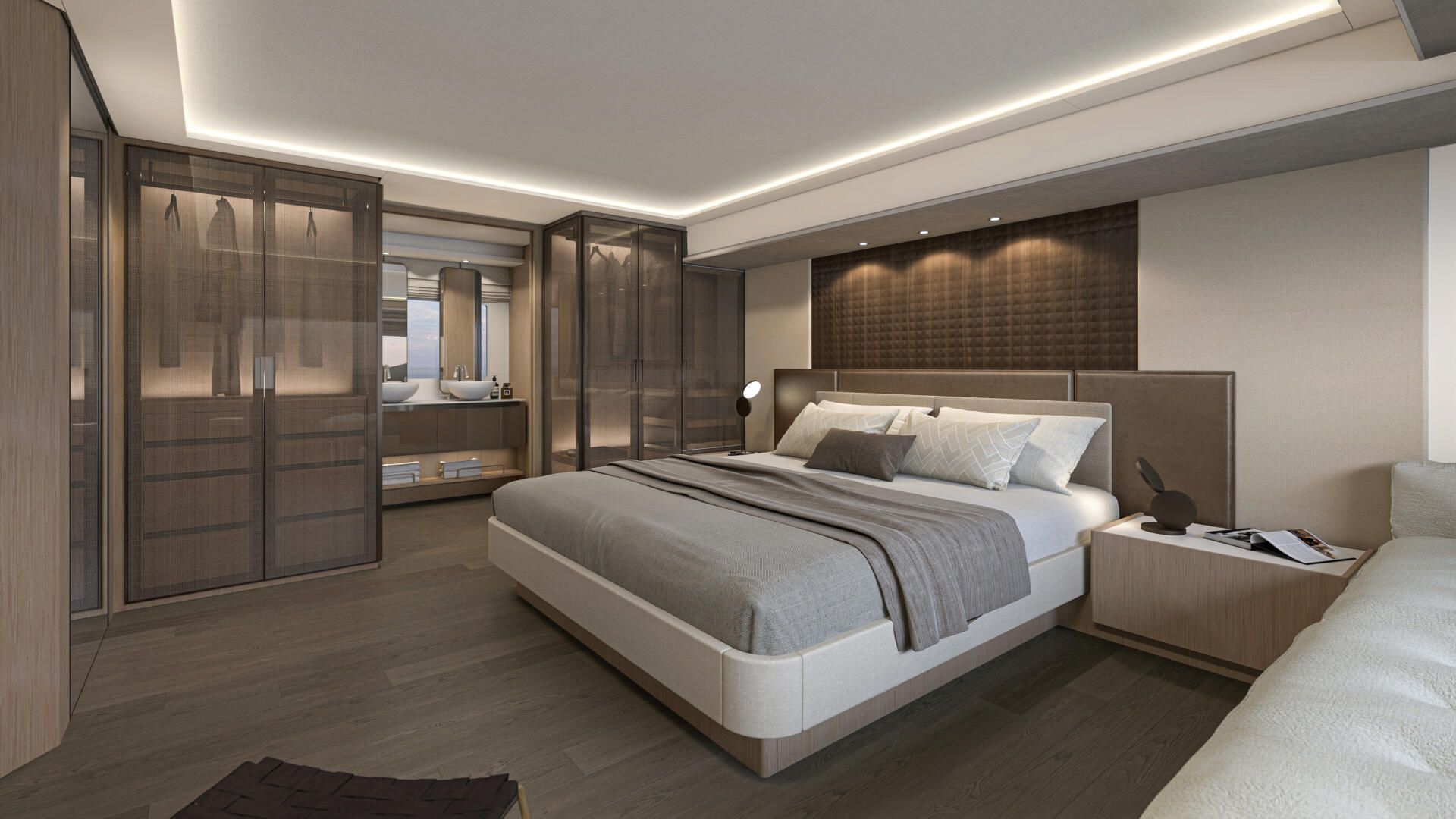
Prestige Yachts didn’t hold back with the VIP cabin either—it’s spacious and well-equipped, featuring a large central bed and a bathroom with a separate shower. The starboard hull of the Prestige M7 houses two more cabins: a second VIP cabin with a private bathroom and a twin cabin that’s generously sized. For a boat of this size, having four cabins of such high quality is truly impressive. In conclusion, the Prestige M7 is a truly out-of-the-ordinary motor catamaran, and we’re confident it will be highly appreciated on the market.
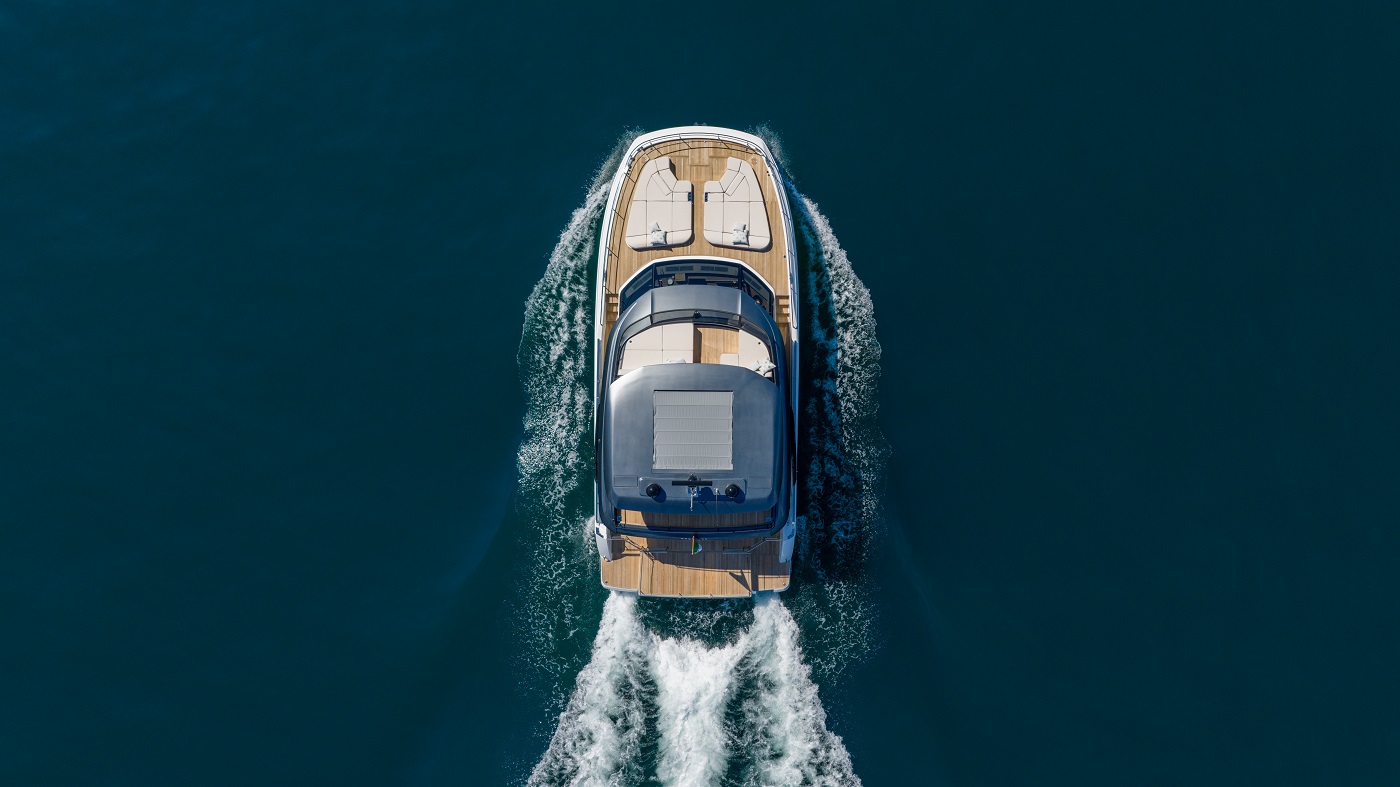
Prestige M7 Technical Specs
| LOA | 17.94 m |
| LH | 17.6 m |
| Max Beam | 7.54 m |
| Standard Draft | 1.55 m |
| Height from the waterline | 5.45 m |
| Light Displacement | 39499 kg |
| Full Load Displacement | 51457 kg |
| Max Speed | 20 kn |
| Cruising Speed | 17 kn |
| Fuel Capacity | 2900 l |
| Water Capacity | 760 l |
| Boiler Capacity | 120 l |
| Black Water Capacity | 340 l |
| Architecture | Garroni Design – Marc Lombard Yacht Design |
Test Data
| RPM | Speed | Consumption in gal/h |
| 600 | 4 | 1.21 |
| 800 | 4.5 | 2.21 |
| 1000 | 7 | 3.01 |
| 1200 | 8 | 4.94 |
| 1400 | 9.2 | 7.34 |
| 1600 | 10.3 | 11.06 |
| 1800 | 10.7 | 17.19 |
| 2000 | 11.4 | 23.51 |
| 2200 | 12.2 | 30.9 |
| 2400 | 14.6 | 37.51 |
| 2600 | 17.3 | 44.64 |
| 2800 | 19.5 | 52.57 |
| 2950 | 20.2 | 58.64 |
The post Prestige M7 Video Test: an out-of-the-ordinary power catamaran appeared first on Yachting News.
]]>The post “Out There”, Aquila Power Catamarans unveils its new brand identity appeared first on Yachting News.
]]>“Out There” is the name of the new brand identity unveiled by Aquila Power Catamarans in recent days. It’s a strategy rooted in innovation and forward thinking, highlighting the American shipyard’s meticulous attention to every design and production decision, all with the goal of making every moment on the water perfect for the owners who choose the company’s power catamarans.
With over 40 years of boatbuilding experience and a global collaboration of award-winning designers and engineers, Aquila was founded on a belief that better designs lead to better experiences for boaters everywhere in the world. The company’s new tagline — “Out There Starts Here” — invites catamaran enthusiasts to maximize their on-the-water experience by exploring Aquila’s expansive portfolio of thoughtfully-designed power catamarans.
“Out There Starts Here” isn’t just a tagline — it’s a way of thinking, building, and boating. From breakthrough hull innovations to the space and stability to truly roam, Aquila boats have always been packed with the kind of forward-thinking features that make the wildest destinations feel well within reach.
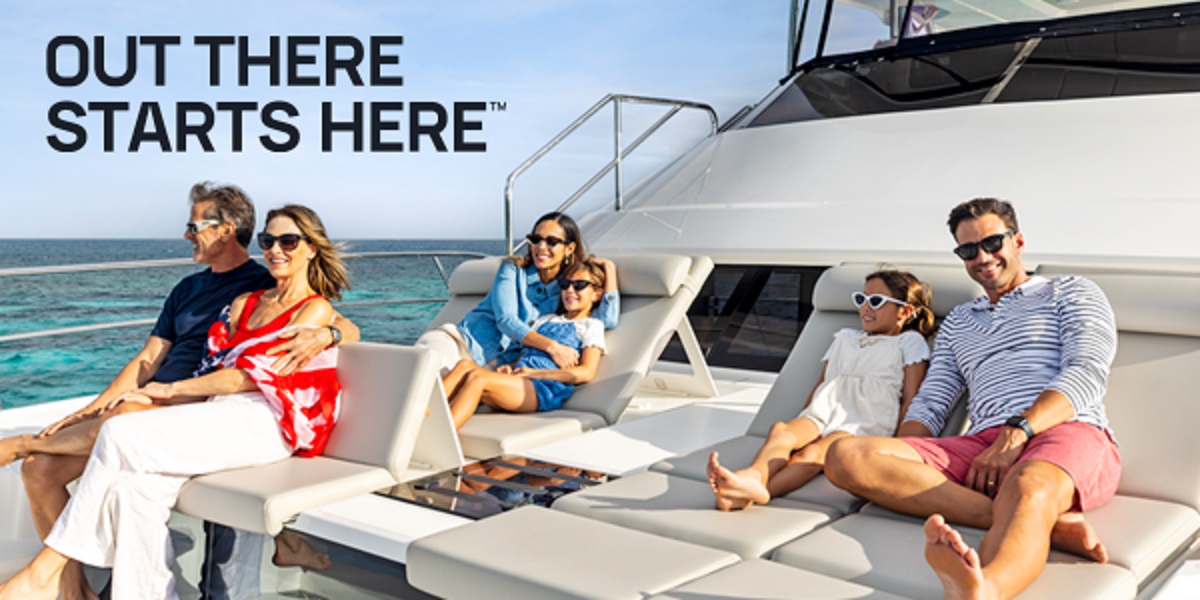
“We’re unveiling this new brand identity because we believe boating should be about connection – with family, friends, and the water itself – said Jean Raas, Chief Product Officer & CEO of Aquila USA – This evolution represents our commitment to ensuring every design decision we make is guided by one question: does this make the boating experience more meaningful? From our intuitive helm layouts to our social gathering spaces, we’re creating boats that bring people together”.
Aquila Power Catamarans’ innovative design philosophy addresses the evolving needs of today’s boating enthusiasts, offering compelling advantages for both seasoned catamaran owners and monohull converts seeking enhanced stability, space, and efficiency. The brand’s power catamarans feature superior fuel economy, exceptional seaworthiness, and expansive layouts that maximize both indoor and outdoor living spaces.
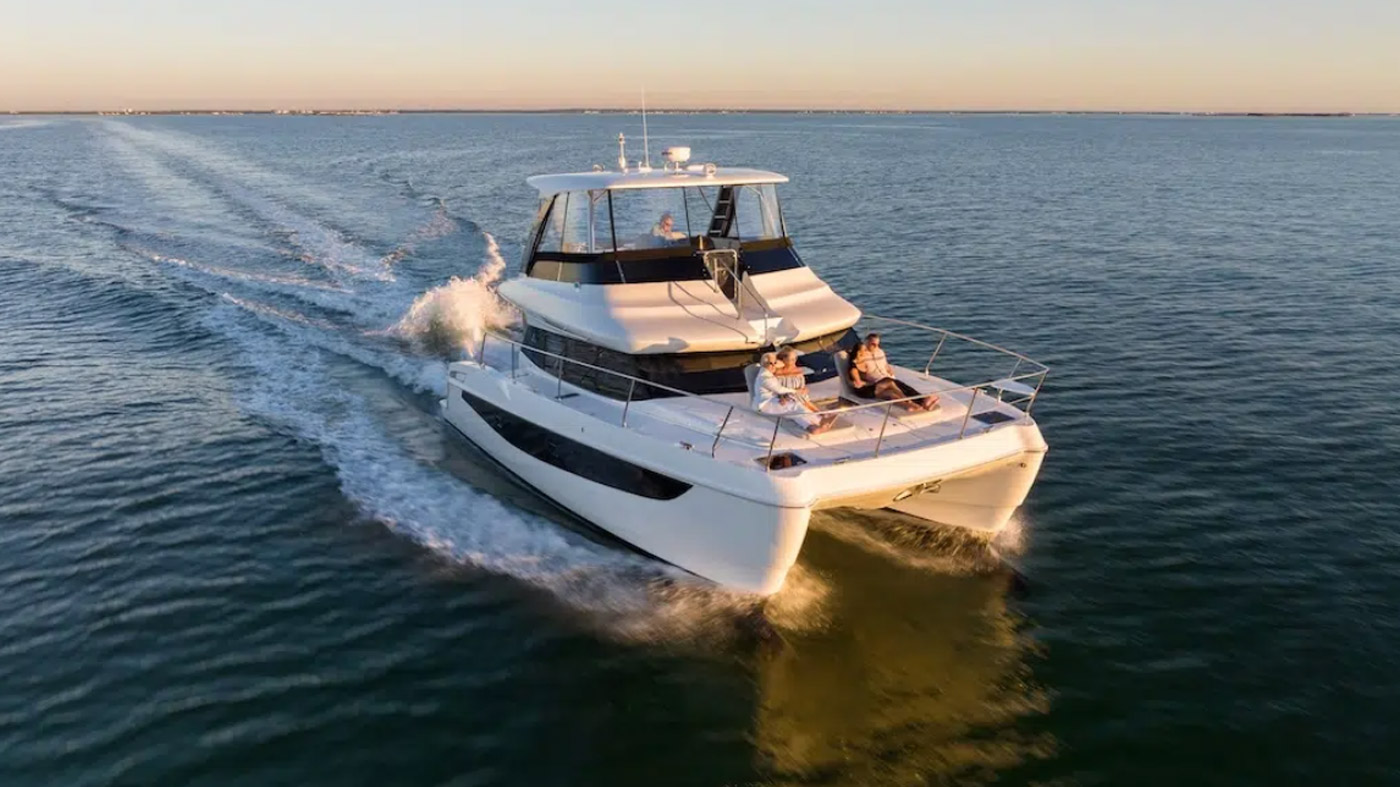
“The Aquila difference is our meticulous attention to the details that matter most to boaters of all types. For our yacht lineup, features like our trademark bridge-to-bow stairs, large hull-side windows that maximize interior light, and innovative storage solutions are critically important to yacht owners – said Alain Raas, Global Brand Director – Our sport boat range delivers excellent versatility and use of space, exceptional performance and handling, and our fishing models continue to evolve with interior cabin features, double stepped high-performance hulls capable of reaching speeds in excess of 70 mph, and integrated purpose-built features like dedicated rod storage, live wells, and fishbox systems. Functional elements like hull design and our carbon-fiber hydro foil provide unmatched stability compared to traditional monohull vessels, while maintaining the performance and handling characteristics that power boaters demand”.
The new brand identity aims to more clearly articulate Aquila’s value proposition to boaters. “We believe that a boat is not just an object in someone’s life, but rather a character in their life story,” adds Chuck Downs, Global Director of Marketing. “When you step on board an Aquila, we want your focus to be on the amazing experiences out there and not on the boat itself. ‘Out there’ isn’t just where the boat takes you—that’s just the destination. We also want to maximize the journey for our owners and help them create amazing memories”.
The post “Out There”, Aquila Power Catamarans unveils its new brand identity appeared first on Yachting News.
]]>The post Aquila 46 Yacht, a huge space: open interiors and breathtaking views appeared first on Yachting News.
]]>The anticipation is already sky-high: the Aquila 46 Yacht will be unveiled in September 2025 in Cannes, but boating enthusiasts around the world are already eager to discover it. The brand-new model from Aquila Power Catamarans promises to be more innovative than ever, bringing the same “Explorer” aesthetic of the Aquila 50 Yacht to a 46-foot platform.
With the perfect balance of performance and comfort, the Aquila 46 Yacht embodies the philosophy of the leading brand in motor catamaran manufacturing. Designed for long escapes on the open sea and effortless enjoyment, this striking catamaran is shaping up to be the ideal vessel for those seeking comfort, space, and beauty on board. Its CE Category A certification ensures maximum safety, the design promises timeless appeal, and its performance guarantees long-distance cruising with confidence.
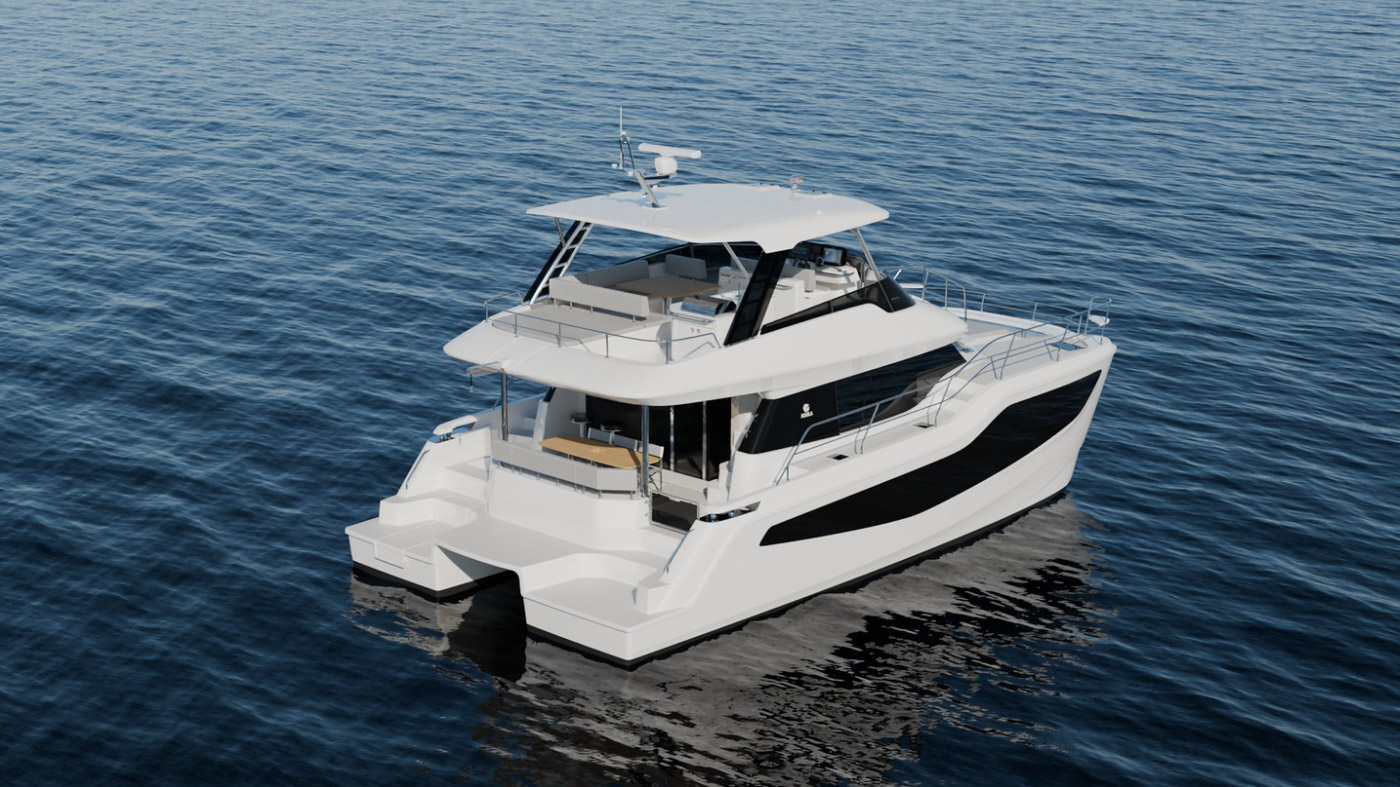
The innovative design of the Aquila 46 Yacht
The Aquila 46 Yacht’s impressive 23’3″ beam creates interior volume that rivals considerably larger vessels, while thoughtful design maximizes every inch for both privacy and connection. The open-concept interior features panoramic windows that flood the salon with natural light and ocean views, creating a spacious living area with full galley accompanied with household sized refrigeration and induction cooktop. The rear salon window and sliding main entrance door opens to create seamless indoor/outdoor entertainment space that enhances every gathering. There’s even an optional interior helm for all-weather comfort.
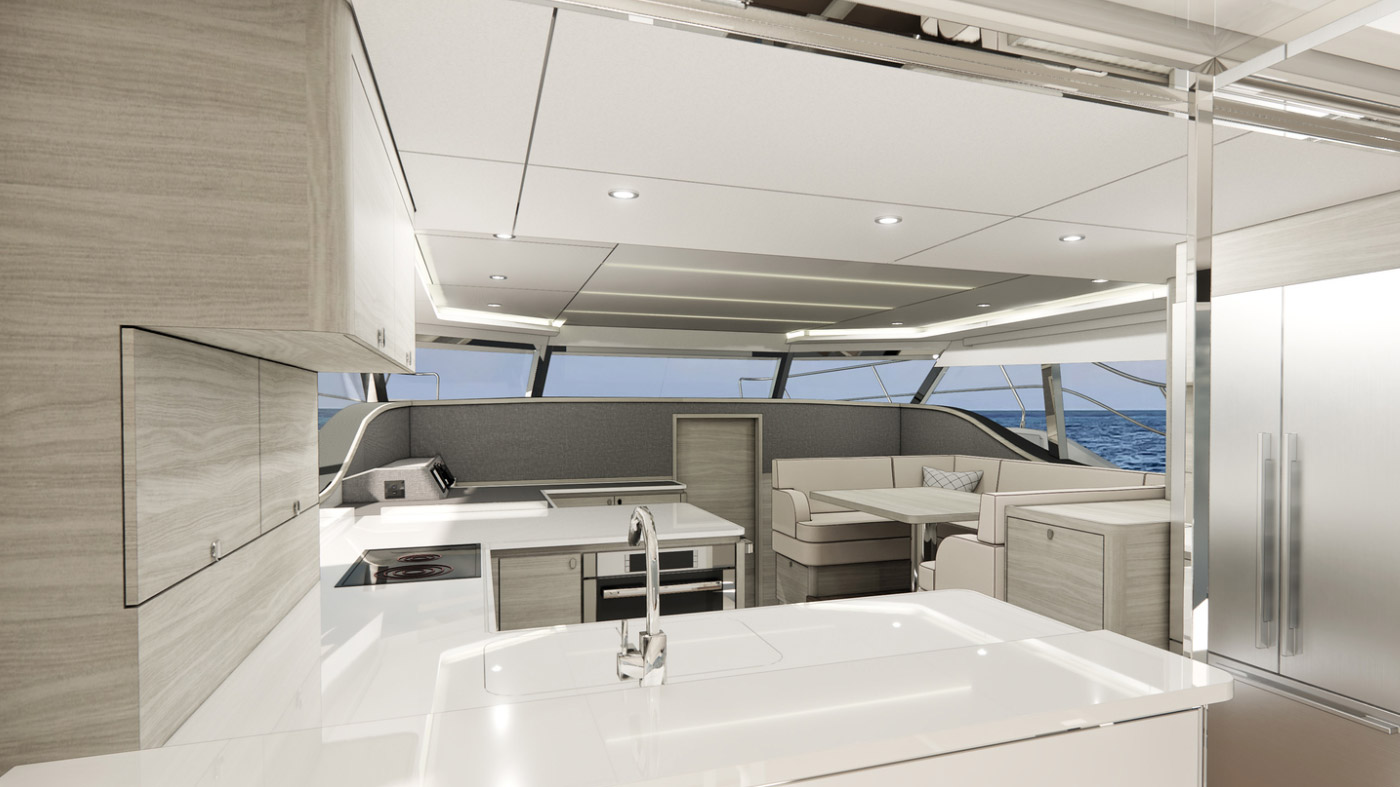
“The Aquila 46 Yacht represents our commitment to bringing larger yacht innovation to a more accessible platform – said Jean Raas, Chief Product Officer & CEO of Aquila USA – This yacht delivers the spaciousness, capability, and luxury our customers expect from Aquila, while maintaining the intimate scale that makes it perfect for couples or smaller groups seeking premium experiences on the water”.
Luxurious accommodations, versatile configurations and advanced technology
The full-beam master cabin delivers impressive spaciousness with a king-size bed, ample storage, and sleek modern finishes. Large windows provide stunning sea views and natural light, creating a relaxing, airy retreat complete with en-suite bathroom featuring a separate shower for luxury and privacy.
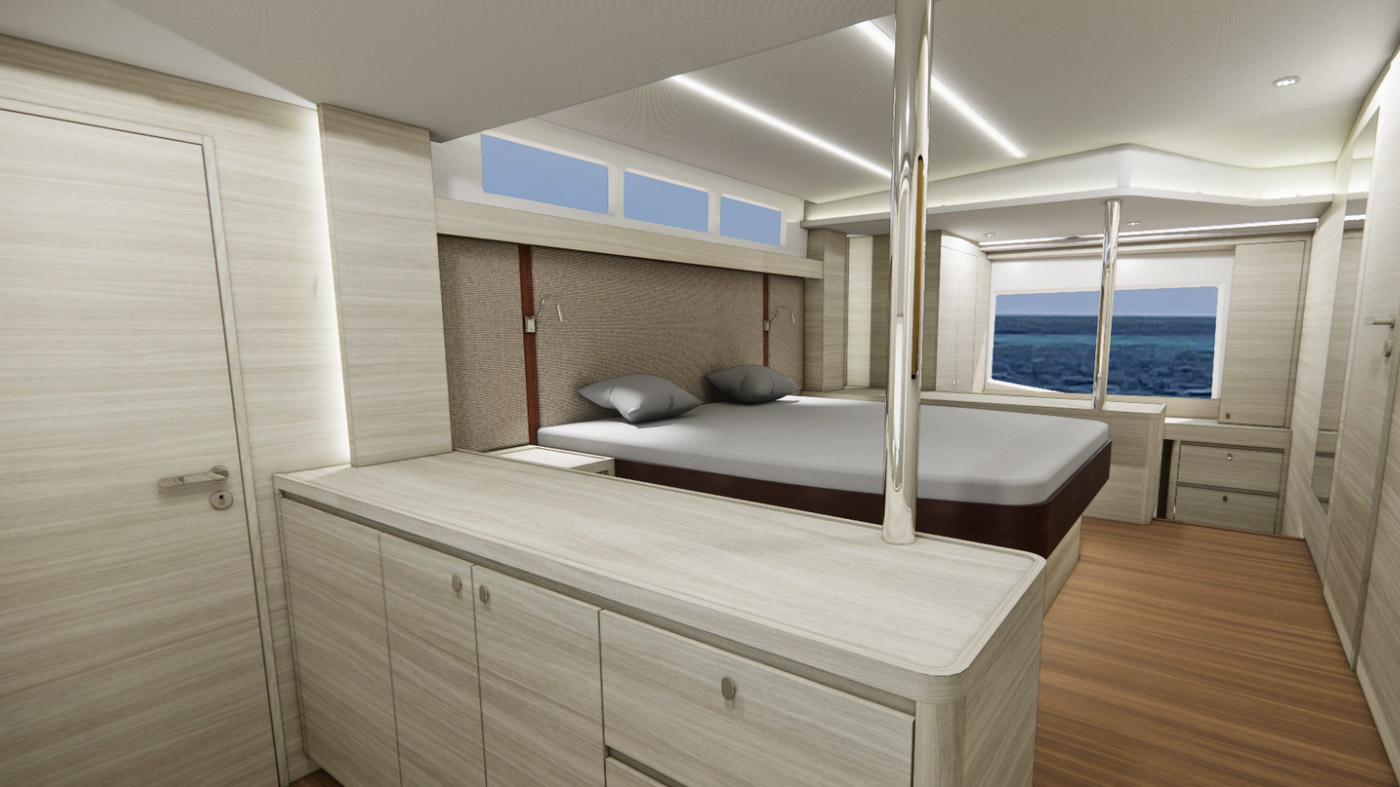
Above deck, expansive areas perfect for entertaining feature stylish lounges and integrated gathering zones. The flybridge provides commanding views and direct access to the forward bow from the helm area, while versatile outdoor spaces enhance every on-the-water experience—whether hosting guests or relaxing in the sun.
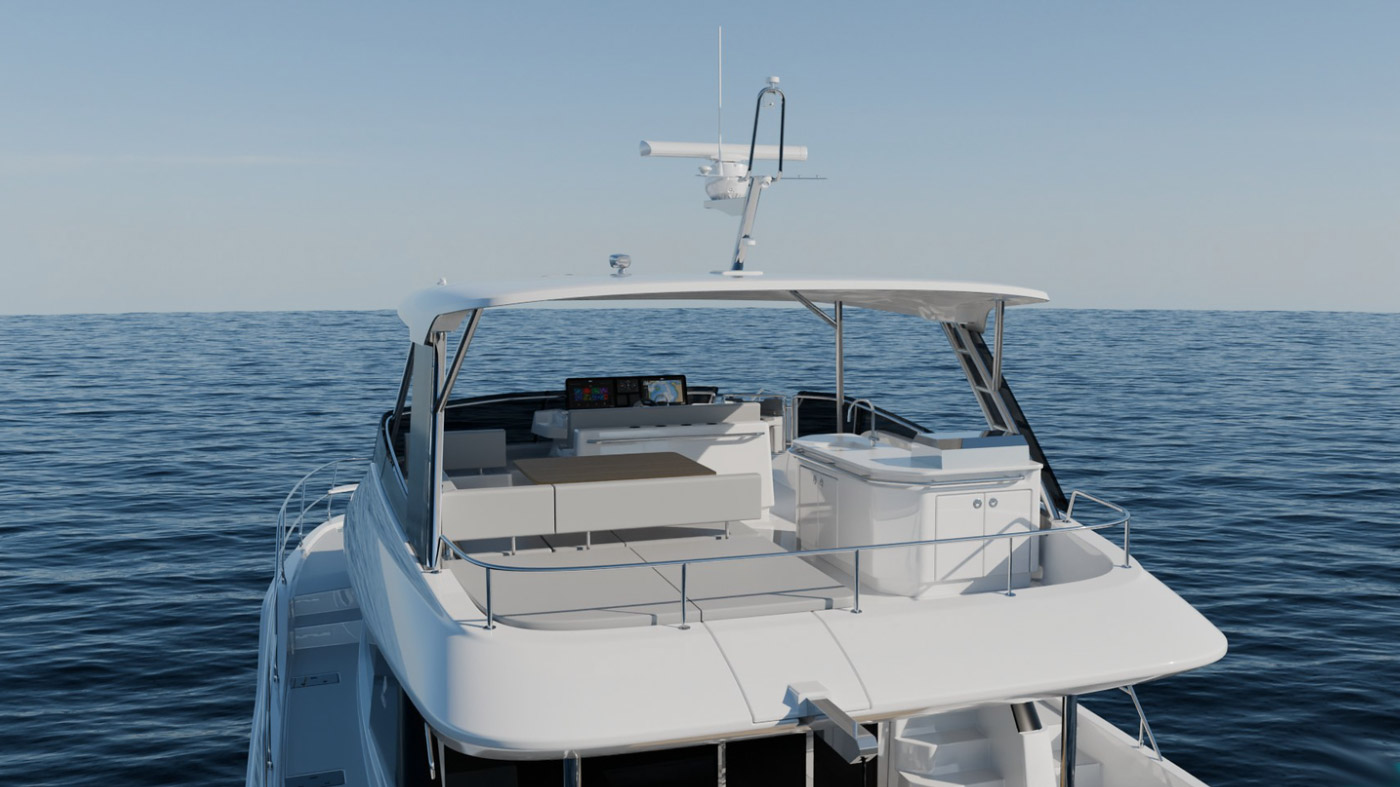
The Aquila 46 Yacht is available in three, four, or five-cabin configurations to perfectly match individual cruising preferences. True to Aquila’s DNA for innovation, the 4-cabin version can be converted back to an owners 3-cabin version – smart design that adapt as plans evolve. For those considering charter opportunities, the five-cabin layout delivers maximum guest capacity.
Advanced options include the Aquila Hydro Glide® Foil System for enhanced efficiency and range, fully-integrated and standard-issue C-Zone digital switching, and the ability to add a lithium battery system.
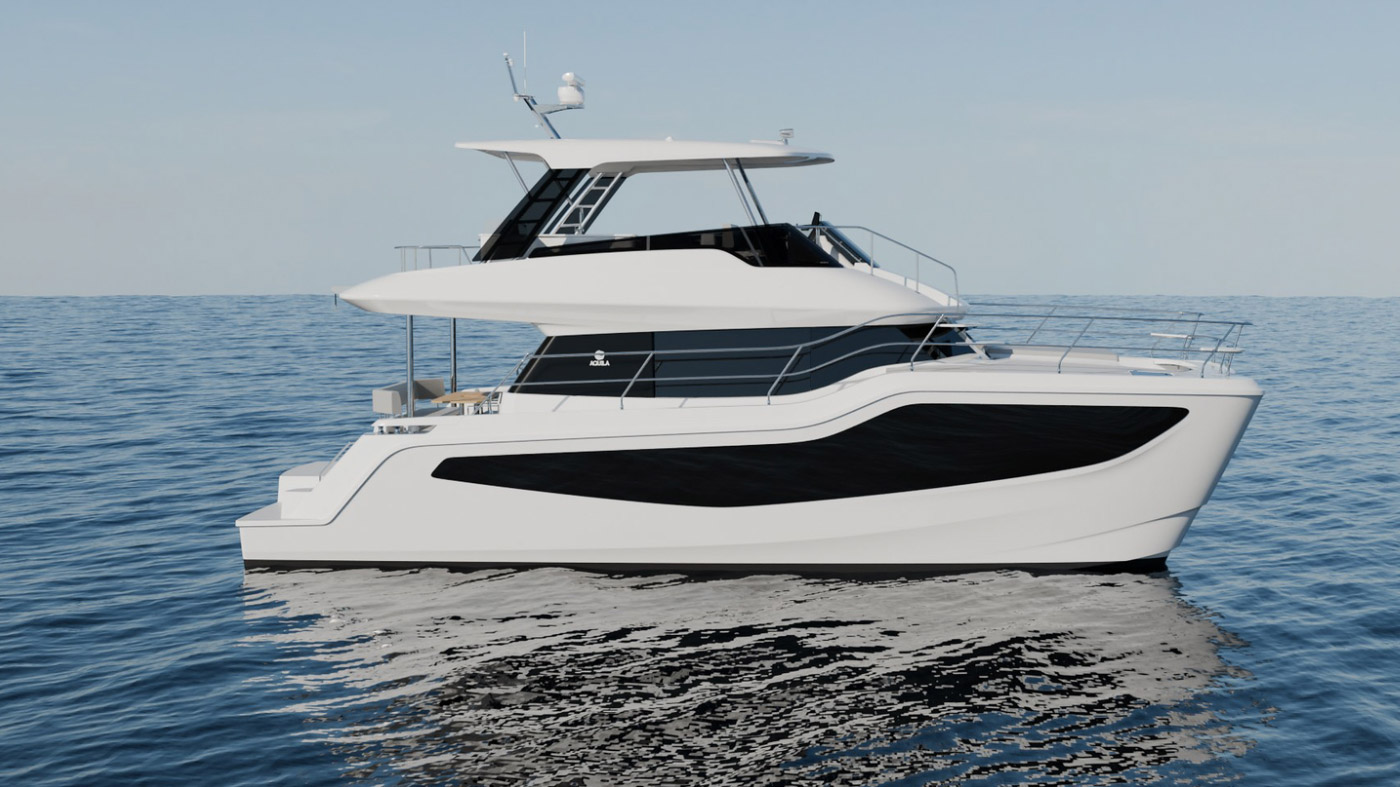
“Aquila 46 Yacht perfectly captures what makes Aquila special—meticulous attention to the details that matter most to boaters – said Alain Raas, Global Brand Director – From the expansive beam that creates remarkable interior volume to the flexible cabin configurations that adapt to different cruising styles, every element has been designed to enhance the owner’s experience on the water”.
The Aquila 46 Yacht will debut at the Cannes Yachting Festival in September 2025 as well as at the Fort Lauderdale International Boat Show in October 2025. We can’t wait to see it in person.
The post Aquila 46 Yacht, a huge space: open interiors and breathtaking views appeared first on Yachting News.
]]>The post Excess 14, the boat review by Giorgio Bruno appeared first on Yachting News.
]]>EXCESS 14 VIDEO BOAT REVIEW
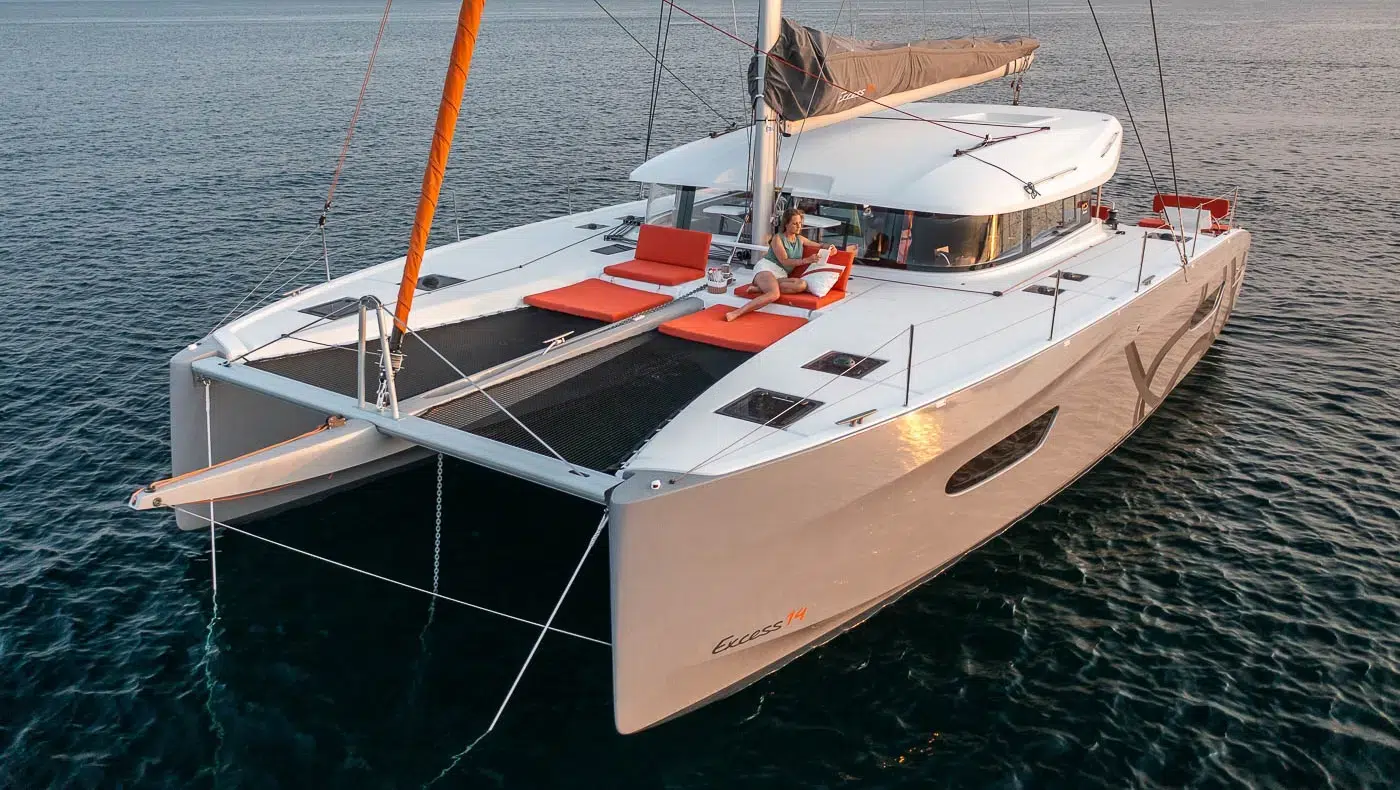
A sailing catamaran with sleek, innovative lines that embody the DNA of EXCESS. The Excess 14 is designed with a unique concept on the market, both in the owner’s version and the charter version.
A low boom allows for easier handling, and reduced aerodynamic resistance is achieved thanks to a low freeboard. Added to this is an aft-positioned coachroof, a forward-set mast step, a composite bowsprit, and an optimized structure with sandwich construction and carbon reinforcements.
At fourteen meters long and nearly eight meters wide, this catamaran offers complete onboard relaxation with generous space. As you enter the dinette you immediately notice the volume, headroom, and especially the brightness that floods the entire area. The XCS14 was designed to make you feel at home in every setting. The L-shaped galley, with a large worktop and spacious refrigerators, allows for the preparation of gourmet meals while cruising. A large central table can comfortably seat up to 10 people. Expansive uninterrupted windows offer a 360-degree view.
In the three-cabin version, one side features a spacious master suite with a large central bathroom, a walk-in closet, a space that can be used as a workstation, and a decidedly comfortable bed. Thanks to the sliding door, an impressive level of privacy can be achieved. Naturally, a charter layout is also available, offering four cabins and four bathrooms, each with a separate shower.
As for the sail area, the square-top mainsail is noteworthy, measuring a generous 83 square meters, paired with a genoa that overlaps at 40 square meters. When conditions allow, a 72-square-meter Code 0 (optional) can be hoisted on the bowsprit.
Certainly, the combination of the mainsail and Code 0—which, in my opinion, is the perfect match on a catamaran—provides a total of 156 square meters of sail area, ideal for making the most of the XCS14’s best points of sail.
All that’s left is to sail and enjoy the wind in your face—whether you’re up front on the large trampoline or comfortably seated aft behind the helm, which, thanks to its unique positioning, offers equally panoramic and thoroughly enjoyable visibility.
Excess 14: Video Chapters
00:00 Introdution
00:24 Exterior Dinette
01:25 Helm Station
02:14 Bow
03:59 Interior Dinette
05:29 Double Cabins
07:45 Master Cabin
08:53 Conclusion
The post Excess 14, the boat review by Giorgio Bruno appeared first on Yachting News.
]]>