The post Selva T 230 VIB and ePropulsion eLite: the test begins appeared first on Yachting News.
]]>Selva T 230 VIB ed ePropulsion eLite: the test begins.
It’s no surprise that a tender and an outboard engine are two indispensable accessories. Inseparable companions of our summer cruises, they allow us to disembark, go to the beach, and accompany us on all excursions where our boat cannot take us.
The evolution of boating in recent years has brought a series of improvements that have made the use of these essential tools much simpler and lighter. On one hand, tenders have become larger, lighter, and have acquired inflatable V-hulls, while outboards have become electric and truly lightweight.
This is precisely why we have decided to test a combination that we believe represents the best possible compromise for all boats, from the smallest up to 15/16 meters, to enjoy holidays with minimal effort and maximum ease of use.
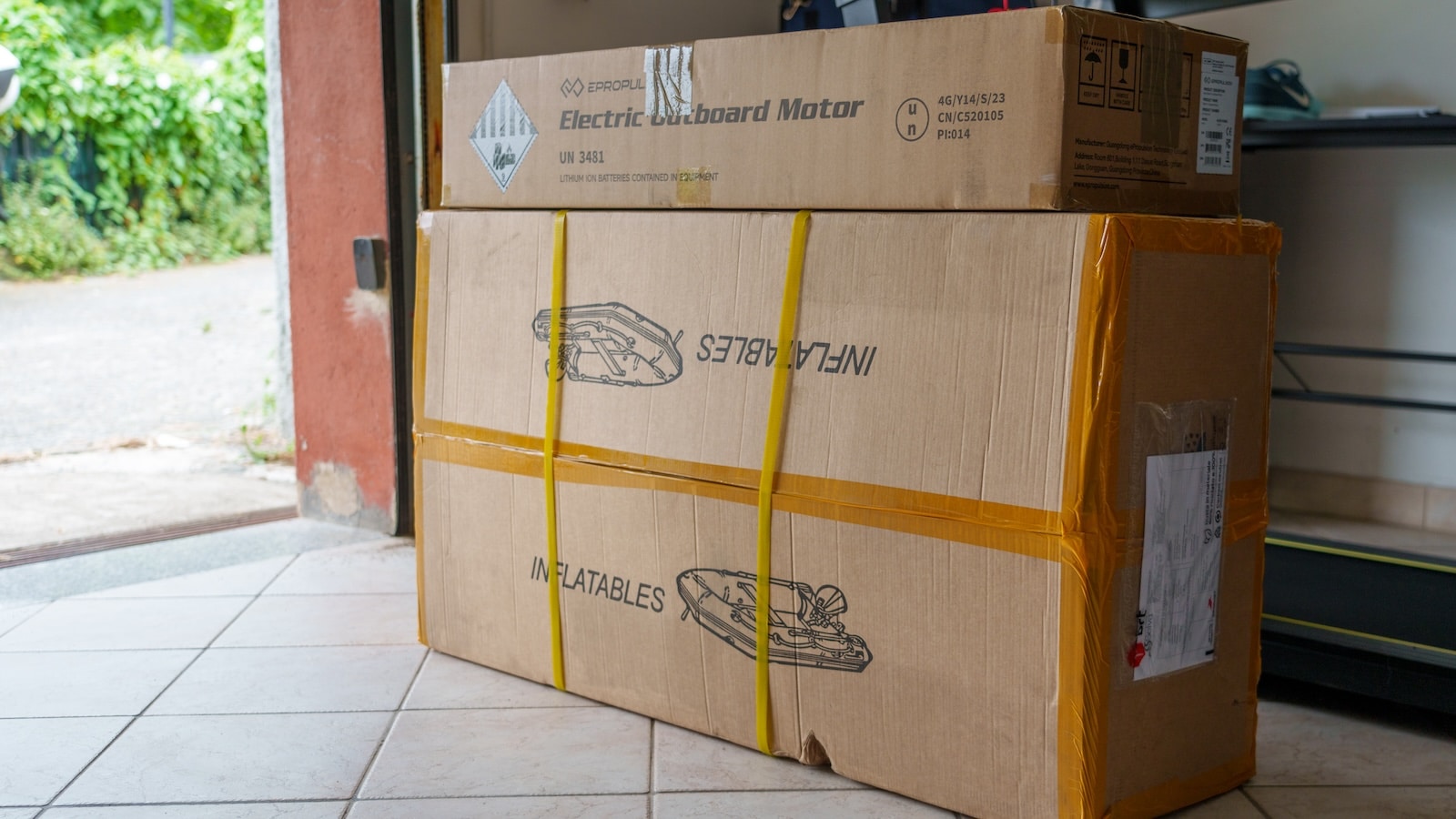
We are talking about the Selva T 230 VIB and the brand-new ePropulsion eLite, the two marine accessories we have just loaded onto the Daydreamer, our famous lab-boat, to subject them to our usual extreme tests. What follows is the first analysis of the two products, from reception to unpacking and the initial tests.
Selva T 230 VIB: the ultimate tender
At 2.32 meters in length and 18 kg in weight, the Selva T 230 VIB today represents the best compromise between habitability, stability, and weight. Equipped with a high-pressure inflatable V-hull, it’s a tender that doesn’t take up too much space on board and is very easy to handle.
The Selva T 230 VIB arrived in a well-packaged box, which, once opened, contained the following: the rolled-up tender (protected by an inner film), its storage bag, two detachable oars, the central wooden bench, the inflator, a pressure gauge, and a repair kit. An initial kit that is truly complete, to which, honestly, I wouldn’t know what to add.
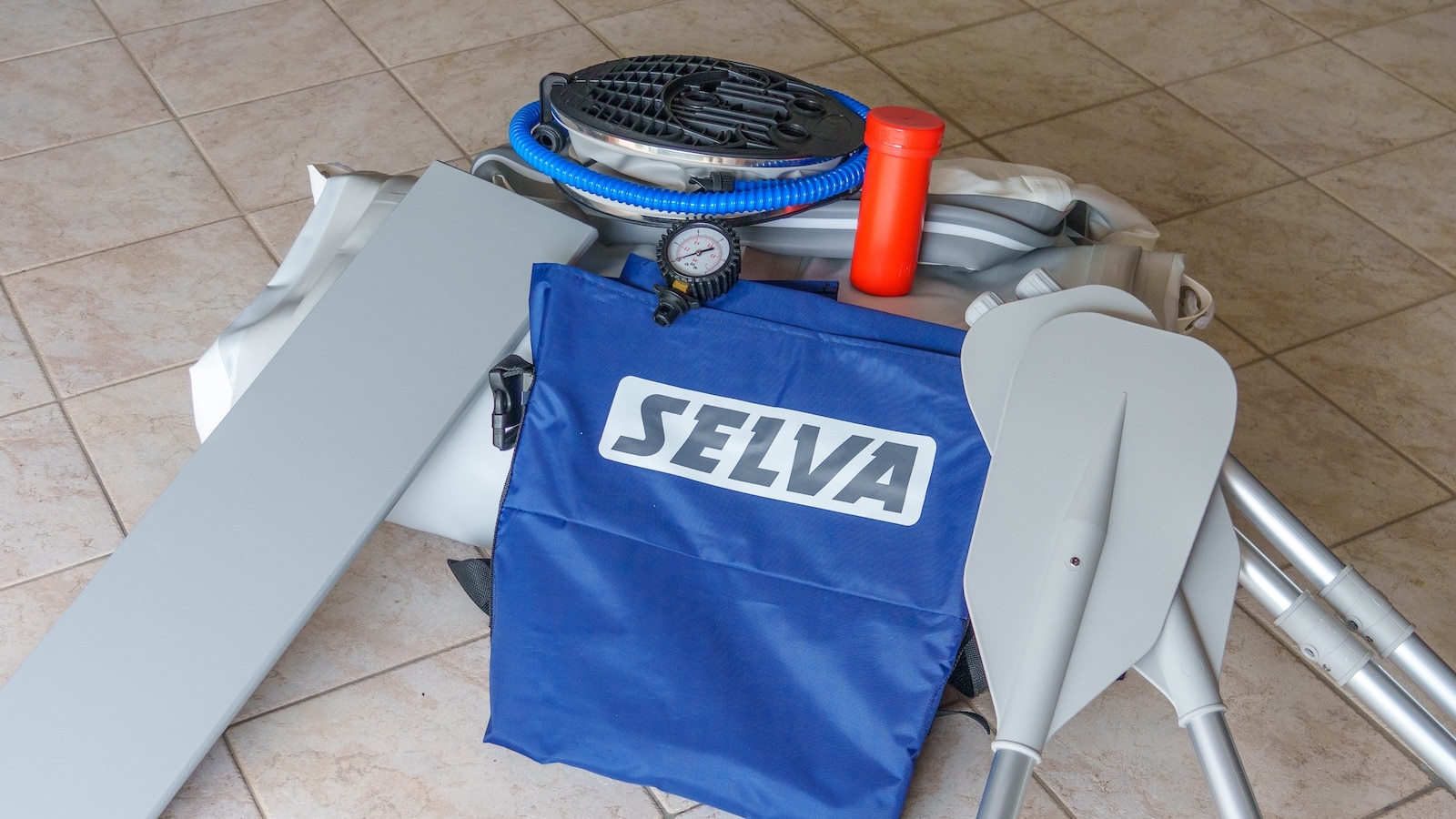
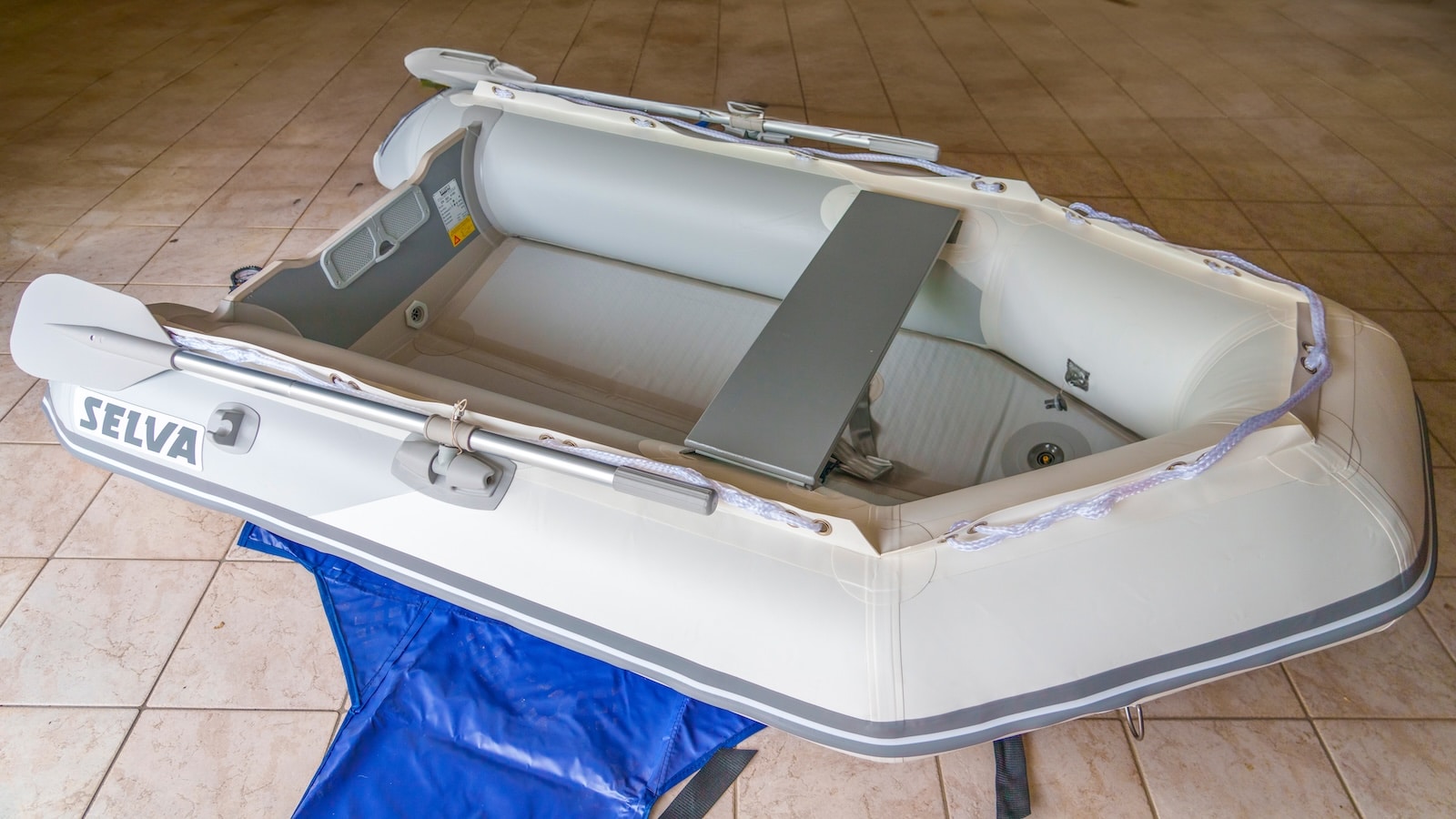
We inflated the tender in about 10 minutes, using only the supplied foot pump, bringing the tubes to the operating pressure and the high-pressure hull to just under one bar of pressure. The central bench should be inserted into its slots when the tender is still half-inflated; once it reaches the operating pressure, it becomes solid with everything, providing excellent overall rigidity. Personally, I would never choose a tender without a bench, as rowing is really simple and safe this way.
The oars are easily assembled with a snap mechanism, inserted into the oarlocks with a dedicated pin that is then secured with a screw nut, covered with ergonomic plastic, and tied to the inflatable boat with a specific small rope. The high-pressure floor is equipped with convenient fastening straps, which will be useful for securing the anchor, an optional tank, or other bags and equipment on board.
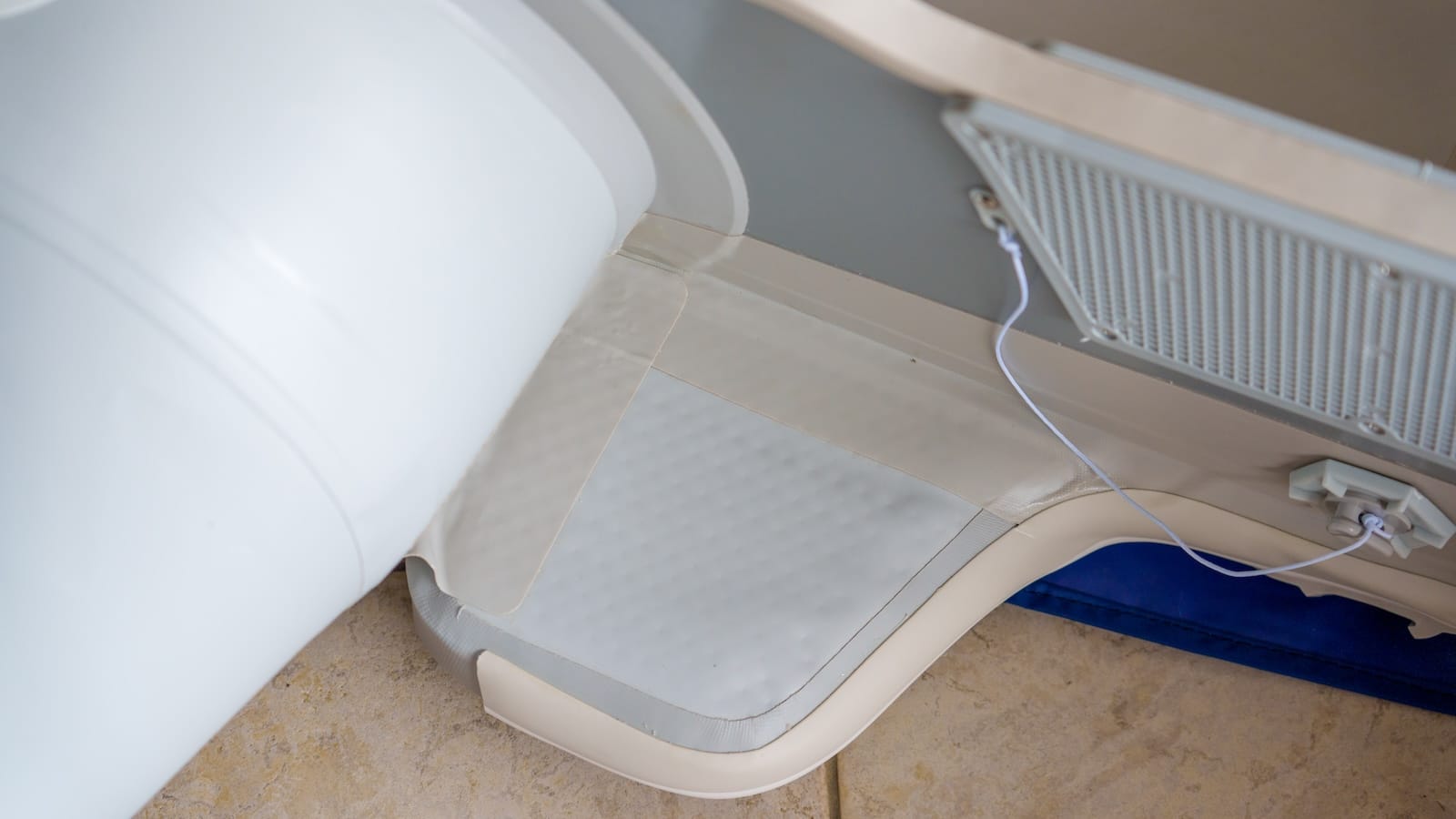
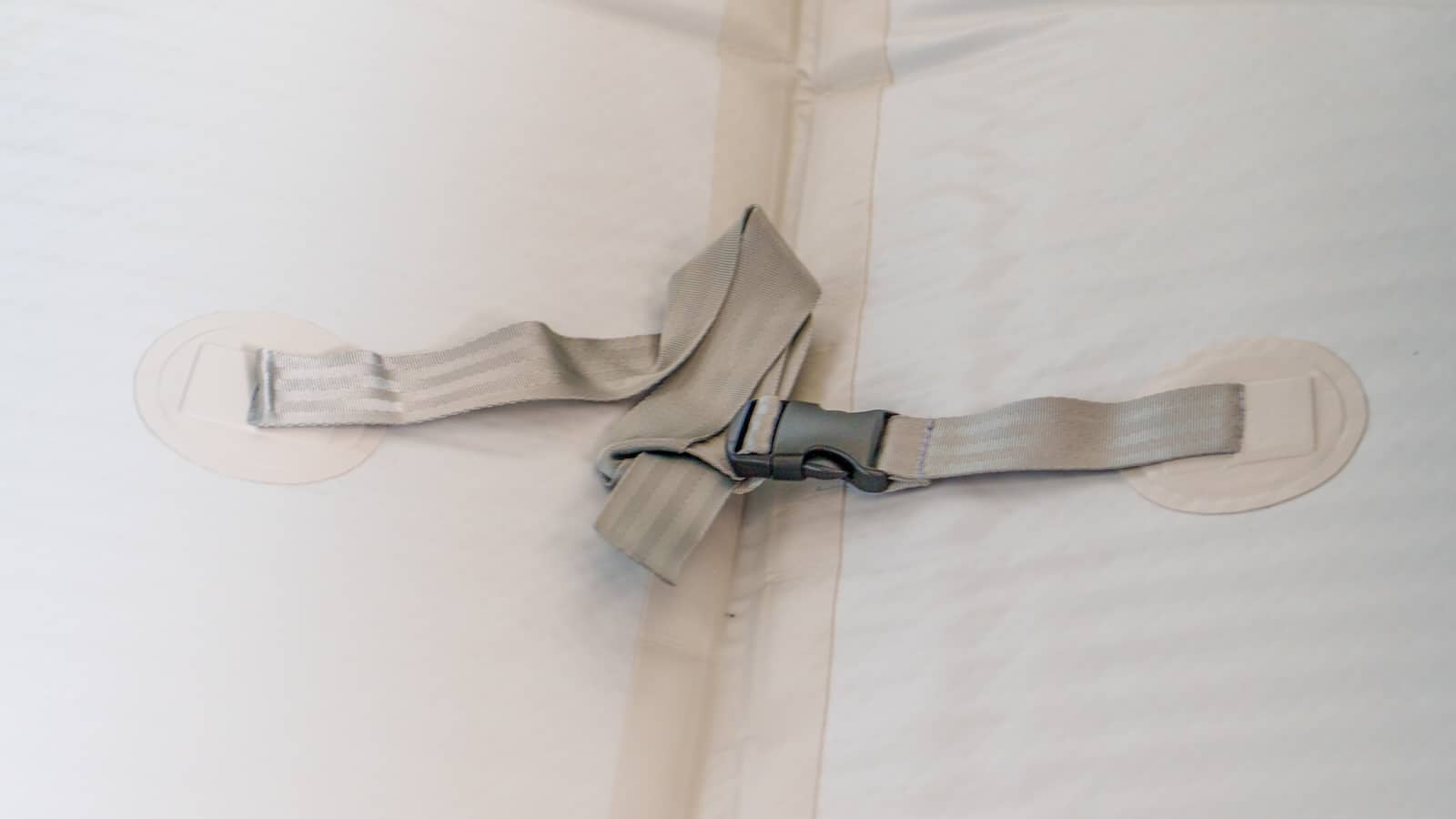
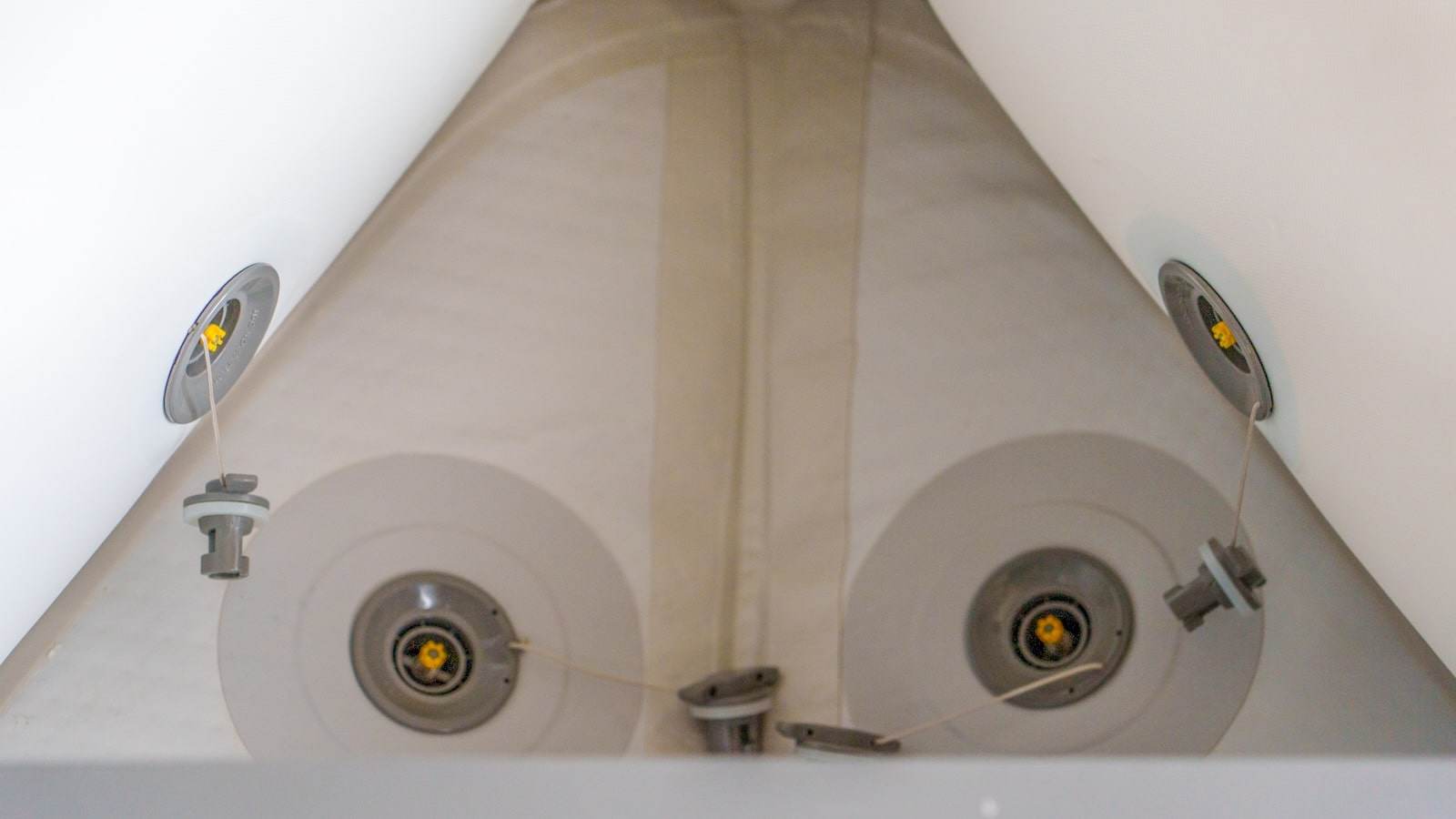
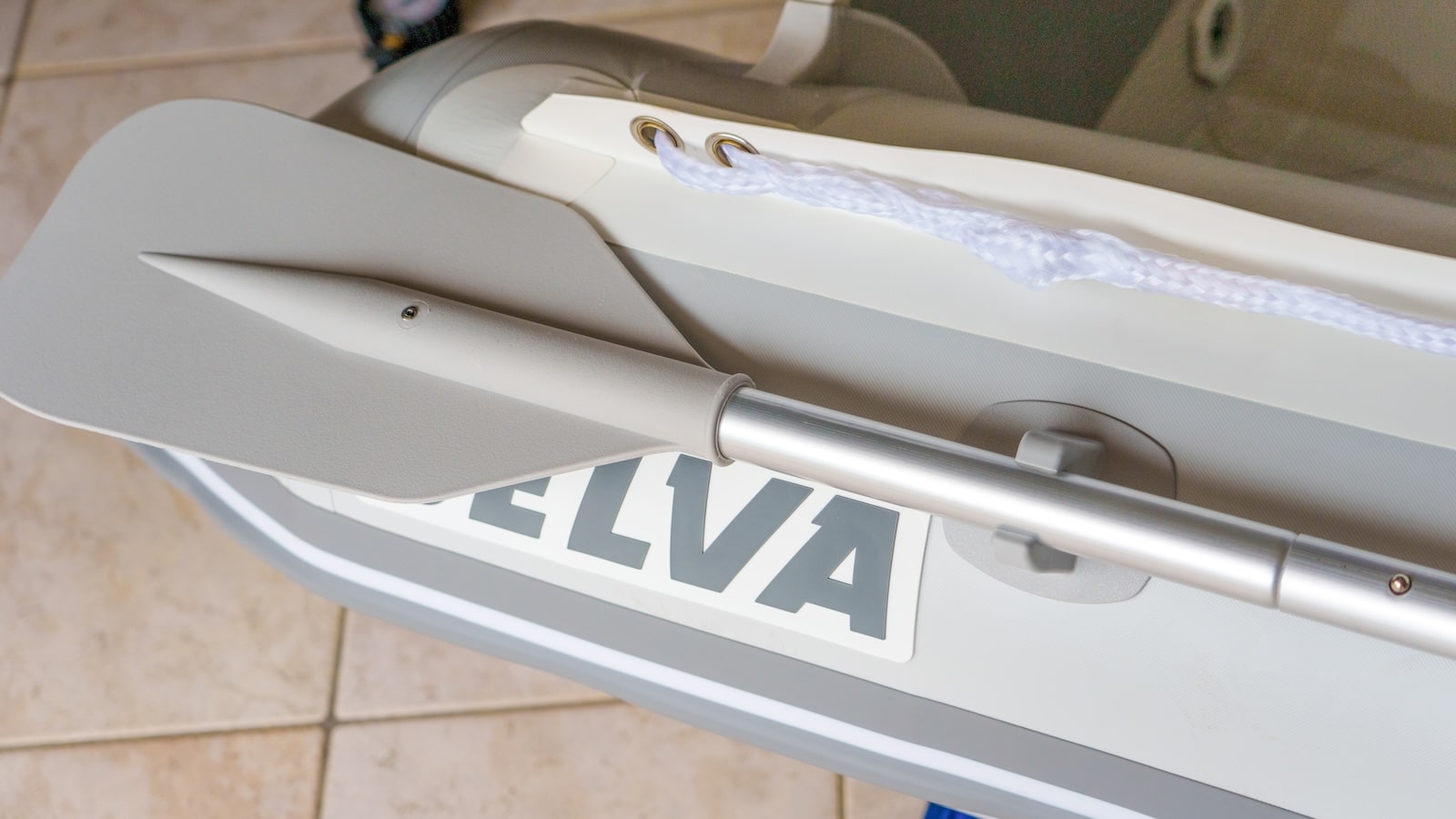
The fabric of the Selva T 230 VIB is the same as that of the models we have tested before, incredibly resistant and with the great advantage of not yellowing over time. The towing rings are also the same, carefully thermowelded, becoming one with the structure.
We finally left the tender inflated without closing the valves with the appropriate screw cap, and after measuring the pressure with the provided gauge after 5 days, we did not notice any difference. It took about 15 minutes to deflate and store the tender and its equipment; the storage bag is equipped with very long compression straps that make this operation easy.
In short, it is a very well-designed and built tender, easily lifted and loaded into a car, and it truly impressed us with its construction quality. The Selva T 230 VIB can be found at Selva dealers or online, with prices ranging between 1,050 and 1,250 euros.
About ePropulsion eLite
ePropulsion eLite is the latest innovation from this manufacturer that has clearly established market leadership with consistent and robust products that, importantly, are sold at reasonable prices.
The latest addition is a completely revolutionary product that provides a simple, lightweight, and effective system for powering your tender with an electric outboard that can be used (and especially moved) by anyone.
ePropulsion eLite arrived in very sturdy packaging, with the top part listing the components inside the box, which, as usual with this manufacturer, are all of excellent quality, both the aluminum and plastic parts. Inside the package, we found: the main body of the motor, the bracket to attach it to the tender, two safety releases, the charger, the user manual, and the carrying bag.
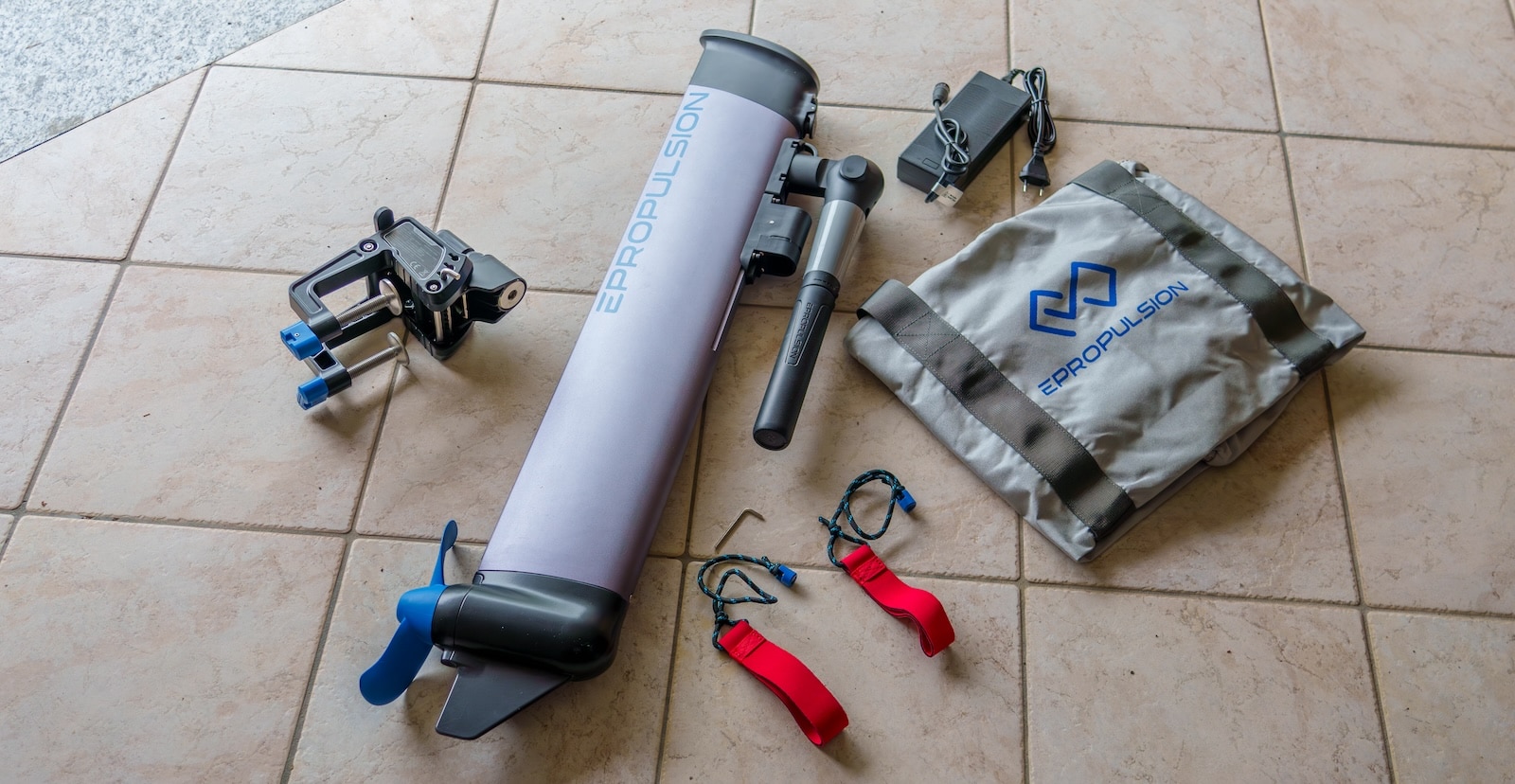
The outboard engine is a single component equipped with a two-blade propeller, with its battery integrated into the outboard’s shaft. The control handle is extendable and also features a joint that allows it to be positioned both for driving and for easily carrying the accessory.
Lifting the ePropulsion eLite immediately reveals its lightness; weighing less than 7 kg, it can be easily loaded and unloaded by anyone, in any sea and weather conditions. On the top side, there is a simple yet effective display that turns on with a long press and shows the battery charge percentage with a short press.
After turning it on, it is also possible to switch to sport mode with a double click on the button; this function increases the power by 50%. Just below the display, there is a useful USB Type-C port that allows us to charge our phone or other accessories while we are out and about.
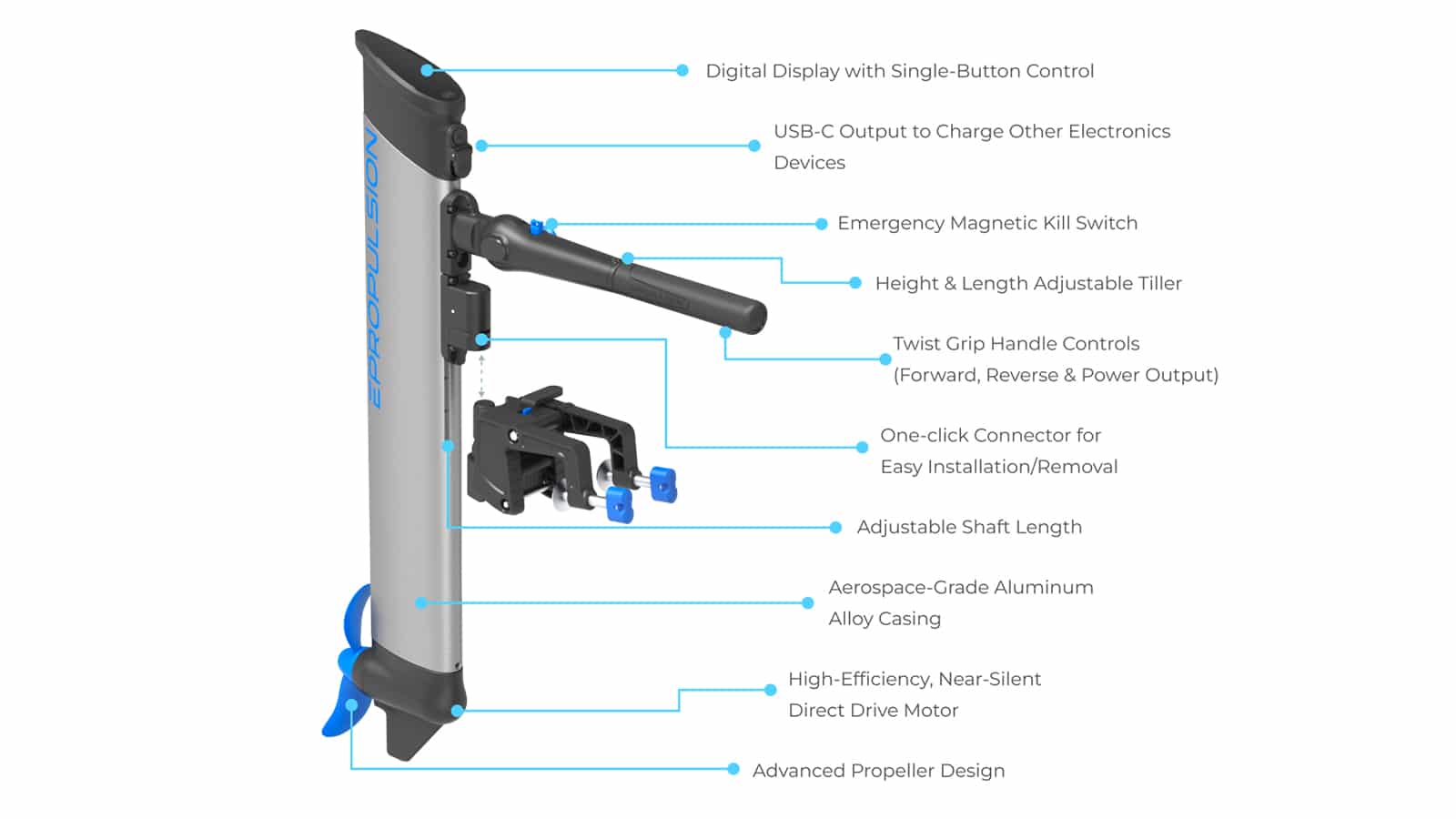
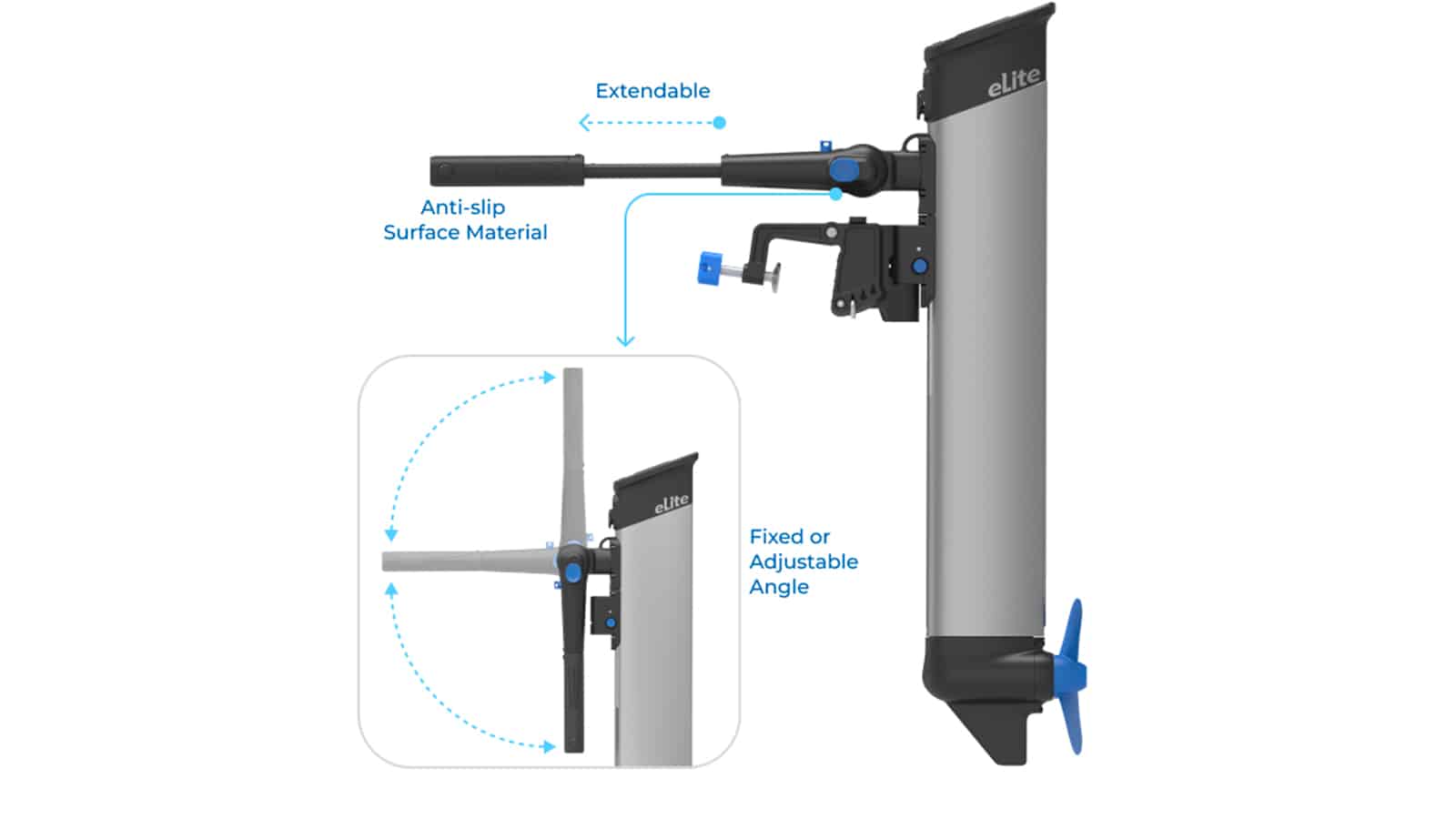
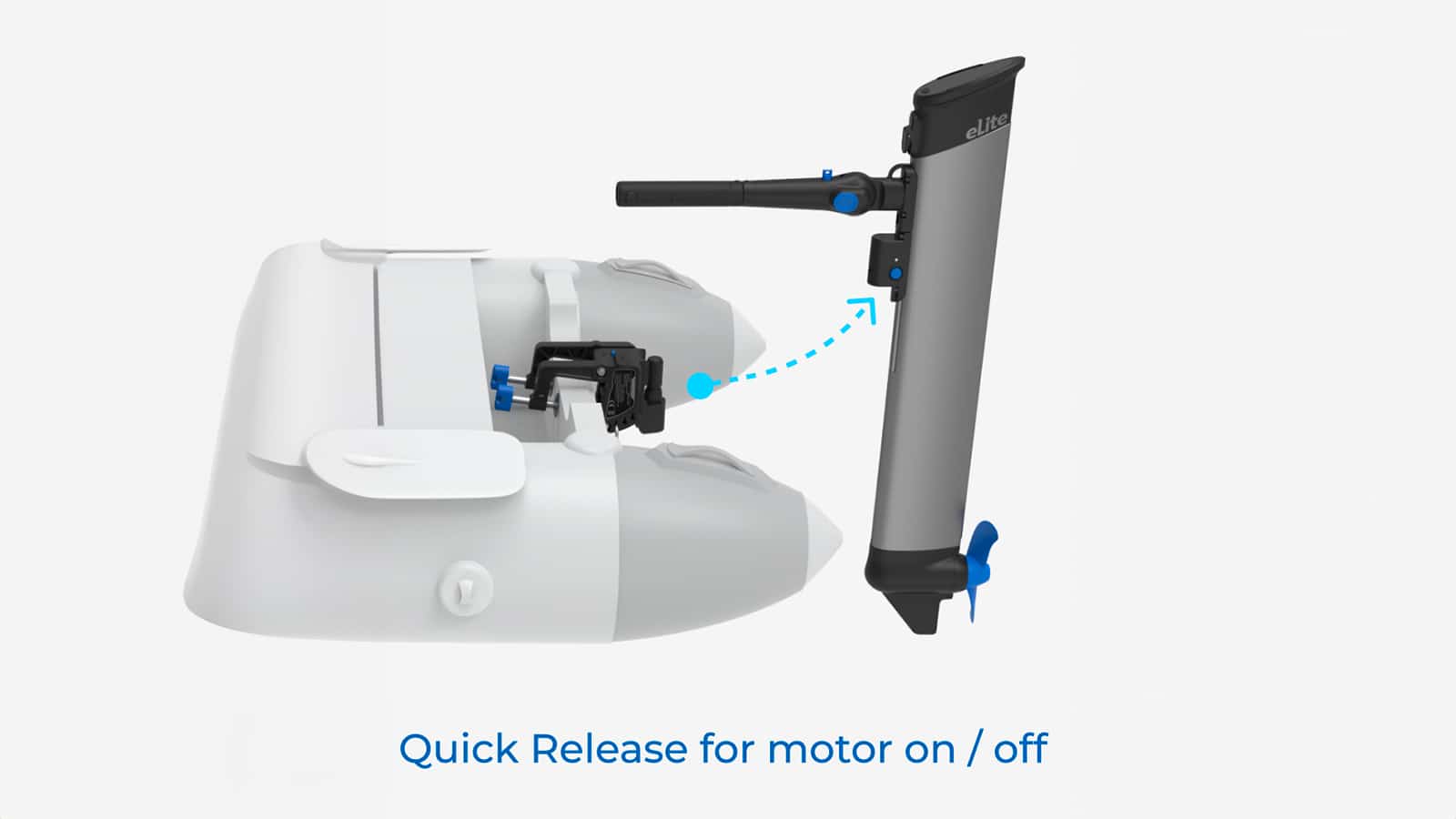
Attaching the electric outboard motor to the bracket is incredibly easy: you insert it into the appropriate pin until you hear a click, and that’s it. To release it, you only have to press a button, and the outboard is freed. The height of the outboard is adjustable, as the pin can slide on a track that allows you to set the propeller’s depth, making this very useful accessory truly universal.
I tried turning on the ePropulsion eLite out of the water, and everything works, but in the absence of immersion, its power is limited to 10W. In this mode, the propeller spins slowly and can be stopped with your hands. This safety feature protects from accidental use of the outboard, yet another demonstration of how advanced these propellers are.
The ePropulsion eLite is available from Selva dealers or online for 1,099 Euros.
Our first test
We launched the tender in the harbor (by hand due to its lightness) with its bracket already secured to the transom. We then boarded the outboard and, with equal simplicity, inserted it into its pin. Total time for both operations: 5 minutes; effort required: almost none.
We inserted the magnetic safety release into its slot, put the neoprene wrist strap on our wrist, and we were ready to go. The throttle is adjusted like on a motorcycle, but here, by turning the handle in the opposite direction, you can also go in reverse. Accelerating quickly gains speed, and at harbor speed, about 3 knots, the display indicates a remaining range of almost 2 hours. Not bad at all for such a compact outboard.
Accelerating further, the outboard engine provides plenty of thrust, but unfortunately, the sea is rough, and a storm is approaching, so reluctantly, we head back and load everything onto the Daydreamer. In a few days, we will depart for our usual testing cruise, where we will have plenty of time to use these two wonderful accessories and conduct more in-depth tests, which we will, as always, share on our pages.
Fair winds!
TECHNICAL SPECS
Selva T 230 VIB
Length | 232 cm |
Beam | 135 |
Tube Diameter | 35 |
Compartments | 4 |
Operating pressure bar | Tube 0,25 / Keel0,8 |
Weight | 18.37 kg |
Max power applicable Kw (Hp) | 3.67 ( 5 ) |
Max engine weight applicable Kg | 40 |
People carrying capacity | 2 + 1* |
Max carrying load Kg (number of people + standardequipment + engine) | 380 |
Type | Rigid GRP hull |
Hull outer / inner colour | White |
Tube colour | White |
Fabric | PVC 1.100 g/m2 |
Type of motor shaft | Short |
ePropulsion eLite
Nominal Power | 500 W |
Maximum Power (in Sport mode) | 750 W |
Battery | Integrated 378 Wh 25.2V Lithium-ion |
Battery Life | 800 cycles |
Charger | 100 to 240V AC charger included, 12V charger optional |
Operating Temperature | -5 to 55 °C |
Trim and Tilt | 8° / 17° / 26° |
Tilt Angle | 75° |
Shallow Water Mode Tilt Angle | 36° |
Steering Angle | ±70° |
Dimensions (L x W x H) | 297 x 75 x 890 mm |
Motor Weight (excluding bracket) | 6.7 kg / 14.7 lbs |
Motor Weight (including bracket) | 7.9 kg / 17.4 lbs |
Adjustable Shaft Length | 401 / 362.5 / 322 / 282.5 mm |
The post Selva T 230 VIB and ePropulsion eLite: the test begins appeared first on Yachting News.
]]>The post Guidi exhaust valves and seacocks: seven years of testing, here are the results. appeared first on Yachting News.
]]>Seven years of testing for Guidi exhaust valves and seacocks
Seven years of testing is a significant amount, especially considering that our lab boat stays in the water all year round, sails an average of over 1,000 miles per season, and is hauled out only for maintenance operations and to be dry-docked.
This is a test of absolute relevance, as you can see from the article at the time, which was also documented by an initial check two months into the test: LINK to the June 2017 article.
About Guidi exhaust valves and sea inlets
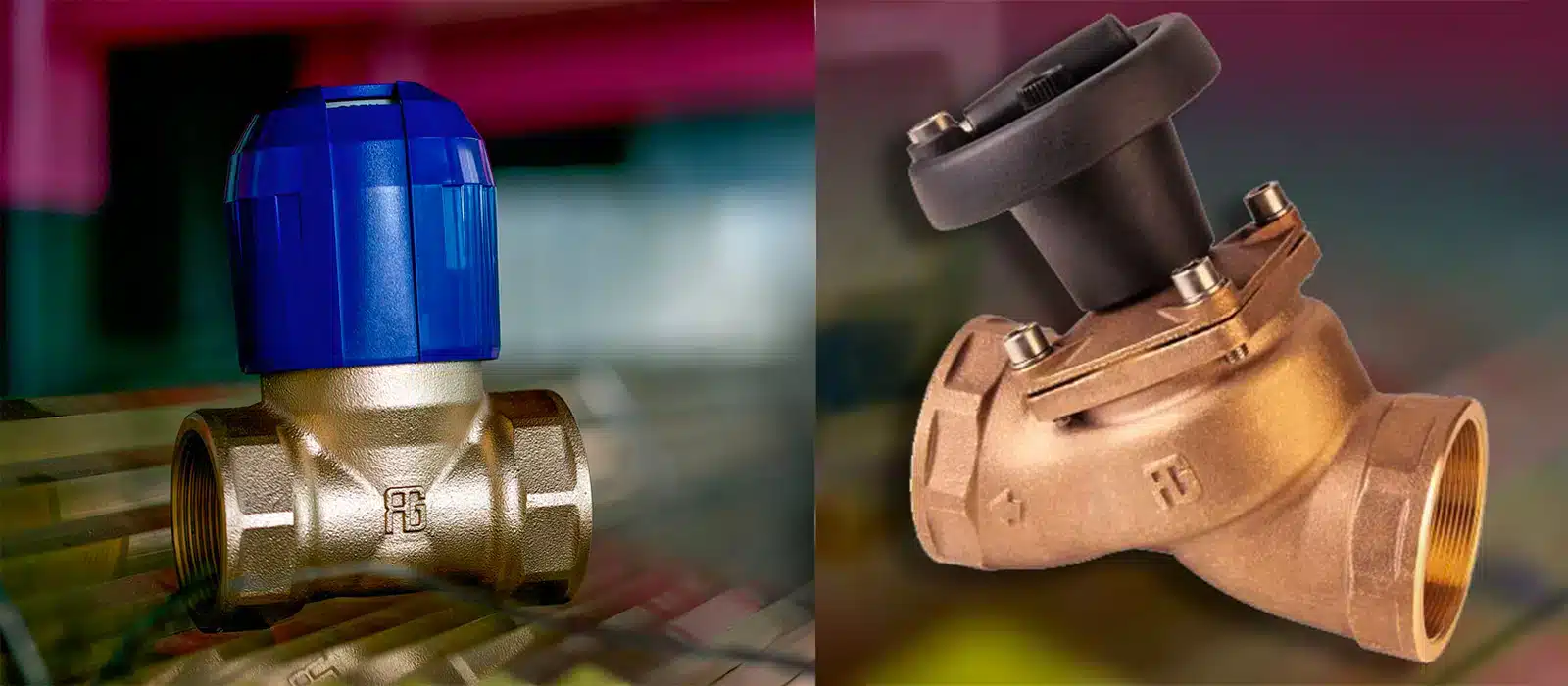
These exhaust and sea inlet valves are operated by a screw rotation mechanism, which, driven by the swivel head, moves a shutter that closes or opens the valve itself. The absence of the classic lever and the lack of friction in the opening and closing movement of the valves result in two advantages: the sea inlet can be installed anywhere (the dimensions are smaller), and above all, when activated, it does not exert dangerous strains on the fiberglass of the hull.
Another important advantage resulting from the use of these exhaust and sea inlet valves is that they can be operated by anyone; the rotation mechanism makes them extremely easy to operate. Moreover, the window positioned on the head of the valve, indicating whether the valve is open or closed, prevents any dangerous misunderstanding.
In these exhaust and sea inlet valves, the internal metal surfaces in bronze have been treated to prevent the formation of deposits and thus prevent blockage. A safety piston placed on the handle of each valve allows it to be locked in the closed or open position to prevent accidental movement.
The Guidi valves installed on our boat are of two types:
- Alex, a straight-through anti-block valve with two opposing sleeves and a 90-degree shutter. An exclusive patent of the manufacturing company.
- Non-stick 2210, a valve equipped with a straight internal passage that allows the passage of 100% of liquids. Internally, it is equipped with a scaling prevention system that prevents blockage. It also comes with a safety stop.
Sea test: How are valves performing today, after seven years of use?
The test is positive since it shows data significantly superior to the performance of traditional valves. With Guidi’s exhaust and sea inlet valves, we have never encountered any kind of problem. We have used them for loading and unloading on our Daydreamer, continuously opening and closing them. Especially during the boat’s laboratory downtime periods, we have appreciated their operation even after months of inactivity. This served as a true test bed and simultaneously highlighted the Achilles’ heel of traditional valves. Moreover, our boat is an old-generation shaft line, so its bilge is often wet. As you can see from the following photo, the comparison between valves made of traditional materials and those by Guidi is decidedly uneven.
After seven years, we can only confirm that all the Alex and Non-stick valves we installed are in excellent condition. Only in some areas of their surface, you can notice a natural and light green patina. We had a good comparison point by observing common valves from other brands that we installed simultaneously with those under test.
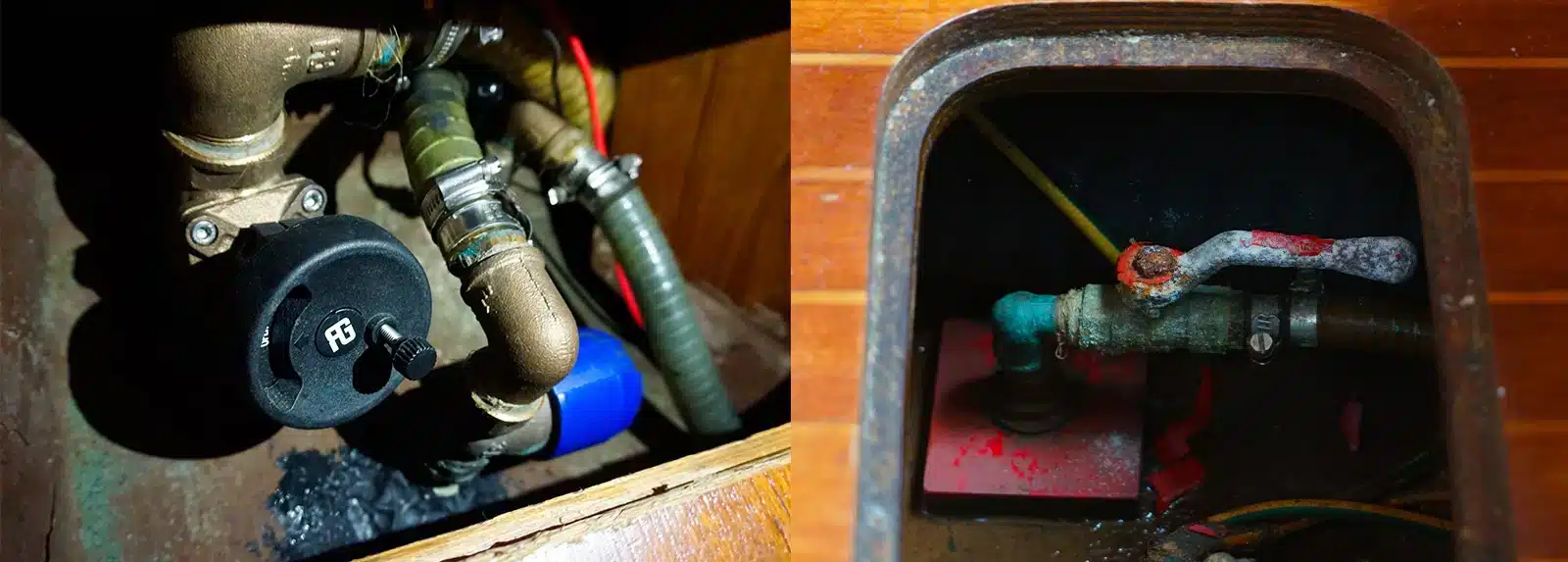
The Guidi exhaust and sea inlet valves, with each use, have always been smooth and fluid. The rotation of the heads has never presented a single problem, and most importantly, we have never encountered signs of blockage or leaks.
However, these products have such peculiar characteristics that they prompt us to make quite different considerations regarding the differences with traditional lever-operated valves. In short, why should I purchase this technology? What are the advantages it would bring to my boat?
After using them, we have identified three important reasons to choose them:
1) Ease of installation: Being devoid of opening levers, they can be mounted in tight corners with minimal space requirements.
2) Convenience and ease of use: The swivel head is geared down (more turns, less load and pressure!), so the action on the valve is always very smooth, and its operation does not require the use of force; even a child could easily operate them. In all these months, the valves have never shown even a hint of seizing up, never!
The post Guidi exhaust valves and seacocks: seven years of testing, here are the results. appeared first on Yachting News.
]]>The post BOS LE300 Smart Battery System, the batteries that will change boating are here appeared first on Yachting News.
]]>BOS LE300 Smart Battery System, the new frontier in energy storage.
The debate is always raging about which is the best solution between lithium batteries and traditional lead batteries. On the one hand, the almost total discharge capacity (and therefore usability) of lithium batteries, and on the other, the peak performance and power offered by traditional AGMs, which, however, cannot drop below 80% of their voltage otherwise they are irreparably compromised.
It’s quite a dilemma to face, especially when it comes to marine use, where our beloved service batteries are subjected to intensive use and must (given their cost) last a long time and not leave us stranded.
Fortunately, the German company BOS AG has come up with an ingenious solution that maximizes the strengths of the two alternatives by making them work together – an innovation that we were so intrigued by that we wanted to try it out…
About the BOS LE300 Smart Battery System
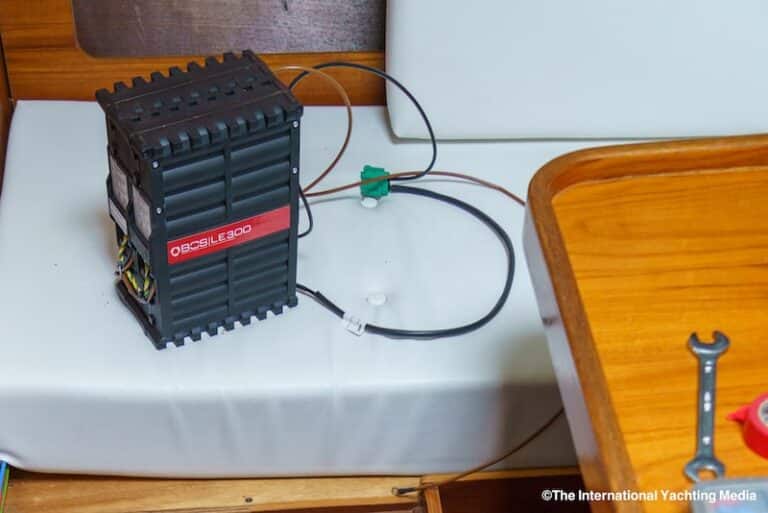
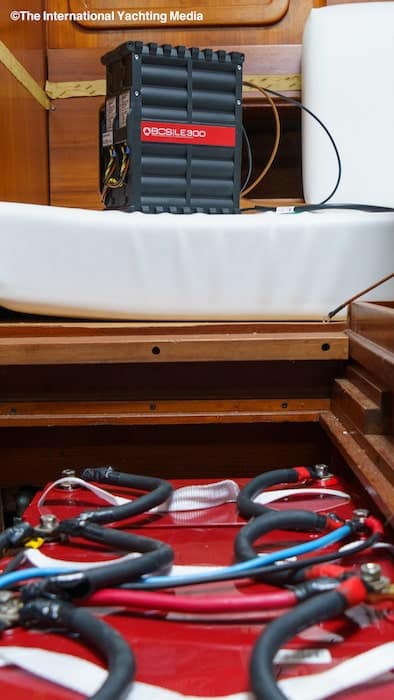 The BOS LE300 Smart Battery System is an advanced energy storage system consisting of individual 12v lithium smart battery modules, each offering 28 Ah of capacity and 12.5 A of current.
The batteries are very compact in size and are designed for parallel assembly to achieve the desired capacity, which will be determined according to the needs of the individual boat.
These lithium batteries can be used either to increase the total capacity of existing lead-acid battery packs, or to study and optimize the operation of a new battery pack, when replacing it or installing it for the first time.
But the real innovation of the BOS LE300s is that their intelligence is designed to prioritize discharging and recharging of their modules, which, by reading the voltage of the lead-acid batteries to which they are connected, effectively eliminate any deteriorating factors.
In fact, it is common knowledge that traditional batteries operate in a range between 12.8 and 10.8 V, although it is advisable not to take them to a voltage lower than 12.3 V in order not to compromise their life.
Well, the primary function of the BOS LE300 is to replace the discharge of lead-acid batteries, keeping them constantly at the highest possible voltage, using the ability of lithium batteries to deliver amps without decreasing their voltage.
In short, the BOS LE300 can discharge completely while the lead-acid batteries remain charged and healthy! Added to this is the fact that this technology is designed to be truly plug-and-play, i.e. the installation of the BOS LE300s does not require any additional charger: you only need to put them in parallel with your existing batteries, which clearly justifies the title of this article.
BOS LE300 Smart Battery System: installation
 The annual check of our Daydreamer‘s batteries is an important task. Our lab-boat sails a lot and, above all, spends an average of 30/40 nights at anchor per season. Our configuration has six 110 Ah lead-acid batteries, one for the engine and five dedicated to the utilities which, as well as supporting all the on-board equipment, must also drive the hydraulic system that powers our large winches, the mainsail furler and the furler.
All this, despite the 150 watts of solar panels we have and due to the large number of nights spent at anchor, rapidly deteriorates the traditional batteries we have. In fact, after only four years of use, we find that one of the batteries is compromised and two others are below the minimum voltage level, which means they are also on their way to expiring. We have to change them all.
 So we decide to trust the product we are going to test and to study a new configuration that foresees the restoration of the engine battery with a specific AGM for starting of 100Ah and, instead of the 5 service batteries, we will install only 4 AGM of 110 Ah.
In place of the fifth battery, we will instead install 4 BOS LE300 modules which, as well as optimizing the operation of our energy reserve, will provide us with a total of 102.4 Ah and will be able to deliver 50 A of current, the AGMs will therefore only be “stressed” once this reserve has been used up.
Installation is very easy, the modules are lightweight and space-saving, nothing compared to the huge effort just put into disembarking and embarking traditional batteries.
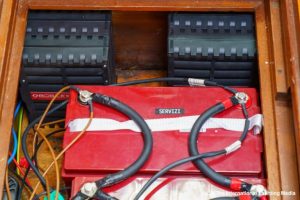 It’s really easy to fit them in, and to connect them up we simply put them in parallel with our 4 AGMs.
In our case we have chosen to pair the modules two by two so that they can be easily distributed in the space available but, if you wish, it is also possible to compose them in a single one-piece block.
The actual installation time, excluding the AGMs of course, is about ten minutes with a very low degree of difficulty. In short, anybody can do it: simply insert the modules into the available space, loosen the nuts on the AGM battery poles, insert the BOS LE300 cable lugs into the corresponding bolts and tighten again. A piece of cake.
After-installation Test
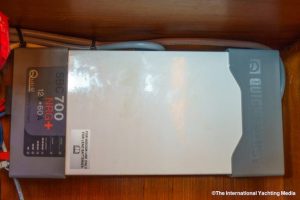 Now it’s time to power up our system. We plug in the dock socket, switch on our trusty Quick SBC 700 NRG+ 60 A charger, charge everything and postpone the first analysis until the next day.
The following morning we disconnect the quayside cable and wait a couple of hours, after which we climb aboard to measure the voltages.
The situation is clear: the engine battery, which is completely isolated, shows a voltage of 12.8 Volts; the utilities-dedicated batteries, connected to the four modules of the BOS LE300 Smart Battery System, measure 13.5V! In practice, it is as if they were charging, in maintenance mode.
We wait a few 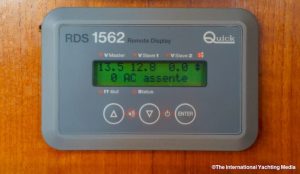 more days and repeat the measurement: no change.
We therefore check the state of the BOS LE300s which, being equipped with autonomous LEDs, show a green light indicating their full charge.
Now we make some empirical tests. First of all, we put the engine battery in parallel by means of the common battery charger and, instantaneously, the BOS LE300s bring it too from 12.8 to 13.4 V.
We disconnect the engine charger again and, wanting to find the limits, we switch on everything: fridge, bilge pumps, all the on-board lighting (incandescent), the navigation lights and the deck light.
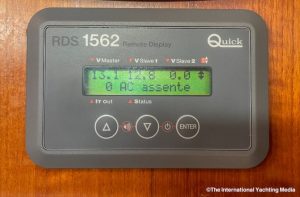 The voltage obviously drops during use, but never below 13.1 V, which is great!
We repeat the experiment over and over again, but the result is unchanged. This is irrefutable proof that only the lithium batteries are working, supplying power to the boat without affecting the capacity of the utilities-dedicated AGMs.
Now all we have to do is connect the solar panels to the system and we will have achieved a small masterpiece of energy self-sustainability.
The BOS LE300s will recharge themselves using the surplus voltage provided by the solar panels and, in turn, will keep the service AGMs charged, so they will never have an energy “deficit”.
This system also protects the boat from the risk of galvanic currents when the battery charger and shore power are connected..
Now what?
So now we leave our 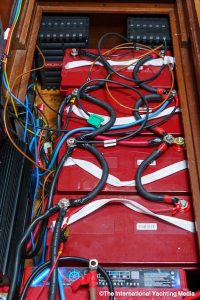 Daydreamer disconnected from the ground and start thinking about the endurance tests that will be carried out over the next few months.
We want to see how the system performs over time, both during the weeks we spend at anchor and during our cruises.
The BOS LE300s will therefore be put to the test by the use of the hydraulic system during sailing, stressed by the nights spent at anchor with the utilities on and put to the test by the numerous daily anchorages and unanchorages, where the 1,400 watts of our winch must manage our 80 meters of chain and the 27 KG Ultra, a heavy anchor line, but indispensable for sleeping peacefully when the seabed is over 15/20 meters deep.
We will be putting the BOS LE300 Smart Battery System to a really important test and, at the end of the season, as always, we will bring you the results.
And if in the meantime you feel like coming to see first hand what we have just told you about, as always the Daydreamer is not only available but proud to welcome our readers.
About BOS Balance of Storage System AG
BOS Balance of Storage Systems AG is a German high-tech company based in Neu-Ulm. The company was founded in July 2014, the CEO and co-founder of the company is Benjamin Seckinger. BOS aims at becoming the leading company in decentralized energy supply with a focus on Li-Pb (lithium-lead) hybrid charging technology for solar systems that supports intelligent load management. Their key markets are in rural and semi-urban areas in Africa, South-East Asia and Latin America with insufficient access to modern energy services, as well as market segments in industrialized countries that require decentralized power supply.
BOS LE300 Smart Battery System – Technical Specs
System voltage | 12 VDC |
Norminal voltage | 12.8 VDC |
Voltage range | 11 -15 VDC |
Battery packs used in LE300 | IFpR/26/65 [8p/4s] E/-20NA/95 LiFePO4 rechargeable battery |
Nominal lithium capacity | 28 Ah / 358 Wh |
Usable lithium capacity | 90% (25.2 Ah / 322 Wh) |
Numbers of cycles at room temperature | >3000 complete cycles |
Continuous charging current | Max. 12.5 A between 5 and 40°C, at higher and lower temperatures current is limited. |
Battery efficiency | > 90% |
Housing dimensions | 175 x 229 x 67 cm |
Weight | 3.4 kg |
Recommended wire size | 1.5 – 4 mm² |
Ambient temp. (operation & warehousing) | -20 – 50 °C ambient temperature with |
| maximum battery life at 15 – 25 °C. | |
| Warehousing temperature 10 – 30 °C. | |
Low and high temperature protection, | Temp. sensor prevents lithium battery charge under -5°C or above 55°C cell temp. |
| heating, charging & discharging | Charging starts once cell temp. is higher than -5°C. |
| Device has an integrated heating that is active between -20°C and 10°C cell temp. | |
| Discharge possible between -20°C and 60°C cell temp. | |
| At cell temp. below -20°C and over 60°C system is running in pure lead acid mode for higher battery lifetime. | |
Lithium cell balancing | Battery management inclusive balancer |
Protection features | Overcurrent, overvoltage, short circuit, deep discharge, wrong polarity protection. |
Operation mode/compatible external batteries | Works in combination with any 12 V lead acid battery & lead acid charge controller. |
Connection possibilities | Packs can be connected in parallel with each other (see exemplary parallel combination in the table below). |
Max. parallel LE300s | In standard version, a maximum of 24 |
| LE300 can be connected only in parallel, higher quantities possible after consulting BOS partner. |
The post BOS LE300 Smart Battery System, the batteries that will change boating are here appeared first on Yachting News.
]]>The post RiggService explains rigging maintenance on board the Daydreamer appeared first on Yachting News.
]]>RiggService introduces us to rigging maintenance and replacement
After having sailed the now famous 1000 miles in the Tyrrhenian Sea, the Daydreamer, our lab-boat, continues to be the hub of our practical insights and, for this early season, the topic chosen is extremely interesting: rigging, masts and their maintenance.
Although everyone knows the importance of rigging on board a sailing yacht, this specific aspect of periodic maintenance is unfortunately one of the most neglected.
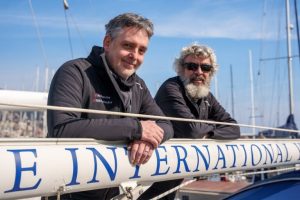 To shed some light on the subject (and also to dispel some dangerous myths) we turned to those who have been working at the highest level in this field for over 25 years: we are obviously talking about RiggService and, more specifically, Paolo Moretti and Umberto Terso, the two most respected riggers on the market.
But, as we always do, we did not stop at a theoretical approach. We wanted to go deeper and use the Daydreamer to illustrate practically what everyone should be doing on board their sailing yachts to avoid the worst nightmare, involuntary dismasting.
By following us you will be able to learn, guided by these two exceptional riggers, which steps are necessary to replace the rigging and how the mast will be centered and optimized to obtain the best performance for your sailing boat.
A rigging myth to dispel: rod or spiral rigging, which lasts longer?
Let’s start with some hard news: 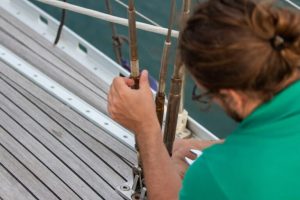 spiral rigging has a shorter life than rod rigging. While it is quite clear that rod rigging has a “safe” life of around 10 years or 40,000 miles, the same cannot be said for wire rigging, which is more common on cruisers and should be replaced after only 7 to 8 years.
This is necessary both because it is impossible to check the condition of the rigging and, above all, because of the configuration of the material itself, which, for obvious reasons, is much more vulnerable to the elements. The rod therefore wins this comparison because it can be inspected, it is more resistant to corrosion and, precisely for these reasons, if at the 10-year check it presents some problem, it can be maintained and continue its life without replacement.
RiggService arrives, analyses and measures
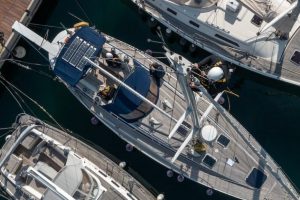 The first and most important step concerns the analysis of the state of the fixed rigging, which, needless to say, should certainly be entrusted to very expert eyes, such as those of the two founders of RiggService.
In our case, after a careful evaluation of all the shrouds, forestays, backstays and stays, but above all not knowing the year in which everything was last maintained, the decision is clear: the rigging must certainly be replaced.
The second operation consists of the precise measurement of the high, medium and low shrouds, as well as the forestay and backstay.
These measurements are important because it is on the basis of them that the rigging will be made to measure.
In the case of the Daydreamer, 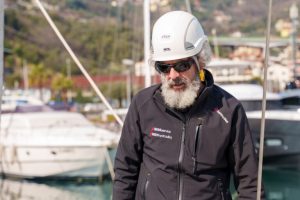 both for its predominant use and to respect the original design, we will replace the rigging with good spiral rigging, similar to that currently in use.
Another choice made after the analysis concerned the state of the rigging which, given the year of manufacture, we will replace with newer models and in a combination of steel, bronze and steel which will prevent blockage.
In the next episodes of this special report we will take you through the next stages, i.e. the dismasting, the fitting of the new shrouds, the remasting and the preliminary adjustments of the mast, followed of course by the sea trial and the final trimming of the replaced rigging.
The post RiggService explains rigging maintenance on board the Daydreamer appeared first on Yachting News.
]]>The post Douglas Marine mooring shock absorbers: the stress test begins appeared first on Yachting News.
]]>Marine accessories on test: now it’s time for Douglas Marine mooring shock absorbers. Because if there’s one thing that worries owners of multi-million euro yachts, it’s that once they’ve left the dock, perhaps in the grip of the weather, the mooring lines will give way to the most unfortunate events. That is why we need mooring absorbers of the highest quality.
We have now started testing 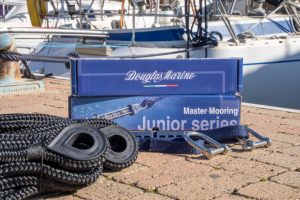 the Master Mooring Junior series using the Daydreamer, our lab-boat. Expectations are high, also because, perhaps needless to say, we are talking about an accessory produced by a historic company, absolutely Made in Italy and which seems to find no rivals worthy of the name in the market that it has been covering assiduously for 45 years in Italy and also abroad, where it operates through its dealers whose network seems to be expanding.
Expectations are also high because these absorbers have much reduced weights and dimensions compared to competitors, but are still able to cushion relatively large boats well.
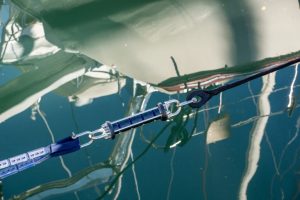
The installation of these mooring shock absorbers was very easy, starting with the mooring straps (also manufactured by Douglas Marine) which we installed in no time at all. Once installed from the first moment, the Master Mooring shock absorbers seem to reduce the tension very effectively. Then, in these days of very heavy seas, the water surface of the vast majority of harbours is affected by developing a lot of undertow, but these mooring shock absorbers have already proved to us that they are capable of cushioning the inevitable tears.
The Daydreamer’s bollards will also thank us if the test doesn’t prove them wrong, because one of the known effects of Master Mooring is that it greatly dampens the forces insisting on the bollards.
Now let’s let the winter season take its course and see how these mooring shock absorbers will perform in the long term, maybe even simulating some neophyte “mistakes”, for example over or under-tensioning them. The excellent reputation of Douglas Marine mooring shock absorbers is that they resist oxide and rust very well, we will see how well this will be confirmed by the results of our tests.
Virtuous administration
 The delivery of the product we are testing took place at the hands of Paolo Ramoino, Sole Director and Legal Representative of Douglas Marine, who explained to us in detail much of the work that is carried out in the Segrate-based company, a work that this year has allowed him to double his turnover, which is expected to be just as high at the end of the coming year.
The mooring shock absorbers process is a detailed industrial production process that involves meticulous attention to every detail and is able to produce a product that is the result of craftsmanship at every stage of production.
The entire product originates from inside the factory, where the tie rods, absorber plates and other components are made by the workers who together make it possible to market a product that is, we repeat, high-quality.
Douglas Marine: products are patented
This is also because in 45 years of company history, the experience that the staff bring to the table, including in terms of genuine customer feedback, is endless. And it has to be said even more: Douglas Marine mooring shock absorbers are patented and proudly so, because Douglas Marine was the first to invent this particular type of absorption operation.
Douglas Marine is well known for its mooring shock absorbers, but is equally famous for its anchor/chain connectors, including a self-righting one that boasts three times the power of its competitors.
Another popular product at Douglas Marine is the various models of ladders, which have been produced in excess of a thousand units this year. The ladders are well thought out in terms of ergonomics and specially designed so as not to hinder the ascent of sailors, but rather to facilitate it without impacting the design of the aft platforms.
But there’s more, 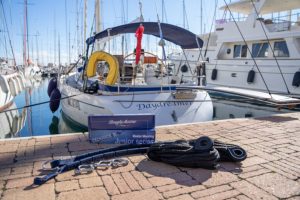 because Douglas Marine also sells its own (stainless steel) fender profiles, also produced in-house, with an overall production of more than 35 kilometres in 2021, which has been a great success among the many shipyard clients, especially because the profiles are developed using special machines that manage to obtain, in a single piece, a double bend, bending the steel cold so that nothing can be seen outside the bend. And the design improves.
 Paolo Ramoino, who has helped the company achieve its highest turnover since the year it was founded, explains that there are plenty of novelties at Douglas Marine: “We’ve redesigned our product packaging, renewed our communication through a completely new website and now we have a totally modern product catalogue. In addition to this,” continues Paolo Ramoino, “we boast a customer service that is always ready for shiphandlers, so every component of the mooring shock absorber, even after several years, is always available and can always be fixed, just a call away”.
Douglas Marine will be present at METS, from November 16-18, where it will also exhibit (stand 05. 250) the telescopic ladder “Portofino” that, partly immersed and installed in the stern, has an integrated handle that can be extracted and bayonet inserted, limiting the burden on board if not used, or facilitating the passage of the passenger, who so does not find the obstacle of the double neck constituted by the two classical handles that restrict the passage unfavorably at the time of the ascent on board. Douglas Marine will also be present at the next Dusseldorf Boat Show.
The post Douglas Marine mooring shock absorbers: the stress test begins appeared first on Yachting News.
]]>The post 1,000 miles in the Tyrrhenian Sea, the Daydreamer’s logbook appeared first on Yachting News.
]]>1,000 miles in the Tyrrhenian Sea: logbook
Day 1 – Varazze – Portovenere – 17/7/2021
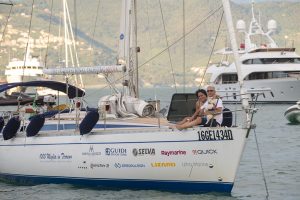
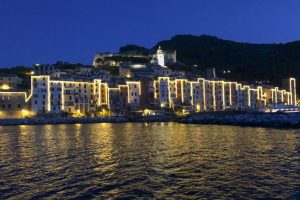
Marina di Varazze: no-stress departure with unexciting sailing towards Portovenere, in a variable 8-knot north wind and crosswave. 60 miles in 9 hours. Saturday night at anchor in Portovenere, with the anchor dropped in a 10-meter muddy and sandy seabed. Plenty of space available even if the bay is crowded. In the background, the colours of the town lit up by the setting sun, the temperature rises to cool the evening.
 Day 2 – Portovenere – Capraia – 18/07/2021
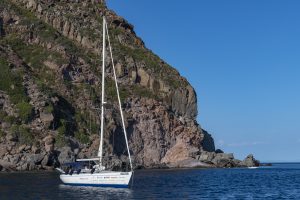
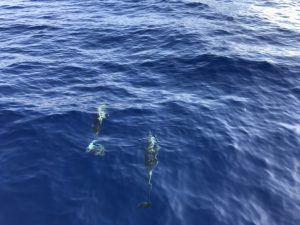
7 a.m: we have a coffee and set sail for Capraia. Portovenere is still asleep while we sail along the islands of Palmaria and Tino, heading 175° – 68 miles. The weak wind doesn’t give us much fun, but we enjoy the beautiful sunny morning and the presence of a pod of dolphins off the inaccessible Gorgona. Aeolus wakes up in the afternoon and we “fly” to Capraia. Here is Capraia Porto, dominated by the Forte di San Giorgio, overhanging the sea, built by the Genoese and the Banco di San Giorgio in the 15th century to repel Saracen assaults. We spend the night in the crystal-clear waters of Cala del Ceppo to the south-east of the island, protected from the mistral by cliffs covered in fragrant Mediterranean scrub.
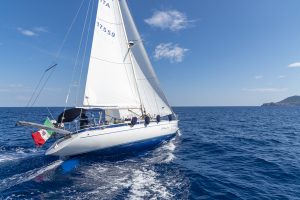
Day 3 – Capraia – Elba Island / Marina di Campo
After a sleep in Cala del Ceppo, interrupted by more or less violent gusts of mistral, we take a morning bath among jumps of tuna. We set sail for the Elba Island, which is just 18 miles away. As we sail along the west and south sides of the island, after Punta di Fetovaia, we come to the Pisan tower of the Marina, which dominates the small beach of Cala Galanzana fringed with pine trees near Marina di Campo. We decide to drop anchor on the seabed of posidonia and rock in this more intimate and uncrowded bay and spend the night there.
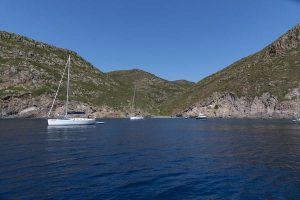
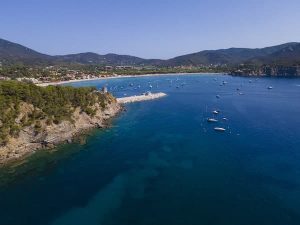
Day 4 – Marina di Campo
Phagocyted by the holiday atmosphere of Marina di Campo, we saunter along the harbour quay full of fishing boats armed with nets and lines for catching blue fish. The shady alleyways of the old village lure us into a moment of relaxation. The stepped ascent of Via Bellavista takes us along a path to the sandy beach of Galenzana, which can only be reached by sea and from where we can see our boats at anchor.
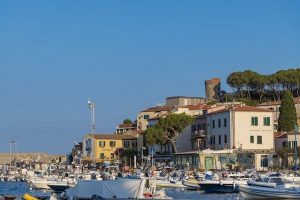
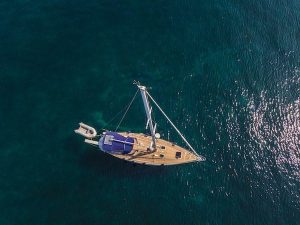
Day 5 – Marina di Campo – Giannutri
7 a.m: we have a coffee and set sail for the island of Giannutri via Giglio Island. The sea is as smooth as oil, and generous too, since it has provided us with tonight’s dinner. We anchor in Cala dello Spalmatoio on a 21-metre sand and posidonia seabed. The cliffs are covered with marine cysts, juniper, rosemary and mastic, the scent of the Mediterranean scrub and maritime pines, the chirping of the cicadas and the clear blue sea stun the senses. Access to the island requires a ticket to be paid to the Tuscan Archipealogo National Park either directly at the bar in the piazzetta or online, at least the day before (only €4 per person). The ticket only allows you to walk along the dirt road from Cala dello Spalmatoio to Cala Maestra; you are not allowed to leave the path unless accompanied by a guide. The ruins of the Villa Romana can only be visited in the morning and accompanied by a Park Guide (8€).
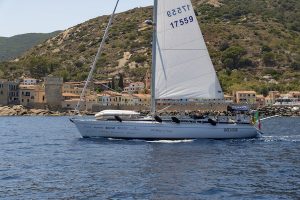
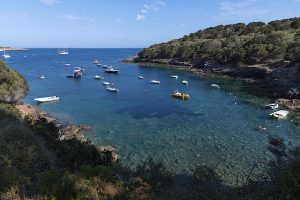
Day 6 – Giannutri – Santa Marinella
One of the good reasons for a healthy passion for sailing and living long periods aboard one’s own boat is to spend the days following the natural rhythms of the passing of time. Today, for example, the sunrise on the island of Giannutri made us feel at peace with the world. Then, we headed ashore to refuel and rest in Santa Marinella, anchored on 4 metres of sand, sheltered from the mistral winds by the end of the marina.
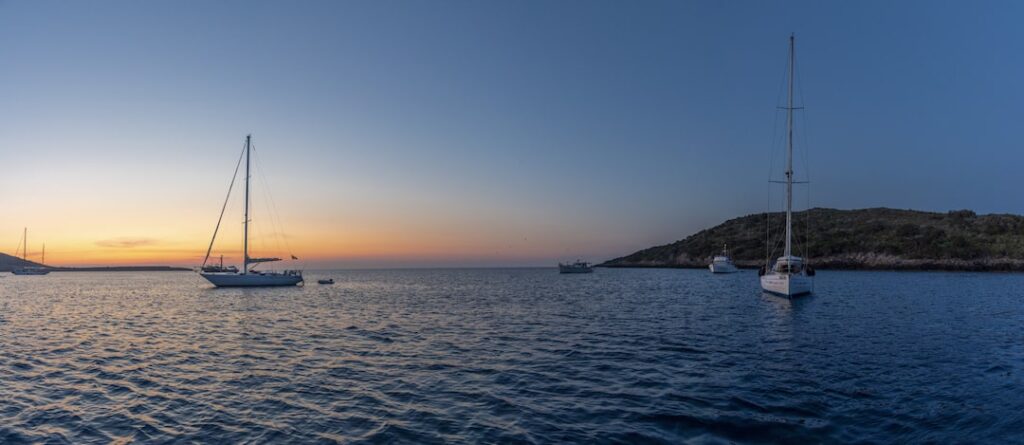
Day 7 – Santa Marinella – Palmarola Island
Departure before dawn: heading 146° to the island of Palmarola, 79 miles, 10 knots of crosswind. The monotony of the Lazio coast is interrupted by the Circeo promontory, which stands out imposingly. Defined by Folco Quilici as “the most beautiful island in the Mediterranean”, Palmarola is just four miles from the island of Ponza. Its high, jagged coastline, punctured by caves and rocky spires, is reminiscent of Hawaiian scenery. We visit Cala Tramontana, known as “The Cathedral”, but anchor in front of Scoglio Spermaturo, a sharp cleft in the cliff on a turquoise seabed.
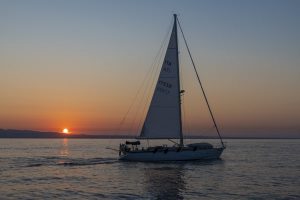
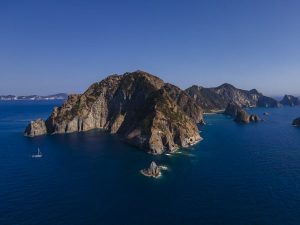
Days 8 and 9 – Palmarola Island- Ponza
Lazy-day awakening after a long crossing. The volcanic cliffs battered by the wind and waves create a breath-taking backdrop. We sail towards the south of the island; Cala Mezzogiorno with its rocks and white rocky amphitheatre is home to dozens of boats at anchor, but the sea starts to rise, the strong Sirocco wind is coming. We decide to take refuge in Chiaia di Luna, one of Ponza’s most beautiful bays. Closed since 2001 and forbidden to the public because of the risk of landslides, the beach even offers a tunnel, dug by the Romans and finished with walls in opus reticolatum, as a direct passage to Ponza Porto.
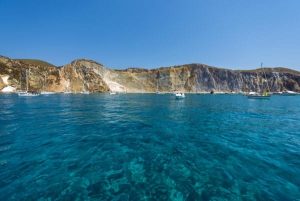
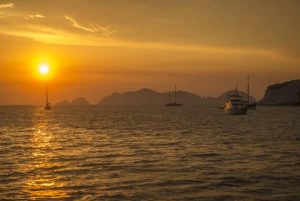
Day 10 – Ponza Island – tourism
A day dedicated to finding photo/video images between Ponza and Palmarola. We sail between the two islands in a south-easterly wind and stop at the most famous inlets of Ponza, first of all Chaia di Luna with its cliffs and anphitheatre, then Cala Lucia Rosa with its rocks and stacks and Cala Feola with its pools. At Palmarola, we explore Cala di Porto, a small beach overlooked by some cave dwellings dug out of the tufa rock and a few more recent structures. The Pontine Islands are a group of volcanic islands formed by several eruptive cones, as you can easily tell by looking at the high, tormented cliffs. Monte Guardia (283 metres above sea level), Ponza’s highest point, dominates the island’s characteristic profile.
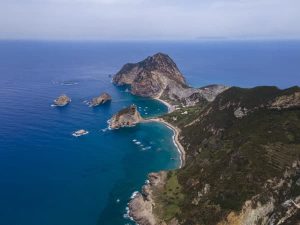
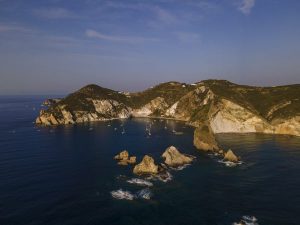
Day 11 – Ponza Island – Procida
Here we are in Procida,in the Gulf of Naples, the next European Capital of Culture 2022 and for some time now the site of interesting encounters in art, cinema and literature. It is part of the group of Partenopean islands, together with Ischia and Vivara, which are of volcanic origin, and Capri, which is of sedimentary origin. Covering almost 4 square kilometres, the island has as many as 4 craters and very steep and jagged coastlines, especially to the south and east. The settlement of Terra Murata stands out on the north-eastern bastion. We spend the night in Chiaiolella, one of the most colourful and lively marinas in the Mediterranean.
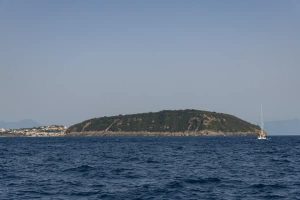

Day 12 – Procida – Naples – Capri
Breakfast at the bar in the Chiaiolella marina with sfogliatelle and lingue di bue filled with Procidan lemon cream. A 12-knot crosswind allows us to sail across Capri in total relaxation, until the island’s imposing rocky cliffs force us to continue under power. The town of Capri, with its famous “Piazzetta”, is right above us, in the central part of the island, 142 metres above sea level. Anchored and night under the cliffs and stacks of Marina Piccola, the sea around us is dotted with illuminated superyachts at anchor.
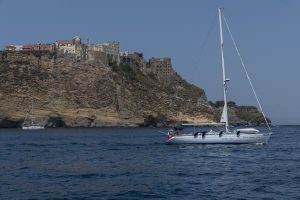

Days 13 – 14 – Capri – Acciaroli – Palinuro – Stromboli
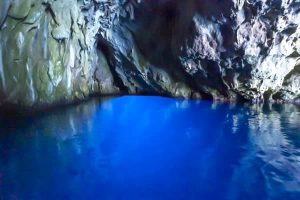
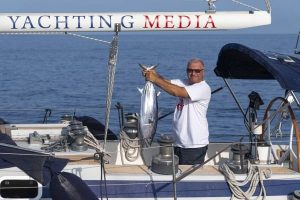
7 o’clock, the silent Quick anchor windlass retrieves the chain, and we leave quietly so as not to wake up the neighbours at anchor. The stacks are illuminated by the still low sun, and we take advantage of the opportunity to fly the drone in search of the most spectacular scenes for our docufilm on the “1000-mile cruise in the Tyrrhenian Sea”. We set course for Acciaroli, 42 miles away, filled up with diesel and set off for Palinuro in a couple of hours. We arrive just in time to anchor in a huge deserted bay, launch the Selva tender with the new EPropulsion electric motor and off we go to explore the famous “Blue Grotto”. The sun is setting, but we are able to enjoy the incredible phenomenon of refraction whereby the bottom of the cave is a luminescent blue. We wake up very early, have a quick look at the enchanting Buondormire bay and are off again. Heading for Stromboli, 74 miles, no wind, flat sea, but suddenly the reel whistles. We stop the engine: 20 minutes of struggle and the skipjack Katsuwonus pelamis of about 15/18 kg, practically the maximum for the species, is on board, arms aching, but we already look forward to the feasts…. for several days!
Day 15 – Stromboli – Basiluzzo – Panarea
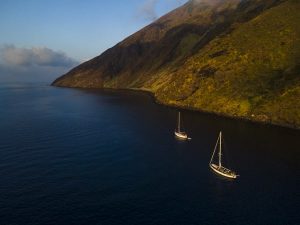
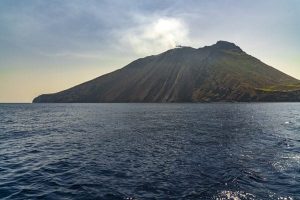
Awake at dawn, the low sun paints the Stromboli volcano in the most typical Mediterranean shades. The Daydreamer snoozes at anchor in a bay not far from the village. We are only a few miles away from Ginostra and the famous “Sciara del Fuoco”, the colliery where the volcano discharges its eruptions; just yesterday there was a fairly major one. A few miles, just 11, and we sail along the west side of the Basiluzzo rock; we pass by under sail for the filming of the docufilm and throw again in the crowded pool between Lisca Bianca and Lisca Nera, two rocks that create a shallow bottom. From there to Panarea is an instant, we look for anchorage, discover that hundreds of buoys have been placed in two separate fields…. a madness of red balls with few boats: 100€ for one night, we prefer to move away to drop anchor south of the town. Just to get off we have our Selva 320 VIB tender equipped with the new Epropulsion electric motor. The evening in Panarea is one of elegance and good living.
Day 16 – Panarea – Lipari – Vulcano
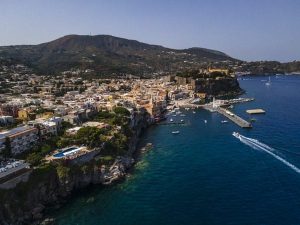
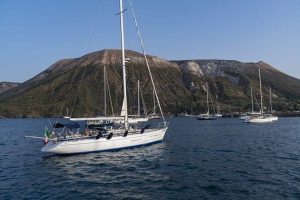
We wake up again at dawn, these volcanic islands deserve some extra effort to get the best images. These are African days and the light during the day is not optimal from a photographic point of view. The green island of Panarea runs along our sides, the few miles that separate us from Lipari will be covered quickly, a strong wind upwind pushes us that is a pleasure, finally! We drop the anchor on a clear seabed opposite the abandoned structures of the pumice quarries. I remember that, 30 years ago, it was possible to roll in the pumice sand along steep walls down to the sea. Not any more, shame. The same 30 years have passed since I spent some time in Lipari, it doesn’t seem to have changed much, it’s still a nice, tidy, colourful town: a granita and a Sicilian cannolo from the Subba pastry shop is a must (and maybe a dinner at Filippino’s restaurant). Half an hour and we are already in Vulcano, in the Porto di Levante bay. The seabed is shallow, let’s say within 20 metres, so I recommend anchoring early to find a place in the roadstead. The village of Vulcano is even more colourful than Lipari, with small shops and bars lining the narrow streets, all dominated by the splendid polychrome volcano.
 Day 17 – Vulcano – Salina
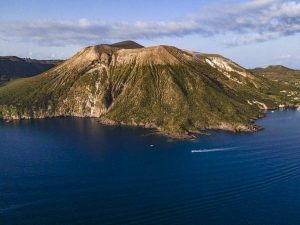
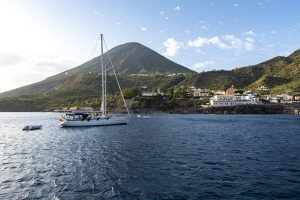
The many boats anchored in the bay of Vulcano- Porto di Levante are still asleep. After a pleasant evening ashore and a quite night at anchor, we set sail to discover the western coast of Lipari: steep, rugged, wild and uninhabited=wonderful. The large bay of Punta Levante in Lipari offers shelter to a few yachts and superyachts, in a truly primeval setting. The wind gets stronger and we are in Salina, with the two majestic volcanoes in the background. We drop anchor at Salina Porto, a pretty, well-kept, quaint village, to collect the Raymarine Axiom 9 Plus, which has arrived at Marina di Salina for testing on board. The wind picks up from the north-east and we move into the sheltered bay of the village of Rinella on the south coast of Salina, right in the middle between the two volcanoes.
Day 18 – Rinella – Vulcano
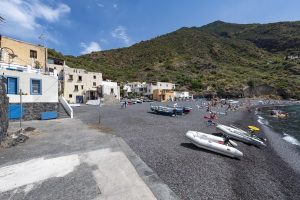
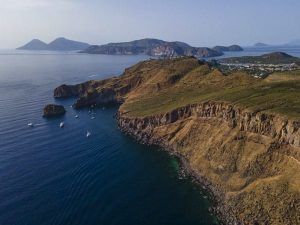
Today, the weather is crazy and unpredictable, an uncomfortable situation when at anchor: jumps in wind direction and speed, insidious waves from different directions; in short, a good reason to review the weather notions absorbed over the years. After a fleeting visit to the village of Rinella, unexpectedly pleasant and characteristic, we head for the bay of Pollera, to the west of the island of Salina. It is a bay created by the collapse of an ancient volcanic crater, and the village lies on the top of the cliff: stairs carved into the rock reach the sea. The sea is too rough to stay at anchor and tonight’s forecast calls for strong winds from various directions, so we decide to shelter in the Bay of Punta Capo Secco at Vulcano, which seems ideal for spending the night. It turns out to be a magical place, with the sheer cliff, the stacks, the cave in the next bay and the sunset in your face. We end the evening with one of the most spectacular views of the starry sky we have ever experienced.
Day 19 – Vulcano – Filicudi
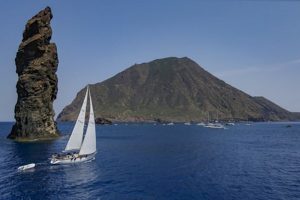
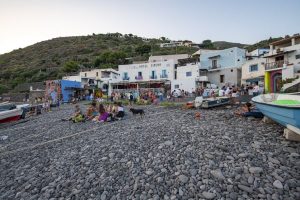
The hot summer night has passed and we are back at sea: today we are going to discover the island of Filicudi, which rises from the deepest depths, 20 miles west of Salina. The northern side is uninhabited and steep, battered and volcanic. Filicudi Porto is located in a bay protected by Capo Graziano, a famous point of interest for underwater archaeology due to the presence of numerous ancient wrecks. Our destination is “la Canna”, a 60-metre high stack of basaltic rock emerging from a very clear sea: it is time to shoot more footage for our docufilm, and the Daydreamer sails as far as the obelisk. We go to anchor in one of the most beautiful places on the Aeolian Islands, Pecorini, a small village clinging to the rocks with the typical white houses that characterise these islands. In the evening, at aperitif time, the place comes alive with tourists, residents and yachtsmen, drinking, chatting and eating delicious local food prepared by the local women in an atmosphere reminiscent of tropical islands.
 Day 20 – Filicudi – Palermo
We wake at dawn,
we have a 63-mile crossing to make from Filicudi to Palermo, and the weather does not look good. In fact, the Mistral comes in early and starts blowing hard from the early morning hours. Our speed is good, but the wave, which is already quite strong on the lee side, is very annoying. The wind shifts to the north as we approach the Sicilian coast, allowing us to make a single tack to our destination, the beautiful Villa Igea marina in Palermo, where we will spend the night and get some rest. Dinner in cheerful Mondello is a must – we’ve really earned it.
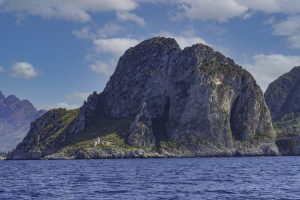
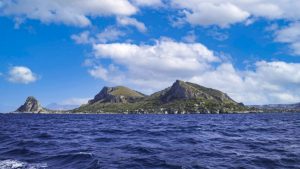 Day 21 – Palermo
Rest day at the Marina Villa Igiea in Palermo, a strategic location at the centre of the southern Tyrrhenian navigation routes and starting point for a visit to the city of Palermo, not far away. Pleasant evening and dinner on the boat based on fish and typical Sicilian pastries with dear local friends.
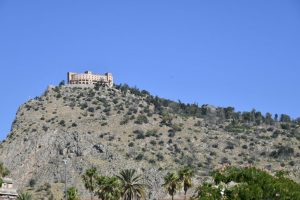
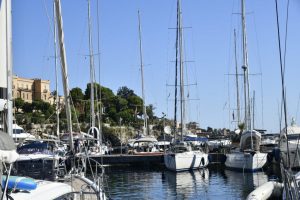
Day 22 – Palermo – San Vito Lo Capo
After having replenished our galley, water and fuel oil, we leave Marina Villa Igiea and, pushed by a north-easterly wind, head for San Vito lo Capo, a small town on a sandy beach, an old fishing village before the recent tourist development and famous for its couscous festival. We spend the night here at anchor, waiting to set sail for Sardinia.
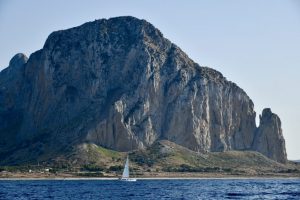
Day 23 – San Vito lo Capo – Villasimius
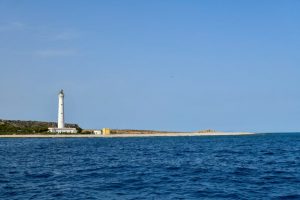
We leave the large bay of San Vito Lo Capo at 9 a.m. We have carefully planned our route and times according to the weather conditions we will find. As soon as we have rounded the cape with its slender white lighthouse, we set a course of 284, with 163 miles of open sea ahead of us. The wind from the south is around 18-25 knots, we manage to keep a good heading and a not bad speed between 6.5 and 9 knots, let’s hope it stays that way! After 3 hours we are still upwind, in the same conditions: it doesn’t seem true… even if the sea is rising and long, swollen waves are passing under our hull. Wind and sea are getting stronger, we decide to reduce a bit of canvas to sail more comfortably, the speed is high, around 8 or 9 knots, a show! As predicted, the wind and sea magically drop, we continue more slowly and in complete safety: life line, inflatable and umbilical jackets, binoculars, frontal light, Lizard shoes on our feet and a light jacket. In the middle of the night, we switch on the engine to charge the batteries and give our speed a little boost. Cloudy, dark night with no moon, colourless sunset and sunrise, a pity to miss the stars. Towards 6 a.m., the expected east wind rises rapidly to over 20 knots: we arrive in Villasimius almost flying through the strait between Capo Carbonara and Isola dei Cavoli: 25 hours exactly, not bad!
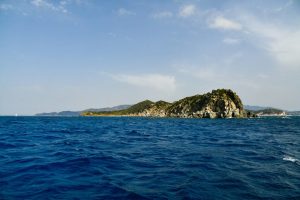
Days 24 and 25 – Villasimius
Days dedicated entirely to writing articles, testing products and taking videos and photos. Since we are at anchor about 1 mile from the port, we take the opportunity to test the battery of the Epropulsion electric outboard, installed on our Selva 320 Vib. A problem with the anchor light at the mast head, instead, gives us the excuse to test the Ewincher electric handle, which lifts me effortlessly to the top. The clear, bright waters, the shallow depths and the white sand allow us to take video footage of the Ultra Marine anchor and test its potential. We also test the water resistance of the Spin Lizard boot by immersing it up to the edge and noting its total waterproofness, as well as the non-slip capacity of the Crew Lizard shoe.
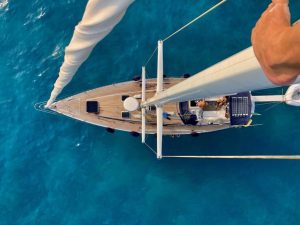
Day 26 – Villasimius – Cala Murtas
Today, we take it easy, we set sail from Villasiumius to shoot with the drone for our documentary, one flight and the wind rises above the safety limit. What a shame! The island of Cavoli and Capo Carbonara deserved spectacular views from above. Wind in the face, nothing to do with the sail, the mainsail simply stabilizes. We head for Arabatax but, once we’re reached the bay of the Murtas beach, we decide to anchor for the night because the place is really amazing.
Day 27 – Cala Murtas – Cala Coloritza
We wake up in a surreal calm, the sea is oil, a light mist of humidity envelops everything, the light is subdued. We swim ashore to walk along a kilometre-long, completely deserted beach where nature has the upper hand. It’s time to set sail, of course we only sail by motor, the little wind is upwind. We sail along a coastline that is sometimes very high with cliffs, sometimes with very white beaches as far as Arbatax, where the cape with a lighthouse hides the port structures that spoil the landscape. From here on, the coast rises ever higher to form sheer cliffs of polychrome limestone. Capo Monte Santo is the gateway to the famous Gulf of Orosei, where tomorrow we will visit Sardinia’s most famous beaches and bays, such as Cala Luna with its caves. We decide to spend the quiet night at anchor before Cala, under an eerie rock overhang. We visit one of the caves and take the tender to discover its blue refractions.
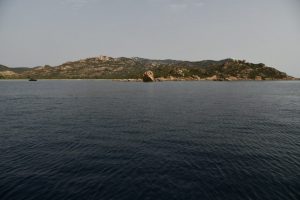
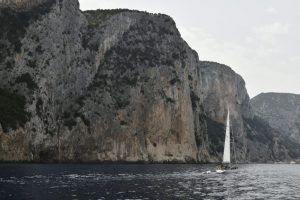
Day 28 – Cala Coloritza – Isola Ruja
7.00 a.m.: drone shots of the incredible sheer cliffs that characterize the whole coastline as far as Cala di Luna. We set sail, letting cliffs and bays flow by like in a film: Cala degli Innamorati, Cala Piscina di Venere, Cala Biriola, Cala Sisine and, finally, Cala di Luna. We arrive before 10am, few people, few boats, a dream. At 10.30 a.m. 6 tourist boats arrive all together, unloading hordes of people on the beach, all wanting to get a place in the sun. We leave. We cut across the Gulf of Orosei, skipping Cala Gonone with its little port, preferring to reach Isola Ruja with its gigantic dune beach, where we will spend the night sheltered from the swell from the east. A sunset aperitif at the Il Moletto oyster bar on the beach.
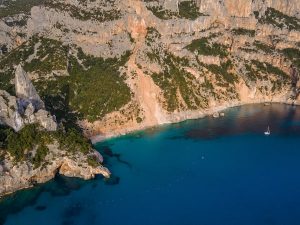
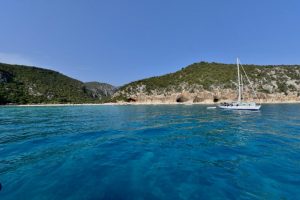
Day 29 – Isola Ruja- Capo Coda Cavallo
The warm light of the early morning illuminates Isola Ruja and its vermilion rocks in contrast with the bright turquoise of the shallow waters, the wind is absent, we take home some footage with the drone. The temperature rises, weak but with a direction favourable to us; today we will sail for just over 20 miles. Armed with the gennaker, we manage to sail at over 6 knots in complete relaxation. We arrive at Capo Coda Cavallo, with the islands of Mortorio and Tavolara in the background. The large, beautiful bay is full of boats at anchor: we were not the only ones to identify this place as an ideal place to spend the night with an easterly wave. We find our spot. Sunset.
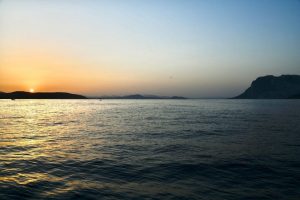
Day 30 – Capo Coda Cavallo – Porto Pozzo
A strong mistral wind is forecast from early afternoon, so we set sail at dawn for Porto Pozzo, a well-protected marina, where we will also try to solve a problem with the Daydreamer’s hydraulics, with the help of trusty Ugo Soldi of Continental Marine, of course. A pleasant evening around a table with a good glass and Sardinian sweets.
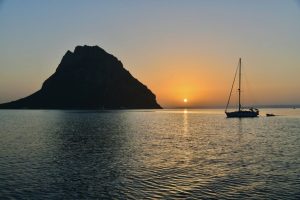
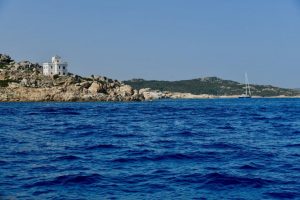
Days 31 and 32 – Porto Pozzo
The mistral forces us to make a long stop in this rather rustic, almost Caribbean, but very well organised and managed marina. We take the opportunity to continue writing editorials and testing equipment such as the Raymarine Lighthouse chart and the Quick Rider 3 windlass.
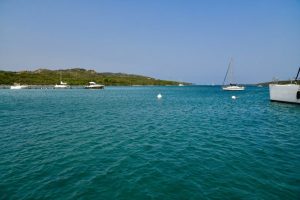
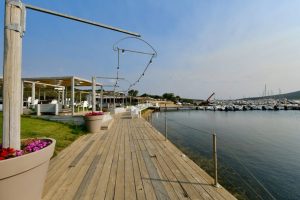
Day 33 – Porto Pozzo – Gulf of Sant’Manza.
Although the mistral has diminished, it continues to be strong, with gusts of over 30 knots. We decide to set sail anyway, two days in port are already too many. We wait for the gusts to diminish a little and leave the mooring, we’re finally sailing again. A handkerchief of mainsail and a little more of genoa and we make 7 knots. As we leave the gulf, the sea is still smooth and protected from the coast, but as soon as we enter the Bocche di Bonifacio, things get more serious. The distant mistral swells up to 3 metre waves, to which are added others of at least one metre, which don’t bother us too much on the crosswind; we exceed eight and a half knots and shortly afterwards we are already sheltered by the island of Cavallo, half an hour and we round the cape of Santa Manza, pure fun.
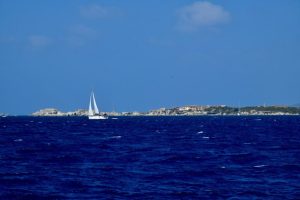
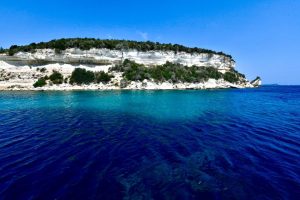
Day 34 – Corsica – Sant’Manza – Gulf of Rondinara
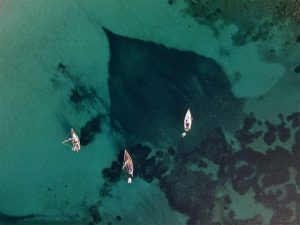
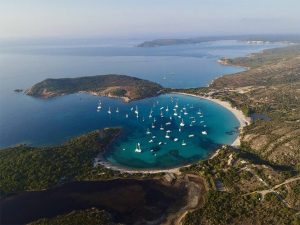
We spend the day on turquoise waters, between the bay of Santa Manza and that of Rondinara, characteristic for its almost perfect semi-circular shape, bordered by a very white beach. As we enter, we must take into account the shallow water aligned with the northern tip and anchor in front of the beach. Of course, in season the bay is quite crowded, but this does not prevent us from enjoying the view.
Day 35 – Rondinara – Pinarellu
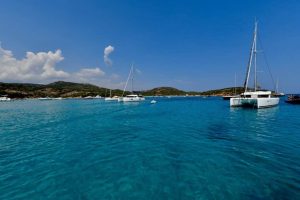
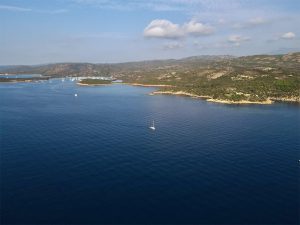
We leave Rondinara early in the morning for Porto Vecchio. As we enter the fjord, we see the village perched on the hill in the background. We drop the anchor and visit the old town: founded by the Genoese in 1539, it is a citadel with houses and alleyways in porphyry, surrounded by ramparts, now full of small shops and characteristic places. We take to the sea again to reach the large bay of Pinarellu and enjoy a swim at sunset. Evening at the little bar on the beach with local cold cuts and cheeses and… Corsican music.
Days 36 and 37 – Pinarellu – Varazze
At 7.30 am, we set sail for a northbound navigation that will take us to our final destination, Varazze. The wind is moderate, crosswind, we manage to sail at around 6/7 knots and without wave, what more could we ask for? After 72 miles, finally with a little bow wave, we arrive in the bay of Marine de Pietracorbara, just for a refreshing swim and an aperitif on the beach and off we go again. The weather conditions are changing, we decide that the best option is to cross immediately. A wonderful night of full moon spent sailing at between 7 and 8 knots. Then the wind lets up and the last 35 miles are sailed under a cloudy, threatening sky that brings us back to the reality of the return journey.
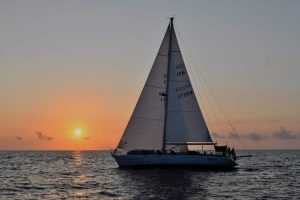
The journey continues…
1,000 miles in the Tyrrhenian Sea
1,000 miles in the Tyrrhenian Sea, the technical cruise of the Daydreamer, the lab-boat of The International Yachting Media, is back again this year. This 6th edition will see the crew of the Daydreamer engaged in numerous tests of various on-board tools, tested with the clinical eye of expert navigators. Anchors, cartography, valves, nautical accessories and much more, will all be installed during the cruise and subjected to intensive use and non-maintenance on purpose, just to verify their resistance even in prohibitive conditions.
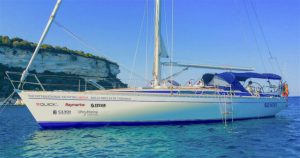 Moreover, 1,000 miles in the Tyrrhenian Sea is also the perfect opportunity to tell about the Mare nostrum, the most beautiful in the world, and document it from the nautical point of view through a completely innovative editorial format, experienced above all by ploughing the waters live. Our crew will set sail today from Marina di Varazze, sailing towards Porto Venere on an adventurous journey that will turn its bow firmly to the south. We will be sailing along the most beautiful coastlines of the Bel Paese: everything is done to fix the memory of the moment through the author photographs, the exceptional full-length films and to put down the most beautiful words, which serve to enrich and describe that wealth of nautical information that is the result of a pure marine sensation. And, in this case, the editorial voice resonates from the best perspective, which is that of the test cruise. “Informing on the accessories needed by those who go boating with their families” was one of the watchwords that resounded in the cabin during the Daydreamer’s preparations.
A complete technical cruise
Mandatory stops include the Tuscan Archipelago, the Phlegrean islands, ten enchanting islands in total on which the crew of The International Yachting Media will cast their eyes. Then at least a hundred or more miles of sailing to touch the Aeolian archipelago with its volcanic outcrops resting on the blue sea; crossing westwards to the Egadi Islands and then northwards towards the southern coast of Sardinia. The lighthouses that light up like huge white candles, many anchorages to discover, and then the ancient port of Bonifacio. Corsica: buttery croissants and gentle bonjours will be a wonderful memory when the Daydreamer lands back at her usual mooring port on the edge of the fragrant Ligurian land.
There will be many surprises in store for us during the 1000 miles in the Tyrrhenian Sea, which will be released in a work in progress with which we will keep our readers updated, as in open logbook. Because it is the real experience at sea that counts the most, together with the immensity of the sails that push us far away to discover that curiosity that is reserved with pride only for the surfaces of the abyss. We have just one objective: to tell you the best of our shared passion for the sea. Stay tuned!
The post 1,000 miles in the Tyrrhenian Sea, the Daydreamer’s logbook appeared first on Yachting News.
]]>The post Selva 320 VIB after 3 years of testing: it proves to be indestructible appeared first on Yachting News.
]]>No maintenance and no storage at the end of the season: this is the fate that befalls the Selva 320 VIB once the summer 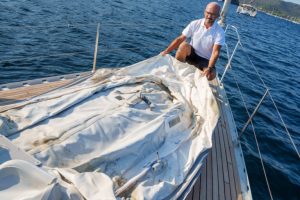 is over. The procedure is: deflation, valve opening, random rolling up and tying up on the deck, without any protection until the following season. This way, we subject the equipment to a stressful and unusual life on board our beloved boats, so that the test period can easily simulate twice as long or more.
The “1,000-mile cruiser in the Tyrrhenian Sea” has set sail from Varazze, en route to the Aeolian Islands, passing through Capraia, Pontine and Campania Islands, before returning to Varazze if Aeolus will allow it, touching Sardinia and Corsica.
Installation
We untie the knots 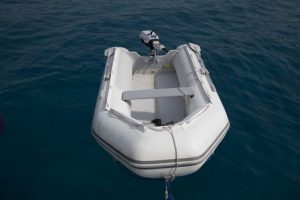 and ties that held the Selva 320 VIB to the mast and open it on the foredeck. It is very dirty of course, the initial white colour has turned into a warm shade of desert sand.
Large salt crystals have formed inside, which we remove without paying too much attention; the hand inflator pushes air into the tubes, which appear to be intact, as do the valves which, once tightened, do not leak air at all. As we inflate it, one by one the five air chambers gain pressure, one by one they all reach the right tension. A good start, no doubt about it. The tubulars of the Selva 320 Vib are just stiff enough, and the high-pressure inflatable dunnage is just as stiff. It’s ready to be launched: the dinghy is quite light, we literally throw it overboard, its knotted retaining line on the bow eyebolt is the one used to tow it aft while sailing, the fastening point shows no sign of sagging.
Now it’s a matter of washing it and restore it to its former glory, if possible – who knows if we’ll succeed… A special cleaning product for the rubberises fabric of the tender is juts what we need: a few sprays to moisten the originally milky white surfaces of the dinghy, 15 minutes of waiting and…. voilà, as if by magic, the whiteness of the synthetic fabric is practically back to its former glory – we certainly didn’t expect it to go so quickly! The high-pressure pneumatic floor, characterized by its non-slip surface treatment, is also easy to clean, as are the transom and stabilizing flaps.
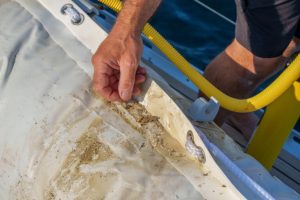 We are surprised by the aesthetic result, the performance demonstrated by the construction materials and the accurate and resistant workmanship with which this Selva 320 VIB is made, also because winter was long and climatically heavy and the various lockdowns did not even allow us to check our boat and equipment.
We have now been sailing for a while and the dinghy is often put in the water and hoisted aboard by the same fixing point.
We have also deliberately left it in tow in wind and sea situations, but this tender does not suffer at all!
Selva 320 VIB Test
We’re using this 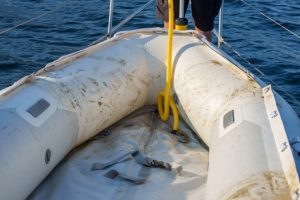 Selva 320 VIB during our “1,000-mile cruise in the Tyrrhenian Sea”. The tender is proving to be an irreplaceable travelling companion as we almost always stay overnight at anchor.
I’m amazed by the generous diameter of the tubulars, which gives the boat exceptional stability and, above all, makes it very dry when sailing with four people aboard in a short windy wave.
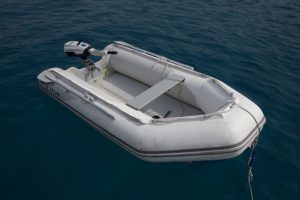 The very rigid pneumatic keel creates a truly stable and non-slip surface while the open V shape channels what little water there is amidships towards the stern.
The V-hull is more than sufficient to achieve good directional stability, which is essential in strong wind.
The oars, with their hard rubber seat that keeps them secure when not in use, are well-sized and fully usable.
The lightness of the Selva 320 VIB seems to be at odds with the solidity and quality of the materials, but it gives us great pleasure when it comes to launching and hauling the dinghy.
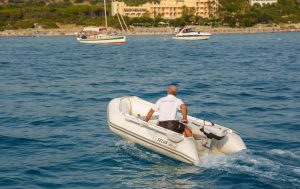
Selva Marine
Viale dell’industria 13 – 23037 Tirano (SONDRIO). Toll-free number: 800 357 935
Previously published articles
July 2019: SELVA 320 VIB AND SELVA GUPPY2.5; A REVOLUTIONARY TENDER-OUTBOARD DUO. THE TEST BEGINS
The post Selva 320 VIB after 3 years of testing: it proves to be indestructible appeared first on Yachting News.
]]>The post 1,000 miles in the Tyrrhenian Sea: sea trials and travel reports appeared first on Yachting News.
]]>Now in its fifth edition, the popular ” Test Cruise” that every year sees the Daydreamer engaged in the most varied product tests changes its name (and itinerary) and becomes ” One thousand miles in the Tyrrhenian Sea” for a completely new editorial format.
Compared to previous years, the 2021 technical cruise of our lab-boat starts earlier. In addition to the usual product tests, we will be engaged in the production of a series of articles and documentary films, destined to portray the most fascinating sailing areas of the world’s most beautiful sea.
We will set sail from Marina di Varazze to the Tuscan archipelago and then head for the Pontine and the Flegrean islands. A first stretch of 350/400 miles with 10 enchanting islands in the middle, absolutely unmissable destinations of our summer holidays. The route then continues in the southern Tyrrhenian Sea to reach, after another 150 miles of sailing, the Aeolian Islands, the mythological residence of the Greek god of the same name from which, thanks to the observation of the clouds of vapur hanging over the Stromboli volcano, he managed to predict the weather.
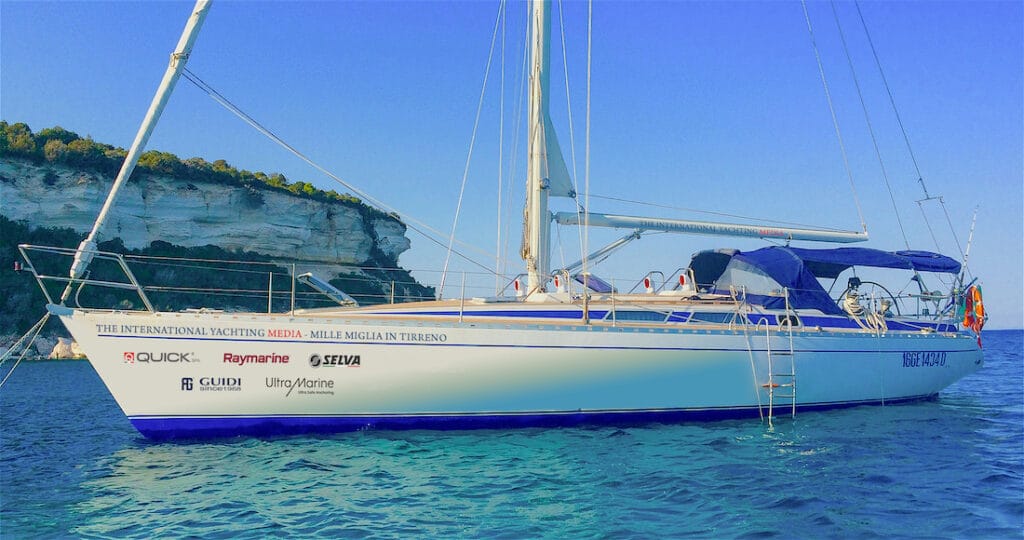
Another 150 miles will take us to the Egadi Islands. Then, the amazing Sardinia and a visit to Carloforte with its wonderful anchorages. Lastly, the Strait of Bonifacio and the western coast of Corsica which, despite not being washed by the Tyrrhenian Sea, is a sailing area we particularly like and that is a prelude to the final crossing which will take our Daydreamer back to her usual mooring port.
A thousand miles in the Tyrrhenian Sea to film, photograph and write about the most beautiful places of this sea. A thousand miles to test first-hand – we are the only ones to do that – the accessories that have become “must-have” for all those who go boating with their family.
The list of the products that will be subjected to our stress tests (and, therefore, to a truly extensive use) is very long and still provisional. They range from the all-new Raymarine LightHouse Charts that we will test in combination with an Axiom Plus multifunction system to the numerous and varied Quick Spa-branded marine accessories we will install on board for the occasion.
At the bow of the Daydreamer, a place of honour is given to an anchor that promises astonishing performance. It is called Ultramarine and, for the occasion, it will be filmed both above and below the sea level. Our shore excursions will be made easier and faster by the Selva Guppy 2.5 which, complete with the Selva 320 VIB tender, is at its third year of continuous stress test which, to simulate an extensive use of these products, wants them not to be stored or maintained. The same goes for the Guidi valves that, having been on board for 5 years, will be subjected to a new test.
Many other products, of which we cannot disclose the name, will soon be added to this list to complete an overall picture that, as usual, confirms the importance that The International Yachting Media gives to the most authentic sea experiences, an essential element of a precise and responsible journalism because – let us stress that – you can write from the comfort of your sofa but the scent of the sea is another thing.
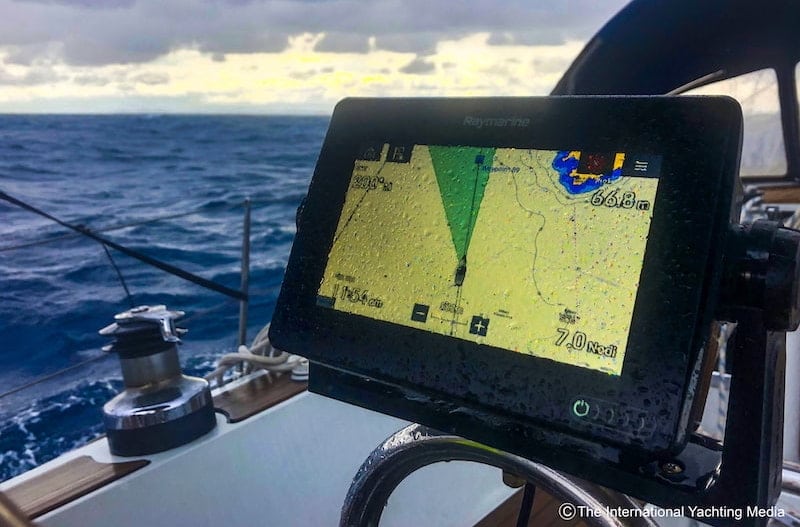
The post 1,000 miles in the Tyrrhenian Sea: sea trials and travel reports appeared first on Yachting News.
]]>The post Raymarine Axiom 7: here are the results of our 3-year stress test appeared first on Yachting News.
]]>Three years ago, we started a severe stress test on board the Daydreamer, the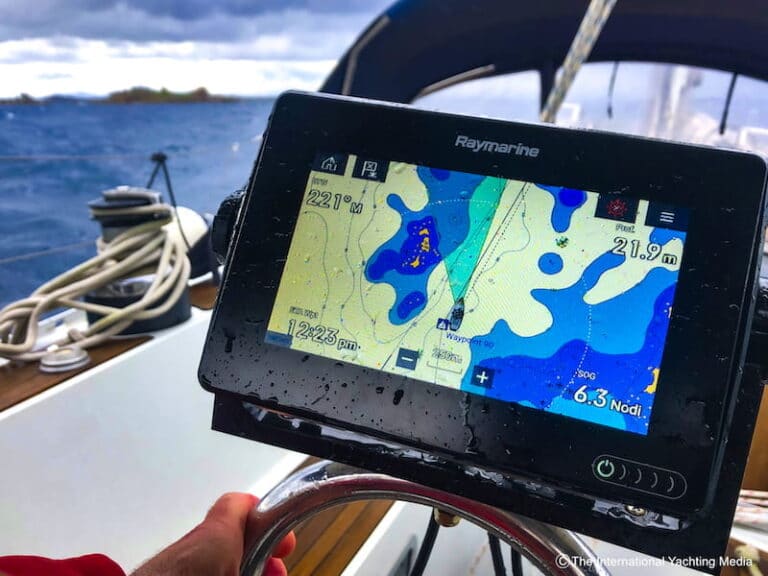 lab-boat of The International Yachting Media. The product on test was the new Raymarine Axiom multifunction system, in its 7-inch version. An important technological upgrade, in terms of both safety, easy handling and, why not, aesthetics because, let’s be honest, these displays are really beautiful.
The Raymarine Axiom 7 was installed on a bracket positioned on the steering pedestal, without therefore being encased in a protective structure, connected with three new cables, one for the power supply and two for the interface. The installation was perfect for viewing from the helm station, good for the usability of the touchscreen display but quite exposed to shocks and elements, therefore perfect for a severe stress test.
The Daydreamer is always in water, travelling around 2,000 miles between cruises, tests, races and transfers every year. Compared with other boats, she is therefore subject to a significantly more intensive use, where three years probably correspond to more than double the normal wear.
The Raymarine Axiom 7 was always left mounted, and unprotected, for two winters in a row, exposed to sun, cold, water and elements, in order to simulate the harshest conditions which an apparently delicate and expensive tool could be subject to: a “real” owner would never have done that.
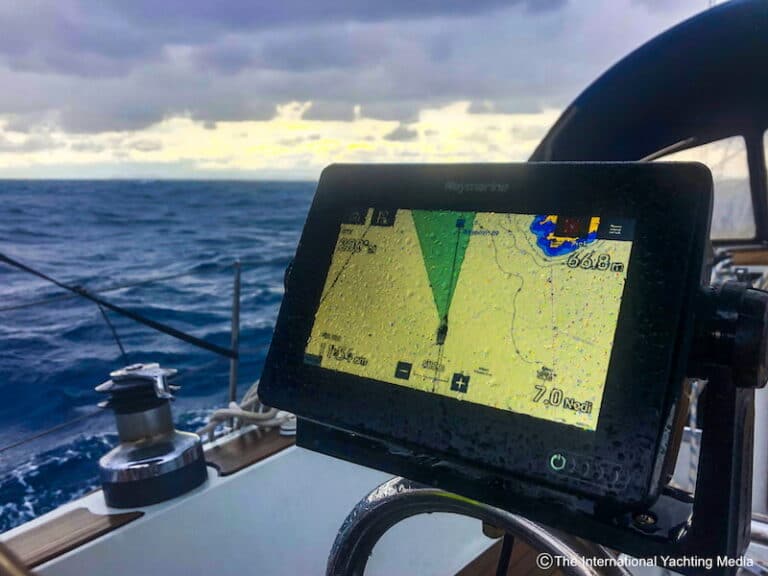
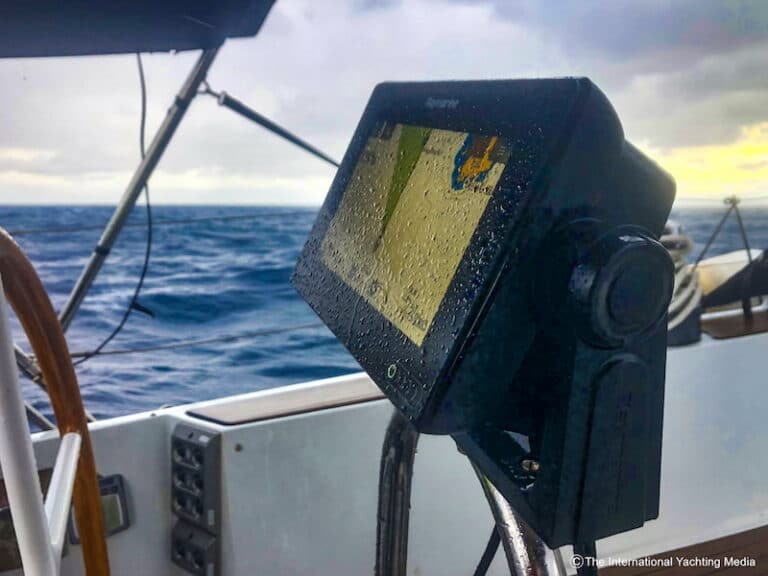
In 2019, the Daydreamer joined the Rolex Giraglia race and the Axiom 7 was further updated with the latest version of the Lighthouse operating system which included the new AIS700 hub, the ClearCruise system and the Ray 63 VHF radio device, whose innovative Bluetooth technology finally allows not go below deck.
Time passed but the tool remained current, so much so that, when the new Lighthouse 3 operating system was launched, we discovered that compatibility was always maximum, after installing the Android update of the hardware operating system. The procedure is simple, especially if performed by downloading the software (available for free) from Raymarine website Pl onto an SD card which, placed in the appropriate compartment, allows to update the display and all the accessories on board (wind station, vhf, autopilot, radar, etc …) at once, quite simply.
A final test bench has been offered just these days during our 200-mile winter crossing from Marina di Varazze to Santa Teresa di Gallura, where our Daydreamer is awaited by Continental Marine, our trusted shipyard, the only authorized to “get its hands” on our boat. This crossing is also the final one for the Raymarine Axiom 7, which will be soon followed by the new Axiom 9 Plus for a new test session.
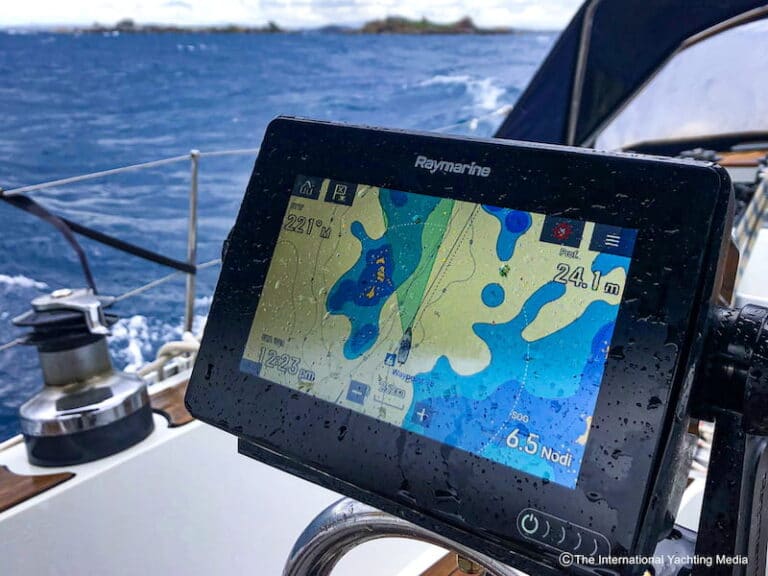
Before setting sail, we update the LightHouse Edgartown software to the 3.13 version and, above all, we install the Raymarine LightHouse Charts, an abolute novelty that we will test in world preview and which we will discuss later in more detail, after installation and testing of the new Raymarine Axiom 9 Plus display.
Raymarine Axiom 7: the final crossing
Here we are: the tool is ready and updated with the new Italy and France maps. We’re ready to cast off and travel 200 miles. The Axiom 7 is mounted on its bracket. I turn it on and realize that its structure is perfectly intact. I do not notice a minimum decay of the materials, much less of the crystal screen. The touchscreen display has the same sensitivity as when it was installed and the image quality is identical. Great!
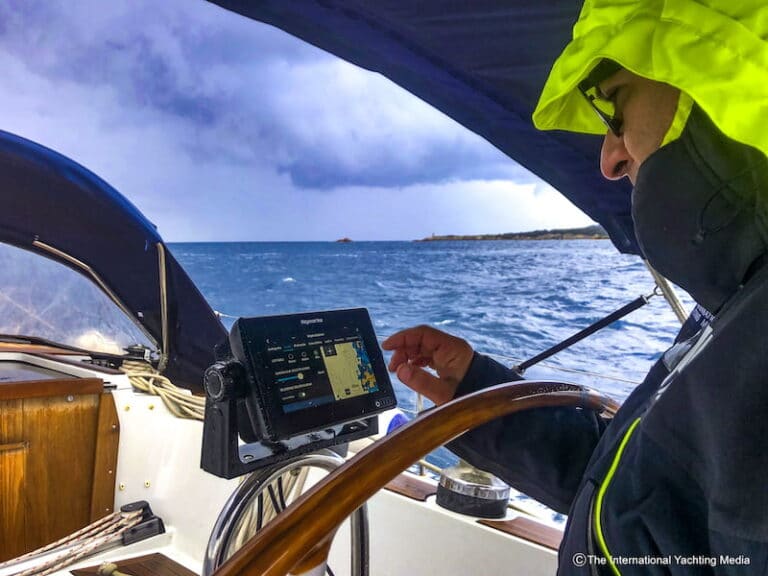
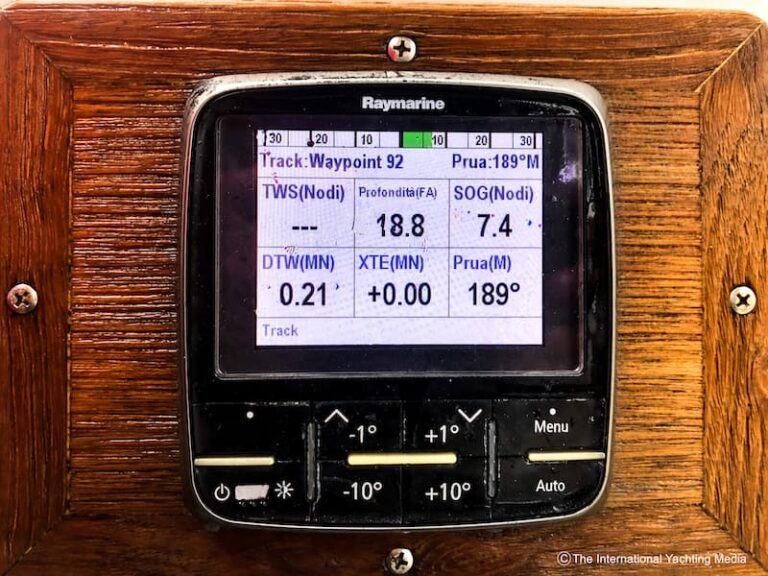
It’s 06:50 in the morning, the weather is fine, the air is cold, the wind light, the forecasts call for good weather, crosswinds, upwind up to 10/15 knots and moderate waves. I like electronic instruments, so I immediately start “playing” with the new LighHouse operating system that I find very fast and responsive, with instant WiFi interface with the pilot, the radar and the VR camera mounted on the mast.
I plot the course. The auto-routing function is not available yet (but it will come soon), operation is fast and user-friendly and I only have to pay attention to the tracks by zooming the view of the whole route. Once the course is plotted, I turn the Raymarine autopilot on and select the “Track” mode, thus interfacing it with the Axiom 7.
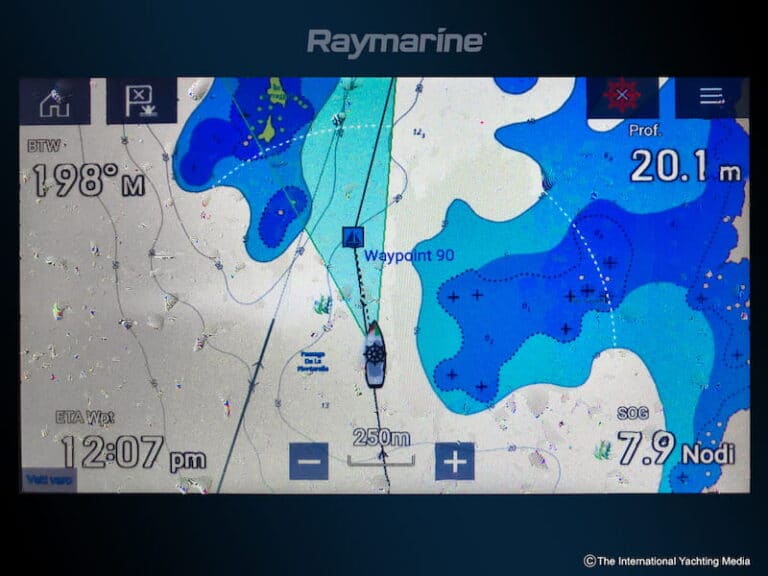
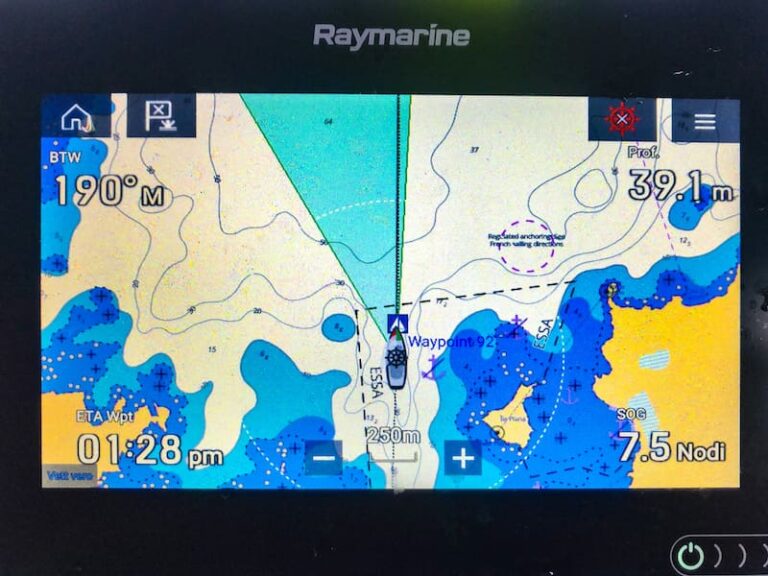
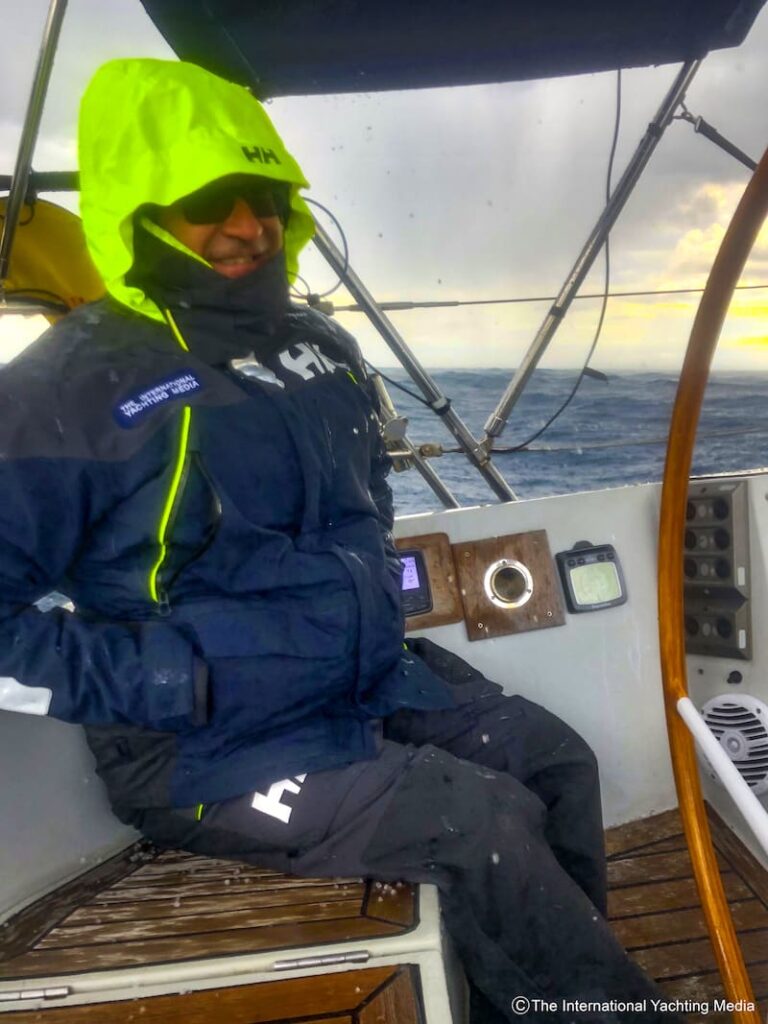
An audible beep signals every course correction, which must been confirmed for safety reasons. At sunset, we reach the Corsican Cape. The Giraglia lighthouse greets us reassuringly when the first east gusts come overwhelmingly: we will spend the night riding waves and sailing quite reefs, with wind peaks up to 38 knots, in the cold, under therain, hail and with two storms really close (in spite of the forecasts!).
The auto rudder performs its impeccable work throughout the navigation, the Raymarine Axiom 7 guides us safely even through the delicate passage of the Pianterella and we are inside the Strait of Bonifacio; we ride swollen waves of the new incoming mistral disturbance and we finally get our destination .
A 3-year test: conclusions
Raymarine Axiom 7 has proved to be an extraordinarily reliable and complete tool. It is easily interfaceable and expandable: a real control hub for the whole boat. The quality of the materials is impressive and, after three years of intensive use and exposure to the elements, is absolutely unchanged compared to the original conditions.
Raymarine Axiom 7 has all the credentials to accompany the most demanding owners during their long years of marine activities. An excellent adventuring or travelling companion for safer holiday experiences.
The post Raymarine Axiom 7: here are the results of our 3-year stress test appeared first on Yachting News.
]]>The post Schenker Zen 50: a one-season-long test appeared first on Yachting News.
]]>After having carried out the first operation test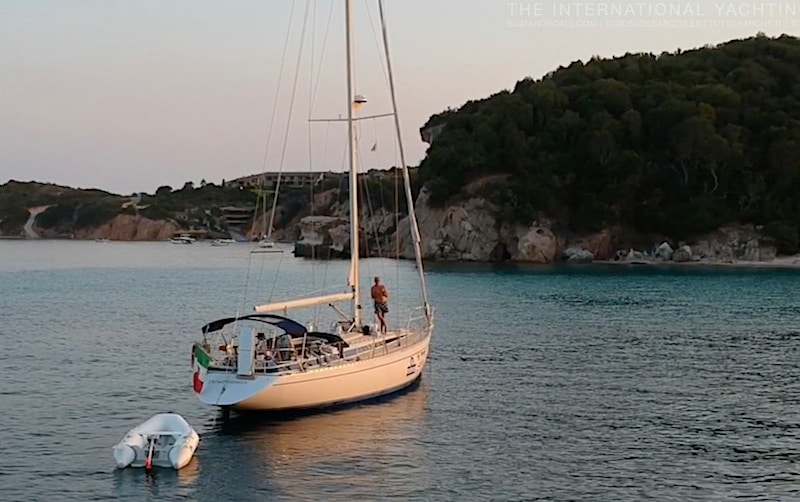 during the installation phase, we decided to put our Scenker Zen 50 to a stress test, in order to subject it, in one single season, to the same stress of some years of use.
We therefore “sealed” the water filler caps of our Daydreamer – a 1986-built Comet 460 – and only used the watermaker to fill our tanks, throughout the season. The result was a water production of around 5,500 liters which, in addition to being a definitively important number, also allowed us to enjoy many interesting “side advantages”. Let’s see together what they are:
- The Schenker Zen 50 allowed us to sail with almost empty tanks, which obviously implies a greater speed under sail, especially when sailing upwind in rough sea.
- Pitching is drastically reduced, to the benefit of comfort
- A lighter boat uses less fuel when traveling under power, thus implicitly reducing emissions. The watermaker, in fact, allowed us not to face “crossings” to reach our summer destinations, with full tanks.
- The Schenker Zen 50 consumes little current, between 15 and 25 Ah. However, if the production of fresh water takes adtavange from the recharging moments of batteries or navigation under power, the use of additional fuel can be avoided. The alternator is, in fact, perfectly able to recharge the batteries, allowing the simultaneous operation of both the watermaker and the various utilities.
- Once the stress of “Hell, we’re running out of water” is eliminated, on-board dynamics change a lot since there is no longer a need to “ration” fresh water. Also because you usually realize that when you get the most beautiful anchorages…
- Lastly but not least, the watermaker ensured a total independence from the ports. We have never had to enter a marina begging for water, deviate from our routes or face long waits to fill our tanks.
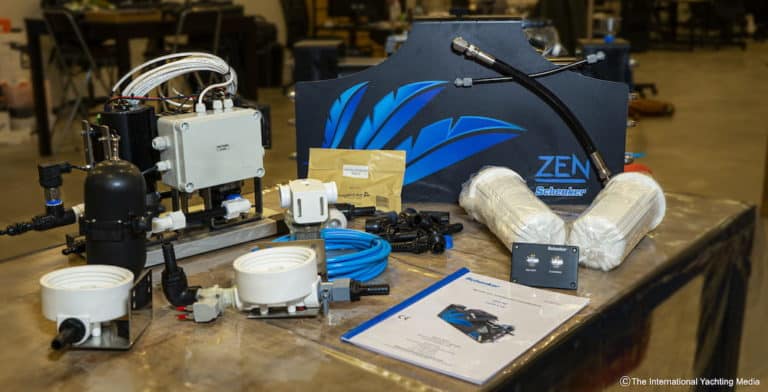 During our 4-month stress test, our watermaker never had a problem. After a few seconds from start-up, it emitted a smoothing buzz and started to produce fresh water.
Now, let’s take a look at numbers and see what happened from a technical point of view.
Schenker Zen 50 Test, here are the numerical results
Instead of a flow meter, we opted for a simple and precise empirical system. In fact, we used a conventional 5-liter graduated container and a chronometer with which, in different situations and at different times, we made our measurements.


This solution allowed us to eliminate any side effects that could affect the test, such as the state of charge (or discharge) of batteries, the simultaneous use of utilities or, a factor unknown to us, the composition of the sea water we were collecting in that precise place.
| Container liters | Time in seconds | Time in minutes | Hourly production in liters | |
| Test 1 | 5 | 372 | 6.2 | 48.39 |
| Test 2 | 5 | 354 | 5.9 | 50.85 |
| Test 3 | 5 | 408 | 6.8 | 44.12 |
| Test 4 | 5 | 354 | 5.9 | 50.85 |
| Test 5 | 5 | 354 | 5.9 | 50.85 |
| Test 6 | 5 | 342 | 5.7 | 52.63 |
| Test 7 | 5 | 348 | 5.8 | 51.72 |
| Test 8 | 5 | 378 | 6.3 | 47.62 |
| Test 9 | 5 | 384 | 6.4 | 46.88 |
| Test 10 | 5 | 348 | 5.8 | 51.72 |
| Average | 49.56 |
As you can see, with an absorption of around 240 w, the water production of the watermaker always ranged between 44 and 55 liters per hour, with an measurement average of 49.56 l/h.
How the watermaker is made
One of the main features of Schenker watermakers is their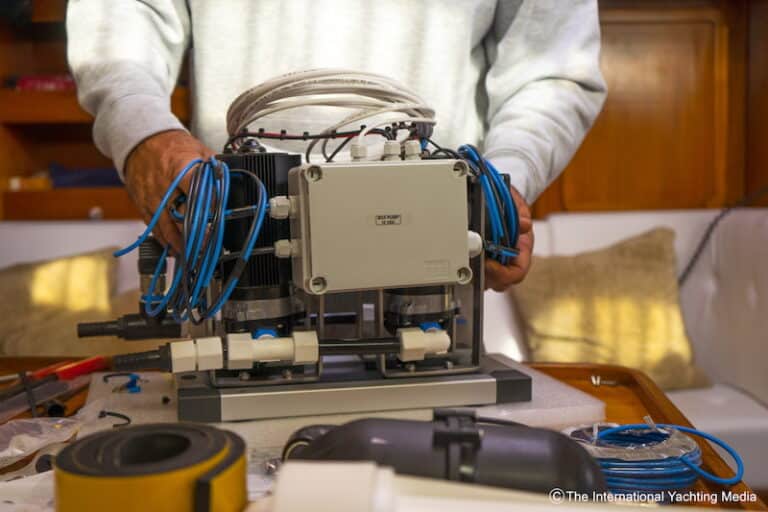 compactness. Thanks to the very small size of the machine body, they take up little space on board, which translates into easy installation on all those sailing or motor-powered boats that do not have a technical space or an engine room.
Just like in the case of the Daydreamer, the 14-meter sailboat of The International Yachting Media, which, despite being a 34-year-old “Stradivarius of the sea”, certainly does not excel for the amount of space available on board.
Fortunately, the Schenzer Zen watermakers are designed for universal mounting since, in addition to being compact, they can also be installed in small units.
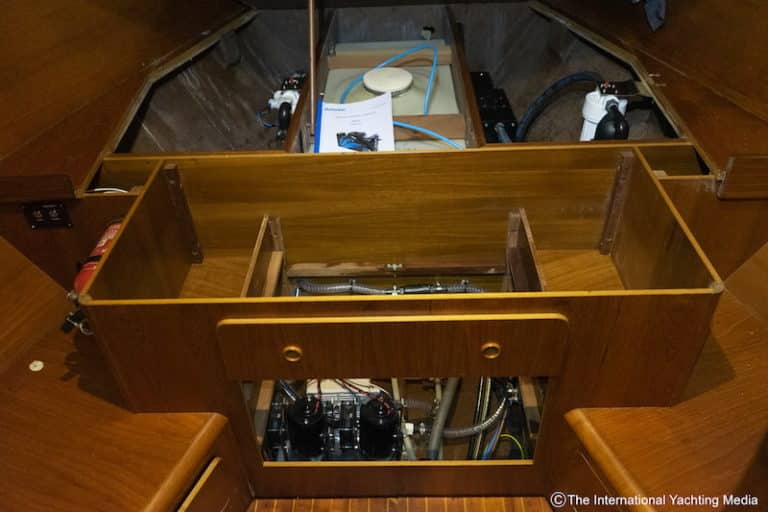 The pump + filters group, in fact, is separated from the machine body, which allows to install them almost everywhere. In our case, we installed the watermaker in the compartment below the bow bed!
Installation takes just a single working day. We suggest to entrust the study of the positioning and installation of the watermaker to a professional, who, in our case, was Ugo Soldi of Continental Marine, a true magician, the only man authorized to get his hands on our boat …
To see in detail the installation steps of the Schenker Zen 50 on board the Daydreamer, please read our dedicated article and watch the video below, made during the assembly and first testing phase.
The post Schenker Zen 50: a one-season-long test appeared first on Yachting News.
]]>